Asterix and the Normans was first published in 1966 and is the ninth album in the Asterix series created by René Goscinny and Albert Uderzo. The story combines historical stereotypes about Viking raiders with a satire of contemporary youth culture in the 1960s.
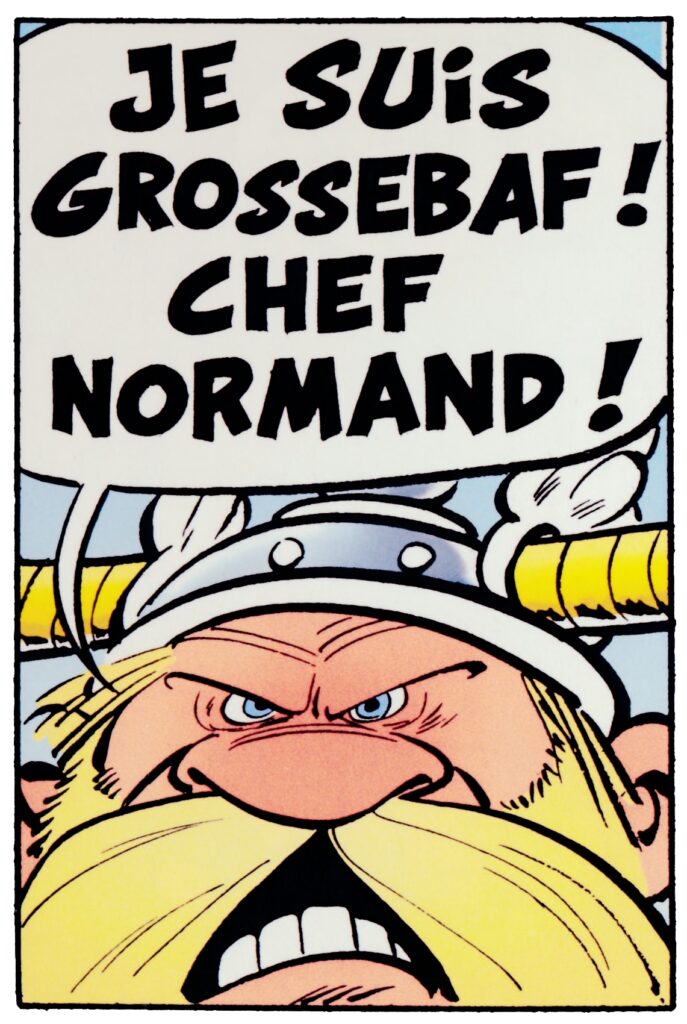
The album introduces several memorable elements to the series, including the Lutetian teenager Justforkix (Goudurix), a group of fearless Norman warriors, and an unusual moment in which the village bard saves the day.
From Easter Island to the North Sea
The initial inspiration for the album reportedly came from an unexpected source. During the mid-1960s, French explorer Francis Mazière had popularized theories about the statues of Easter Island, including the idea that they might have been created with extraterrestrial assistance.
According to later interviews with Albert Uderzo, the creators briefly considered sending Asterix and Obelix to Easter Island to investigate the mystery. The idea was eventually abandoned because it was considered too implausible within the historical framework of the series.
Around the same time, a televised discussion in France addressed theories about early exploration of the Americas. Some historians argued that Norse seafarers had reached the continent long before Christopher Columbus. This discussion reportedly helped redirect the authors’ attention toward the Vikings, leading to the creation of the Norman invaders who arrive in Gaul during the story.
The term “Normands” also provided a convenient historical bridge, referring both to the medieval Northmen and to the French region of Normandy.

Justforkix and the Generation Gap
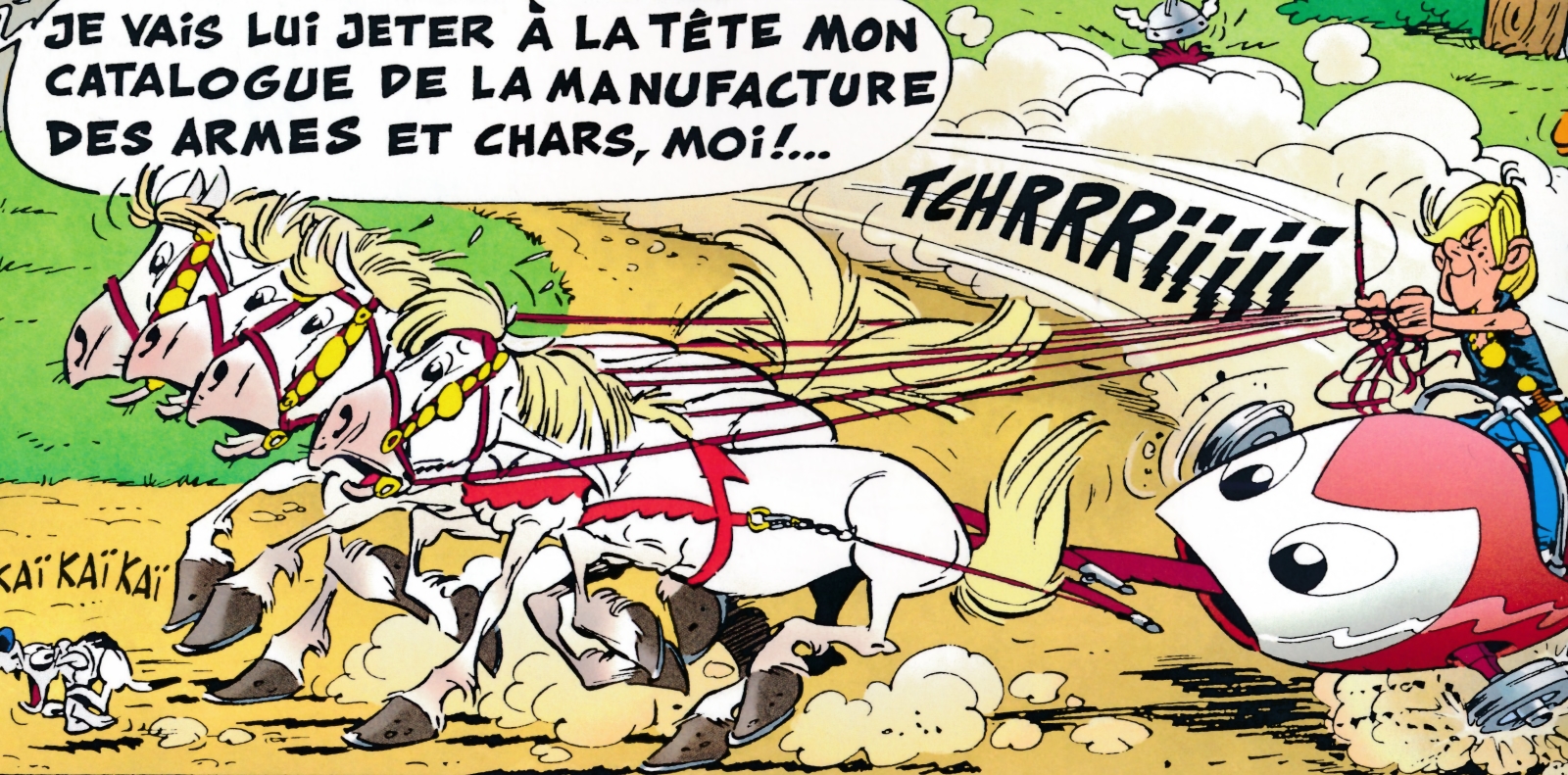
A central figure in the album is Justforkix (Goudurix), the nephew of the Gaulish chief Vitalstatistix. Unlike the warriors of the village, he comes from Lutetia (modern Paris) and represents a fashionable urban youth.
His appearance reflects contemporary youth culture of the 1960s, particularly the so-called “Yé-yé” generation associated with pop music, new fashions, and modern lifestyles. In contrast to the villagers’ traditional warrior values, Justforkix initially shows little interest in courage or combat.
The album plays on this contrast between the older generation of Gauls, who value bravery and honor, and the younger urban generation, which is portrayed as more concerned with entertainment and leisure.
Several musical references appear in the story. The songs associated with Lutetian youth parody contemporary popular music and performers, including fictional names such as “Elvix Preslix.” These jokes reflect the influence of international pop culture during the 1960s.
Justforkix also arrives in an elegant chariot said to come from Mediolanum (modern Milan), which may be interpreted as a reference to the prestige associated with Italian automobiles during the same period. In Parc Astérix a rollercoaster is themed after this.
The Normans and the Meaning of Fear
The central plot of the album revolves around a misunderstanding. The Norman warriors are portrayed as fearless to the point of naivety. Having heard the expression “fear gives wings,” they interpret it literally.
As a result, they travel to Gaul in search of someone who can teach them what fear is, believing that learning this secret will allow them to fly.
This misunderstanding drives much of the story’s humor. The Normans repeatedly attempt to frighten their prisoners in order to observe the effects of fear, while the Gauls try to prevent them from succeeding.
Cacofonix as the Village’s Secret Weapon

The village bard, Cacofonix (Assurancetourix), usually appears in the series as the victim of his neighbors’ attempts to silence his singing. In Asterix and the Normans, however, his musical talents play an unexpected role.
When the Normans finally hear the bard perform, his singing terrifies them so completely that they immediately discover the meaning of fear. In this way, the character who is normally ridiculed by the villagers becomes the decisive factor in defeating the invaders.
At the end of the story, the druid Getafix (Panoramix) summarizes the lesson by explaining that true courage lies in mastering one’s fear rather than ignoring it.
Development of the Village Characters
The album also contributes to the development of several recurring characters. The blacksmith Fulliautomatix (Cétautomatix) appears in a more recognizable form, with his design and personality closer to the version that would appear in later albums.
His rivalry with the bard, which becomes a recurring comedic element throughout the series, is also more clearly established.
A Notable Entry in the Series

Asterix and the Normans remains one of the most distinctive albums in the series. By combining Viking stereotypes with contemporary cultural references, René Goscinny and Albert Uderzo created a story that reflects both ancient history and elements of modern society.
The contrast between fearless warriors, fashionable city youth, and the traditions of the Gaulish village provides the foundation for many of the album’s jokes and character interactions.
Commercial Success of the Album
When Asterix and the Normans was released in 1966, it quickly became another major success. By the mid-1960s the adventures of Asterix had already become one of the most popular comic series in Europe, with each new album reaching a rapidly growing readership. Like other titles from the classic Goscinny–Uderzo period, Asterix and the Normans sold millions of copies over time through repeated reprints and international translations. The continuing popularity of the series has contributed to cumulative global sales of hundreds of millions of albums, making Asterix the best-selling European comic series of all time.
Later this year a special edition of the album will see the light as well as a deluxe version.


