In 1965, readers of Pilote magazine followed an eagerly anticipated serialized adventure in issues 307 to 334 that would soon become one of the most memorable stories in the Asterix canon. When Asterix in Britain (Astérix chez les Bretons) was released as a standalone album in 1966, it solidified René Goscinny and Albert Uderzo’s reputation for sharp cultural satire and brilliant wordplay, using the Gauls’ journey across the Channel to playfully explore the quirks that divide—and connect—the French and the British.
A Family Affair in Kent

This eighth volume of the Asterix series opens with Julius Caesar’s successful—but puzzling—conquest of Britain, largely because the Britons stop fighting to drink hot water and refuse to fight on weekends. One last village in Cantium (modern Kent) still resists Roman rule. To seek help, a determined Briton named Anticlimax (Jolitorax in French) travels to Gaul to find his cousin Asterix, asking for help in procuring the Gauls’ legendary magic potion. Goscinny and Uderzo make a point of the family connection, giving the mission a personal emotional stake and propelling Asterix and Obelix into their cross‑channel odyssey.
Asterix and Obelix set out with a barrel of magic potion and a mix of confidence and cultural bewilderment. Their journey is filled with obstacles: dense fog, confusing local customs, Roman interference, and more than one lost barrel of potion.
Serialized Beginnings and Cultural Context
Originally published over several months in Pilote, the story’s serialization allowed readers at the time to savor each encounter and gag one installment at a time. The gradual build from Roman Britain’s foggy uncertainty to the climactic battle gave the narrative an episodic rhythm that translated well into the finished album.
Goscinny and Uderzo drew upon real historical and cultural markers to anchor their satire: the village chief Zebigbos (Mykingdomforanos in English) caricatures aspects of British leadership, and names like Cassivelaunus reference actual ancient figures, though the story remains unabashedly anachronistic and humorous.
Linguistic Acrobatics of Bell and Hockridge

The translation challenges in Asterix in Britain are legendary. Goscinny’s original French uses a deliberate mimicry of English syntax—placing adjectives before nouns and forcing literal translations of English expressions—to make the Britons’ French sound awkward and foreign. For example, grammatical inversions and literal phrases like “I beg your pardon” and “Isn’t it?” are used for comedic effect.
When Anthea Bell and Derek Hockridge created the English version, they faced the opposite problem: how to make the Britons sound peculiarly British in English. Rather than translate literally, they leaned into caricatures of upper‑class speech—“old fruit,” “jolly rum things,” and a distinctly “Oxfordian” tone—making the dialogue both humorous and culturally resonant. Memorable touches like rendering a bowler hat gag into fruit terminology showcase their linguistic creativity.
Beatlemania and Londinium Life
One of the most iconic sequences occurs in Londinium, where Asterix and Obelix encounter four young bards with shaggy “mop‑top” haircuts surrounded by adoring crowds—a clear homage to The Beatles and the global phenomenon of Beatlemania. This wink to contemporary pop culture cements the album’s blend of ancient setting and modern satire.

The heroes’ misadventures in Britain include getting lost amid row houses, dealing with fog and weather, and even witnessing a proto‑rugby match—all humorous riffs on British stereotypes and beloved local customs.
Cultural Satire and the Birth of Tea
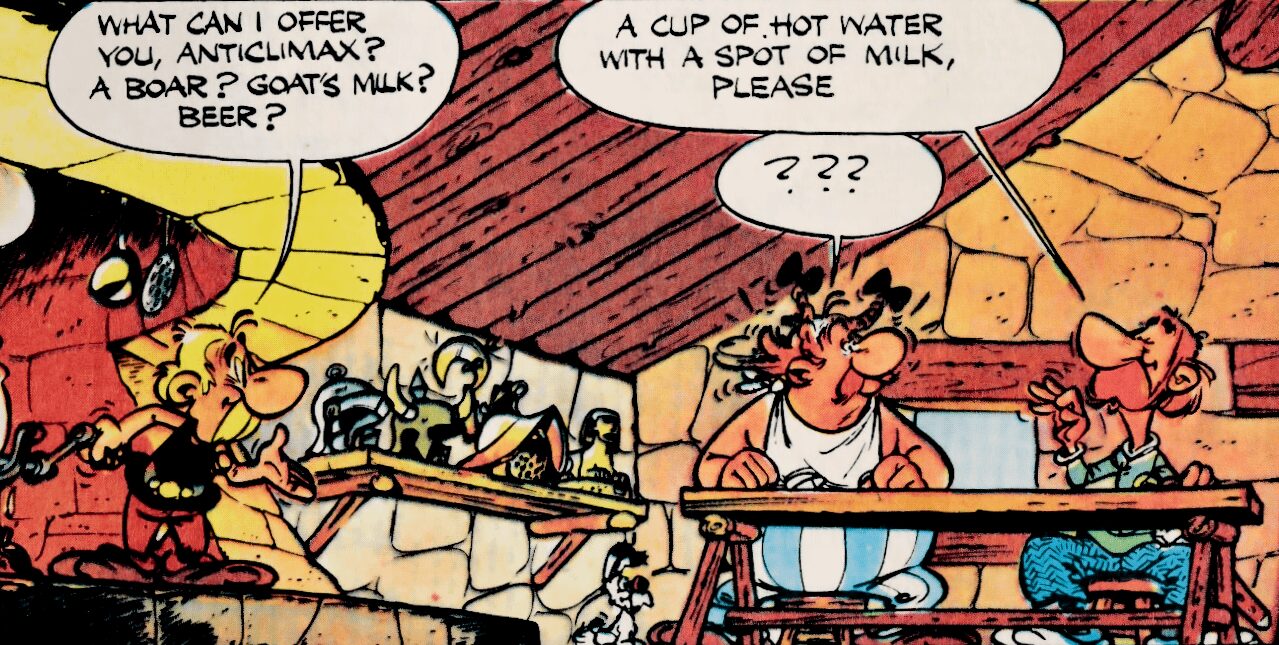
Goscinny’s satire extends to British culinary customs. Obelix’s disgust at boiled boar with mint sauce and the local fondness for warm beer provide recurring laughs. The climax of the story hinges on a clever twist: after the potion barrel is lost or destroyed, Asterix uses a handful of herbs from a Phoenician merchant to create a hot herbal infusion for the Britons. The villagers believe it grants them strength, and this is enough to make them win the battle. Later we learn that the herbs were … tea.
Inside Easter Eggs and Intertextual Humor
The album contains visual Easter eggs for attentive readers. One example is the trophy shelf in Asterix’s hut displaying souvenirs from previous adventures, rewarding longtime fans who followed the Pilote serialization and recognize objects from earlier stories.
Walter Melon is spotted as a defeated Roman legionair uttering his trademark phrase … hop!
From Page to Screen
Like other major Asterix stories such as Asterix and Cleopatra, Asterix in Britain lent itself naturally to cinema. The 1986 animated adaptation remains a fan favorite for its faithfulness and musical score, capturing much of the original’s humor. The 2012 live‑action film Asterix & Obelix: God Save Britannia reimagined elements of the British story while blending in aspects from other adventures, demonstrating the timeless appeal of the stiff upper lip, the indomitable Gauls, and cross‑channel comedy.


In 1965, readers of Pilote magazine followed an eagerly anticipated serialized adventure in issues 307 to 334 that would soon become one of the most memorable stories in the Asterix canon. When Asterix in Britain (Astérix chez les Bretons) was released as a standalone album in 1966, it solidified René Goscinny and Albert Uderzo’s reputation for sharp cultural satire and brilliant wordplay, using the Gauls’ journey across the Channel to playfully explore the quirks that divide—and connect—the French and the British.
A Family Affair in Kent
This eighth volume of the Asterix series opens with Julius Caesar’s successful—but puzzling—conquest of Britain, largely because the Britons stop fighting to drink hot water and refuse to fight on weekends. One last village in Cantium (modern Kent) still resists Roman rule. To seek help, a determined Briton named Anticlimax (Jolitorax in French) travels to Gaul to find his cousin Asterix, asking for help in procuring the Gauls’ legendary magic potion. Goscinny and Uderzo make a point of the family connection, giving the mission a personal emotional stake and propelling Asterix and Obelix into their cross‑channel odyssey.
Asterix and Obelix set out with a barrel of magic potion and a mix of confidence and cultural bewilderment. Their journey is filled with obstacles: dense fog, confusing local customs, Roman interference, and more than one lost barrel of potion.
Serialized Beginnings and Cultural Context
Originally published over several months in Pilote, the story’s serialization allowed readers at the time to savor each encounter and gag one installment at a time. The gradual build from Roman Britain’s foggy uncertainty to the climactic battle gave the narrative an episodic rhythm that translated well into the finished album.
Goscinny and Uderzo drew upon real historical and cultural markers to anchor their satire: the village chief Zebigbos (Mykingdomforanos in English) caricatures aspects of British leadership, and names like Cassivelaunus reference actual ancient figures, though the story remains unabashedly anachronistic and humorous.
Linguistic Acrobatics of Bell and Hockridge
The translation challenges in Asterix in Britain are legendary. Goscinny’s original French uses a deliberate mimicry of English syntax—placing adjectives before nouns and forcing literal translations of English expressions—to make the Britons’ French sound awkward and foreign. For example, grammatical inversions and literal phrases like “I beg your pardon” and “Isn’t it?” are used for comedic effect.
When Anthea Bell and Derek Hockridge created the English version, they faced the opposite problem: how to make the Britons sound peculiarly British in English. Rather than translate literally, they leaned into caricatures of upper‑class speech—“old fruit,” “jolly rum things,” and a distinctly “Oxfordian” tone—making the dialogue both humorous and culturally resonant. Memorable touches like rendering a bowler hat gag into fruit terminology showcase their linguistic creativity.
Beatlemania and Londinium Life
One of the most iconic sequences occurs in Londinium, where Asterix and Obelix encounter four young bards with shaggy “mop‑top” haircuts surrounded by adoring crowds—a clear homage to The Beatles and the global phenomenon of Beatlemania. This wink to contemporary pop culture cements the album’s blend of ancient setting and modern satire.
The heroes’ misadventures in Britain include getting lost amid row houses, dealing with fog and weather, and even witnessing a proto‑rugby match—all humorous riffs on British stereotypes and beloved local customs.
Cultural Satire and the Birth of Tea
Goscinny’s satire extends to British culinary customs. Obelix’s disgust at boiled boar with mint sauce and the local fondness for warm beer provide recurring laughs. The climax of the story hinges on a clever twist: after the potion barrel is lost or destroyed, Asterix uses a handful of herbs from a Phoenician merchant to create a hot herbal infusion for the Britons. The villagers believe it grants them strength, and this is enough to make them win the battle. Later we learn that the herbs were … tea.
Inside Easter Eggs and Intertextual Humor
The album contains visual Easter eggs for attentive readers. One example is the trophy shelf in Asterix’s hut displaying souvenirs from previous adventures, rewarding longtime fans who followed the Pilote serialization and recognize objects from earlier stories.
Walter Melon is spotted as a defeated Roman legionair uttering his trademark phrase … hop!
From Page to Screen
Like other major Asterix stories such as Asterix and Cleopatra, Asterix in Britain lent itself naturally to cinema. The 1986 animated adaptation remains a fan favorite for its faithfulness and musical score, capturing much of the original’s humor. The 2012 live‑action film Asterix & Obelix: God Save Britannia reimagined elements of the British story while blending in aspects from other adventures, demonstrating the timeless appeal of the stiff upper lip, the indomitable Gauls, and cross‑channel comedy.