By Toutatis! Before Asterix and Obelix set off to conquer hearts in over a hundred languages, their first international adventure began on the sunny shores of Portugal. Yes indeed—the Portuguese were the very first readers outside France to welcome our indomitable Gauls! It took them 41 adventures to finally end up in Portugal, which doesn’t seem quite fair.
1961: A historic landing
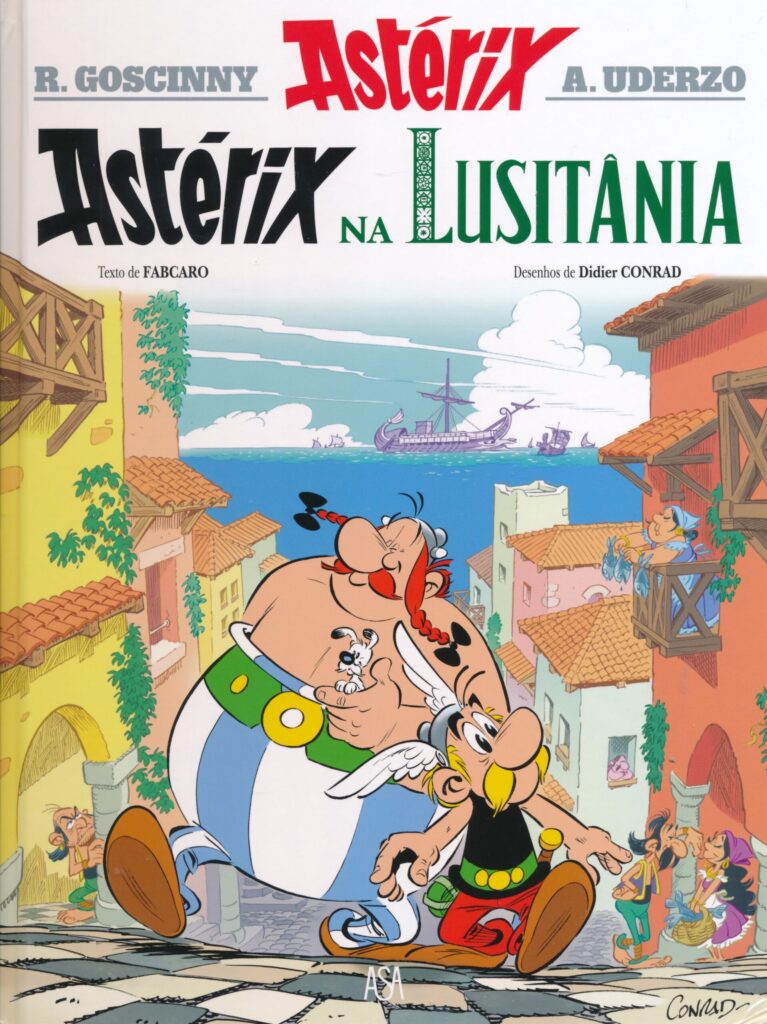
Barely eighteen months after their debut in Pilote, Asterix and his merry band embarked on their first overseas mission. On May 4, 1961, Foguetão magazine published the very first foreign translation of Asterix the Gaul, thanks to the foresight of editor Adolfo Simões Müller. Unfortunately, Foguetão didn’t have Obelix’s strength and folded after just three months. But as any Roman could tell you—you can’t keep a good Gaul down! Asterix reappeared in magazines like Cavaleiro Andante and Zorro, until the true breakthrough came in 1967.
The golden age of the albums
December 1967 marked the start of Asterix’s golden age in Portugal. Publishers Ibis and Bertrand released Asterix the Gaul and Asterix in Britain in full color—and the Portuguese public fell head over sandals. To sweeten the success, chocolate spread brand Tulicreme distributed 17 exclusive mini-albums as collectibles. Today, those tiny treasures are rarer than a Roman patrol that returns from the forest unflattened!
What’s in a name?
When Asterix returned in 2004 with updated translations, the Gaulish village gained a touch of Portuguese wit. While Asterix and Obelix kept their names (some things are sacred!), several villagers got new ones that perfectly captured their spirit:

- Dogmatix became Ideiafix (French Idéfix)– “fixed idea,” as stubborn as ever!
- Cacofonix, Assurancetourix in French, is called Cacofonix in Portuguese as well.
- Vitalstatistix, Abraracourcix in French, transformed into Matasétix, a chief with numbers to match his might.
- Geriatrix, Agecanonix in French, turned venerable as Decanonix, still chasing the young women of the village.
Viriato & Vercingetorix
What makes Portugal such fertile ground for Asterix’s adventures? The answer might lie in their own national hero, Viriato—the legendary shepherd-turned-warrior who led the Lusitanians against Rome. Like Vercingetorix, he was fearless, and loved to give the legions a good headache. Whether in Armorica or Lusitania, resistance, humor, and independence seem to speak the same language.
No wonder Asterix remains Portugal’s most beloved comic hero, with hundreds of thousands of albums sold. Caesar never managed a conquest quite like that!


By Toutatis! Before Asterix and Obelix set off to conquer hearts in over a hundred languages, their first international adventure began on the sunny shores of Portugal. Yes indeed—the Portuguese were the very first readers outside France to welcome our indomitable Gauls! It took them 41 adventures to finally end up in Portugal, which doesn’t seem quite fair.
1961: A historic landing
Barely eighteen months after their debut in Pilote, Asterix and his merry band embarked on their first overseas mission. On May 4, 1961, Foguetão magazine published the very first foreign translation of Asterix the Gaul, thanks to the foresight of editor Adolfo Simões Müller. Unfortunately, Foguetão didn’t have Obelix’s strength and folded after just three months. But as any Roman could tell you—you can’t keep a good Gaul down! Asterix reappeared in magazines like Cavaleiro Andante and Zorro, until the true breakthrough came in 1967.
The golden age of the albums
December 1967 marked the start of Asterix’s golden age in Portugal. Publishers Ibis and Bertrand released Asterix the Gaul and Asterix in Britain in full color—and the Portuguese public fell head over sandals. To sweeten the success, chocolate spread brand Tulicreme distributed 17 exclusive mini-albums as collectibles. Today, those tiny treasures are rarer than a Roman patrol that returns from the forest unflattened!
What’s in a name?
When Asterix returned in 2004 with updated translations, the Gaulish village gained a touch of Portuguese wit. While Asterix and Obelix kept their names (some things are sacred!), several villagers got new ones that perfectly captured their spirit:
- Dogmatix became Ideiafix (French Idéfix)– “fixed idea,” as stubborn as ever!
- Cacofonix, Assurancetourix in French, is called Cacofonix in Portuguese as well.
- Vitalstatistix, Abraracourcix in French, transformed into Matasétix, a chief with numbers to match his might.
- Geriatrix, Agecanonix in French, turned venerable as Decanonix, still chasing the young women of the village.
Viriato & Vercingetorix
What makes Portugal such fertile ground for Asterix’s adventures? The answer might lie in their own national hero, Viriato—the legendary shepherd-turned-warrior who led the Lusitanians against Rome. Like Vercingetorix, he was fearless, and loved to give the legions a good headache. Whether in Armorica or Lusitania, resistance, humor, and independence seem to speak the same language.
No wonder Asterix remains Portugal’s most beloved comic hero, with hundreds of thousands of albums sold. Caesar never managed a conquest quite like that!