Following the expansive, outward-looking narrative of Asterix and Cleopatra, the seventh album in the series, Asterix and the Big Fight (Le Combat des chefs), brought the focus decisively back to Gaulish soil. Published as a standalone album in 1966, it occupies a distinctive place in the early development of the series. Rather than relying on travel, exotic settings, or large-scale spectacle, the story explores what happens when the internal structures that sustain the Gaulish village cease to function.
The result is an album in which disorder arises not from external conquest, but from the suspension of memory, authority, and shared custom. In doing so, The Big Fight combines topical parody with longer historical resonances, while also functioning as one of the most tightly constructed narratives of the early Asterix period.
A Presidential Parody in the Pages of Pilote
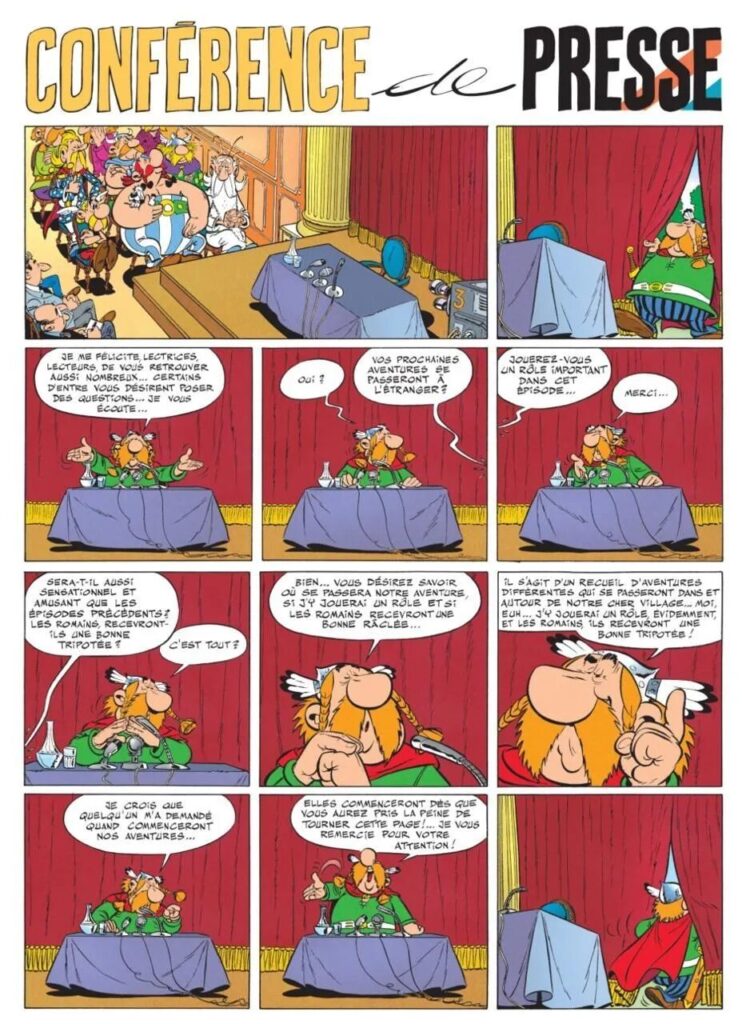
Before the story itself began, René Goscinny and Albert Uderzo drew attention to the forthcoming album through an unusual promotional page published in Pilote. In issue #260, dated 15 October 1964, readers were presented with a full-page illustration entitled “The Press Conference.”
The image depicts Chief Vitalstatistix standing behind a lectern surrounded by microphones, addressing an unseen audience. The staging closely mirrors the televised press conferences held by General Charles de Gaulle, then President of France, and would have been immediately recognizable to contemporary readers. As such, the illustration situates the forthcoming story within a visual and cultural framework drawn from modern political life, even before a single page of the narrative had appeared.

This introductory parody encouraged political readings of the album. Both at the time and in later commentary, the story has often been discussed in relation to the political climate preceding the 1965 French presidential elections. Some readers have also noted parallels between the ritualized Gaulish contest for leadership and modern electoral mechanisms such as the second round of voting, or ballottage. While these connections are not made explicit within the narrative itself, the promotional context clearly invited such associations.
Historical Memory and the Theme of Collaboration
In later interviews and recollections, Albert Uderzo emphasized that the album’s underlying inspiration should not be understood solely in terms of contemporary politics. Instead, he pointed to the influence of historical memory, particularly the experience of the Second World War and the moral ambiguities associated with collaboration during the Occupation.
Viewed in this light, Asterix and the Big Fight operates as a historical transposition rather than a direct allegory. The Roman occupation of Gaul provides a framework in which questions of accommodation, loyalty, and legitimacy can be explored at a distance, without reference to specific modern events. The tension arises not from open violence, but from the willingness of certain characters to align themselves with power in exchange for security or advantage.
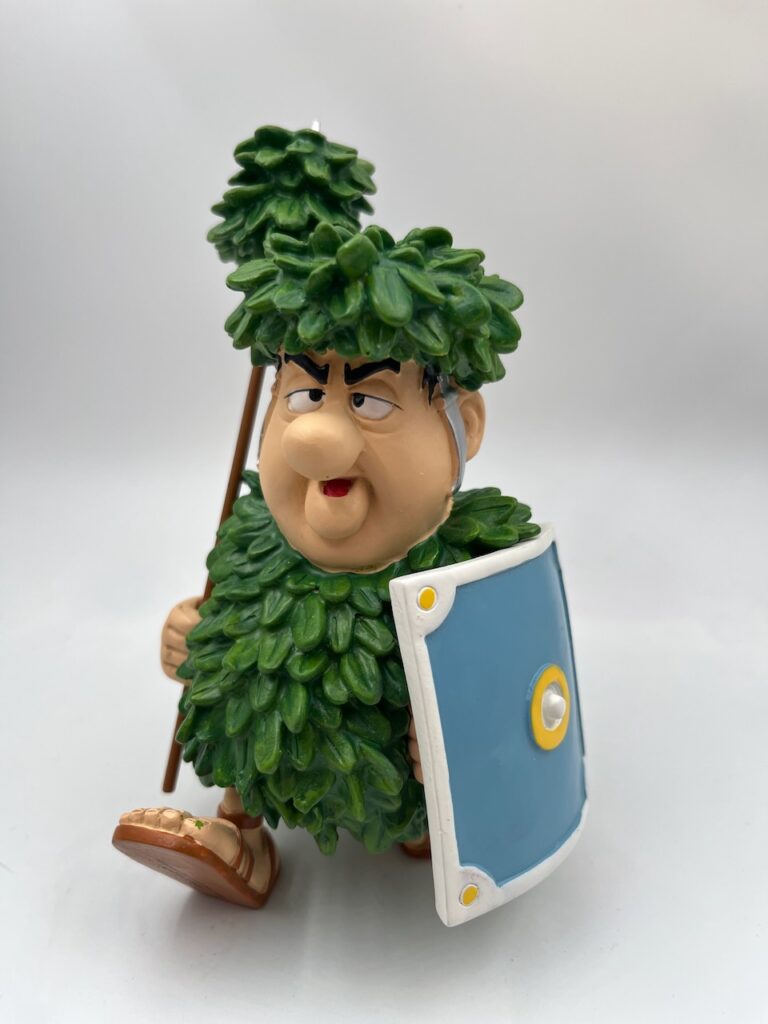
This theme is embodied most clearly by Cassius Ceramix (Aplusbégalix), a Gallo-Roman chief who has embraced Roman customs, language, and material culture. His residence, filled with Roman-style furnishings and “modern” comforts, visually distinguishes him from the other chiefs and underscores his rejection of traditional Gaulish identity. Through this character, the album presents collaboration as a gradual process of cultural and political accommodation rather than an act of overt betrayal.
Serialization and the Breakdown of the Village
The story itself was serialized weekly in Pilote, beginning with issue #261 on 22 October 1964 and concluding in issue #302 in 1965. This extended publication period allowed the narrative to unfold slowly, with the consequences of each development accumulating over time.
The central crisis is triggered when Getafix is struck on the head by a menhir thrown by Obelix, causing him to lose both his memory and his reason. With the druid incapacitated for most of the story, the village is deprived of the one figure capable of producing the magic potion on which its collective strength depends. Unlike many earlier adventures, this loss is not quickly reversed, and the village is forced to confront its vulnerability directly.
Several notable episodes emerge from this situation:
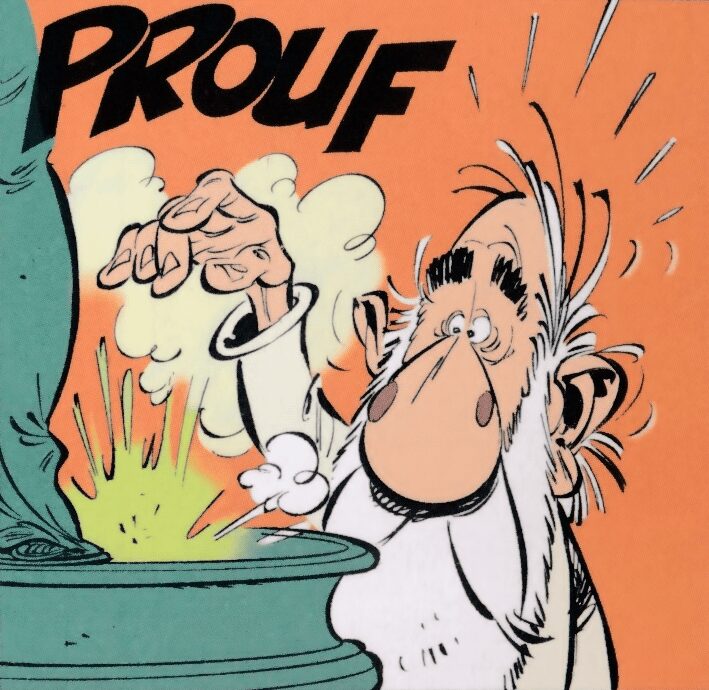
- The Roman legionary Plutoqueprévus drinks one of Getafix’s unstable experimental potions and becomes buoyant, floating helplessly into the sky. This episode marks the first appearance of a Roman soldier rendered literally airborne by potion mishaps and highlights the dangers of power divorced from knowledge.
- In an attempt to restore Getafix’s sanity, the villagers summon Amnésix (Psychoanalytix in English translations), a druid whose methods parody contemporary psychoanalytic practices. His forest “consulting room,” emphasis on diagnosis, and abstract theorizing contrast sharply with the practical role traditionally played by druids in the series. Ultimately, Amnésix suffers the same fate as Getafix, leaving the village without guidance.
- With the village thus weakened, the ritual “Big Fight” between chiefs becomes unavoidable. According to Gaulish custom, a victorious challenger gains control over the defeated chief’s village. The impending duel between Vitalstatistix and Cassius Ceramix therefore represents not merely a personal contest, but a legally sanctioned transfer of authority.
Through these developments, the album depicts a community whose collapse is driven as much by its own traditions and assumptions as by Roman intervention.
Publication and Reception
When Asterix and the Big Fight appeared as a standalone album in 1966, the Asterix series was already experiencing rapid growth in readership. The earliest Asterix album is generally reported to have had an initial print run of around 6,000 copies, a figure that reflects the modest expectations surrounding the series in its early years.
By contrast, later albums were released in much larger numbers. The Big Fight is commonly cited as having debuted with an initial print run in the hundreds of thousands, illustrating the extent to which Asterix had become an established publishing success by the mid-1960s. This expansion coincided with a noticeable tightening of narrative structure and an increasing confidence in visual storytelling, as Goscinny and Uderzo explored more complex themes within the familiar comedic framework.
Adaptations and Continuing Influence
The central premise of Asterix and the Big Fight has proven particularly adaptable to other media. In 1989, it formed the basis of the animated feature Asterix and the Big Fight (Le Coup du Menhir in French), which combined the amnesia storyline with elements from Asterix and the Soothsayer.

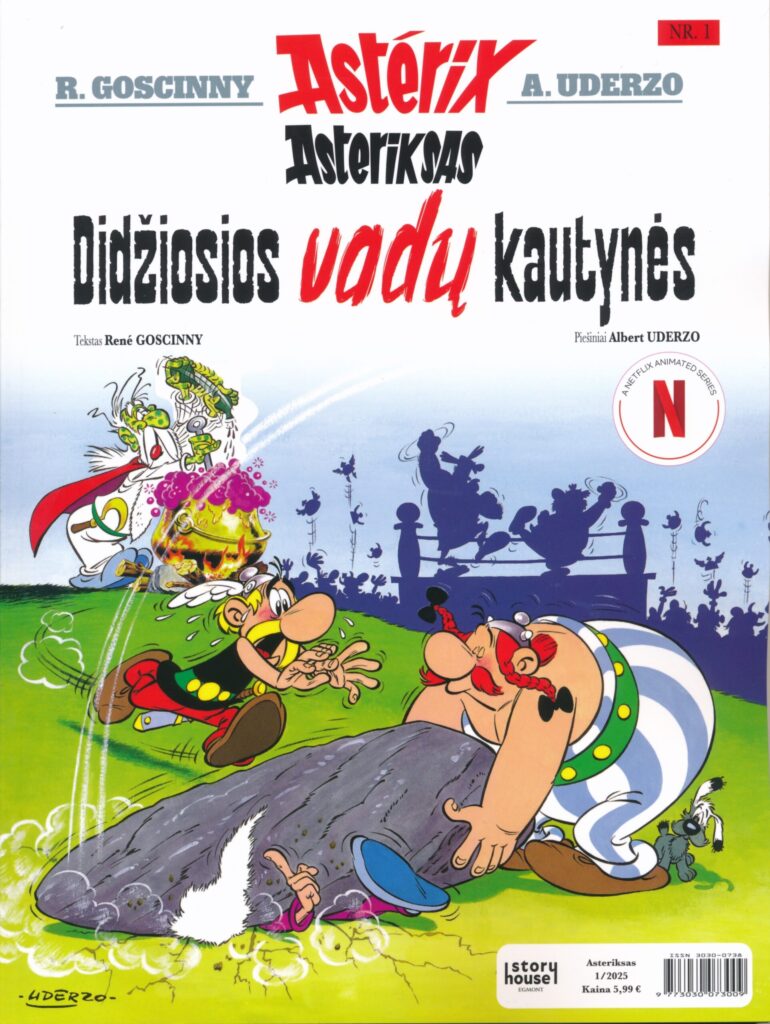
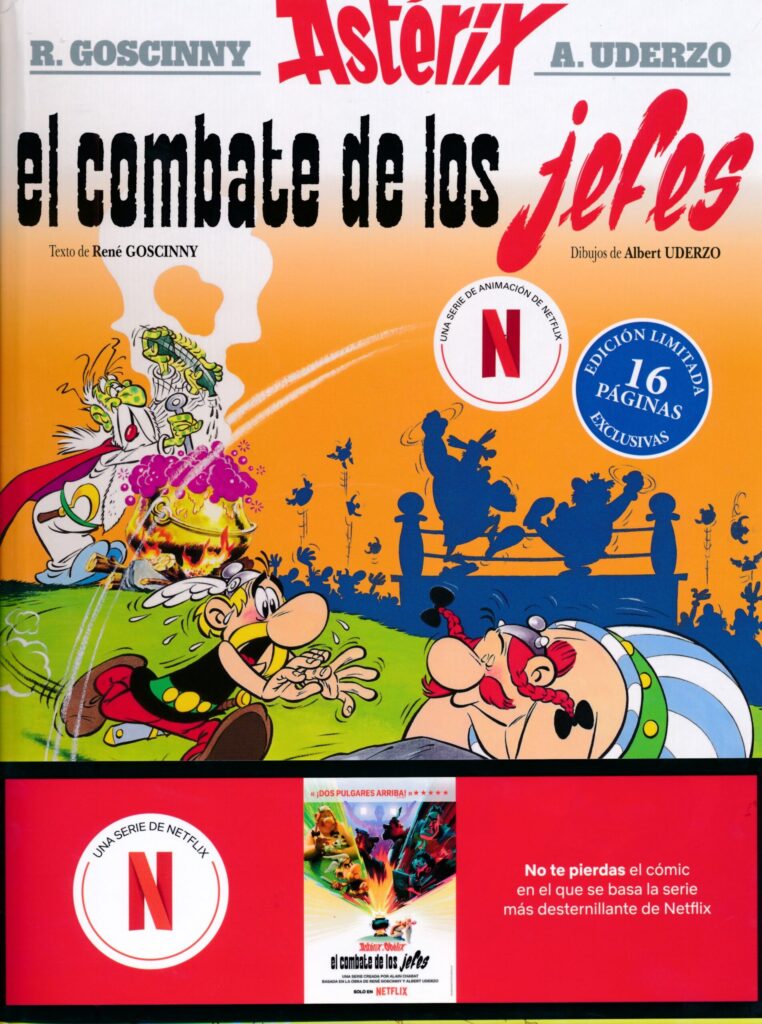
More recently, the album served as a major point of reference for the 2025 animated Netflix series directed by Alain Chabat. This adaptation returned to the idea of a Gaulish village deprived of its stabilizing institutions, presenting the struggle for leadership and legitimacy in a format suited to serialized animation. The continued reuse of this material reflects the album’s importance within the broader Asterix canon, particularly as a study of what happens when strength, memory, and authority no longer align.
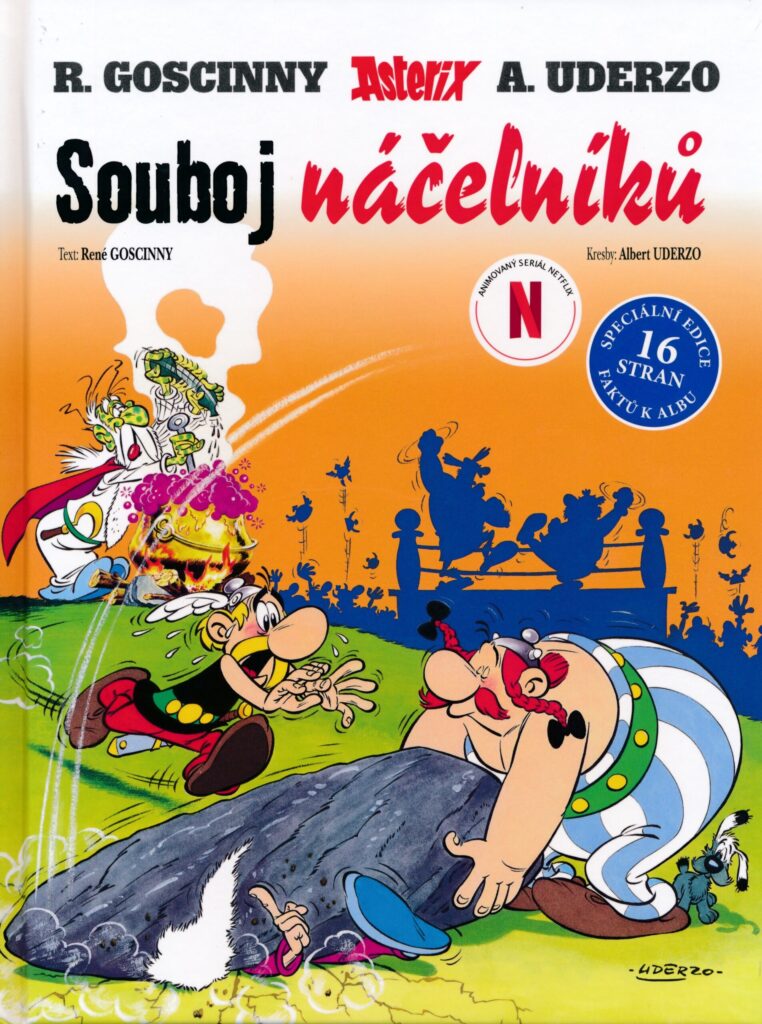
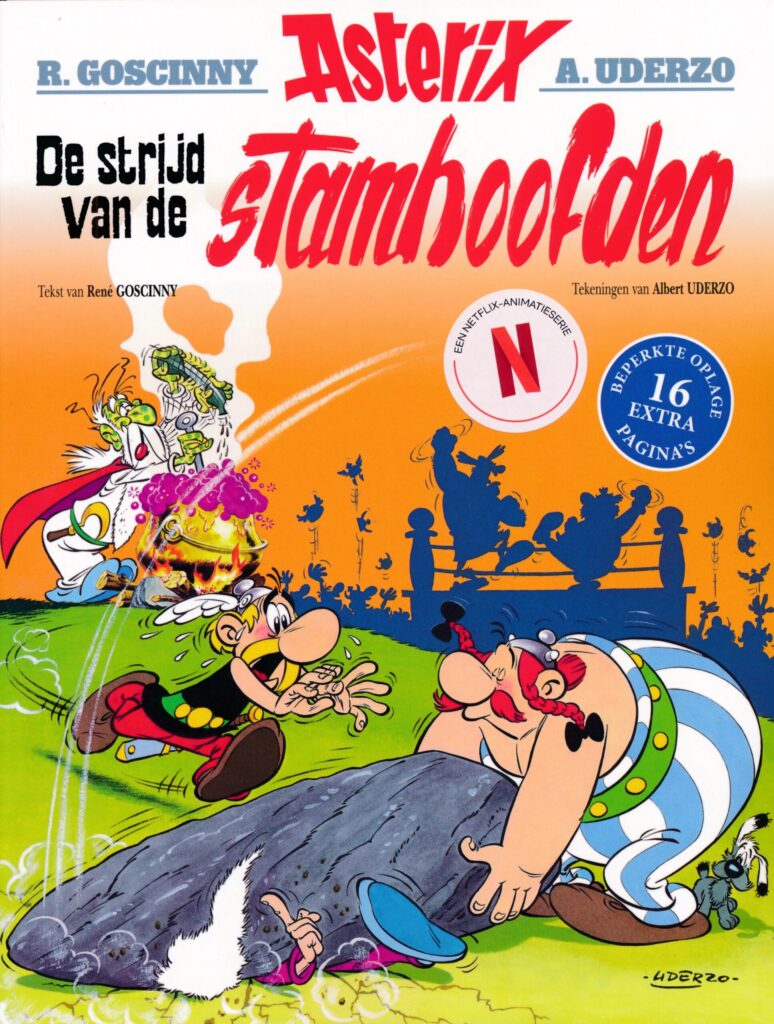
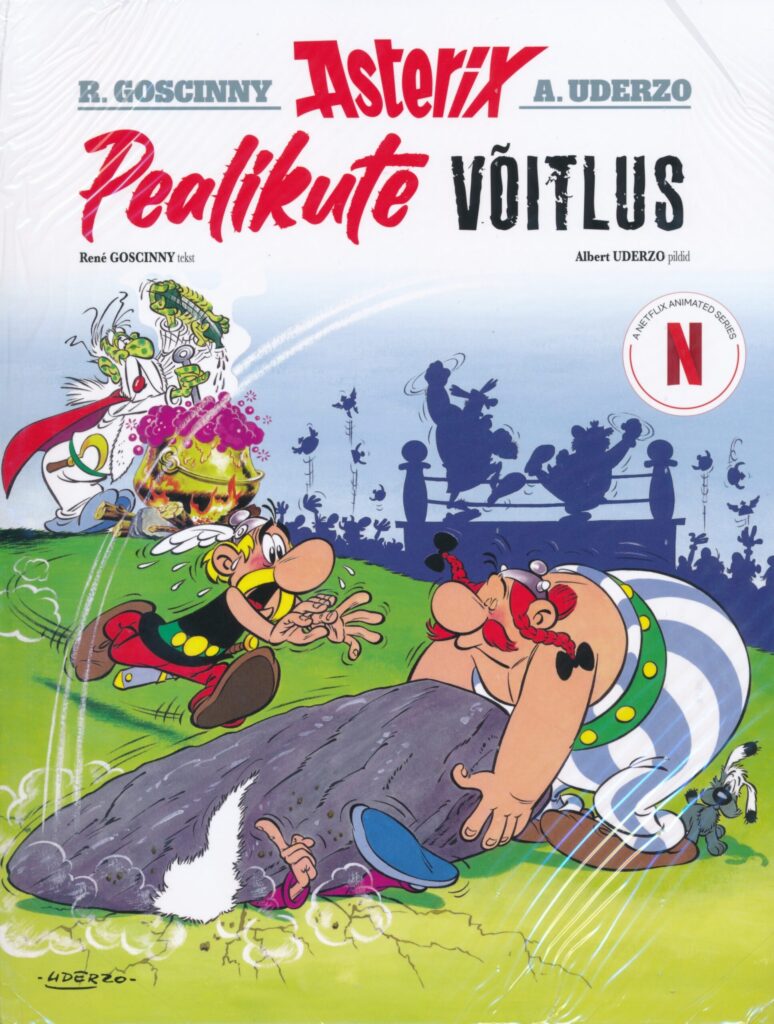
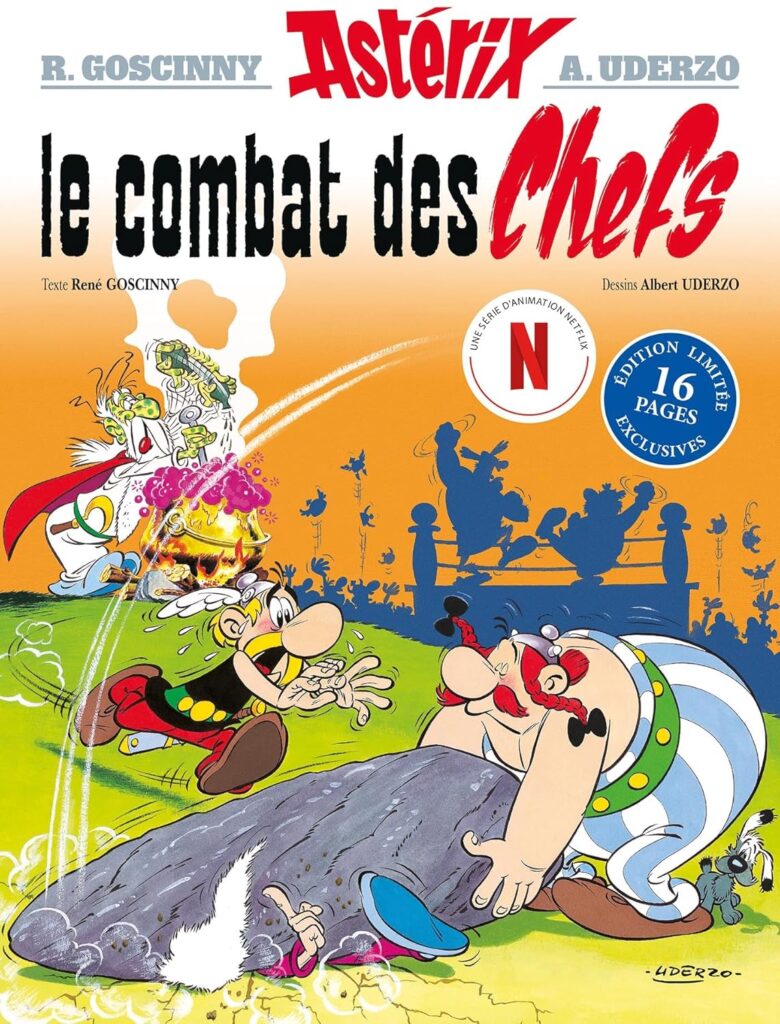
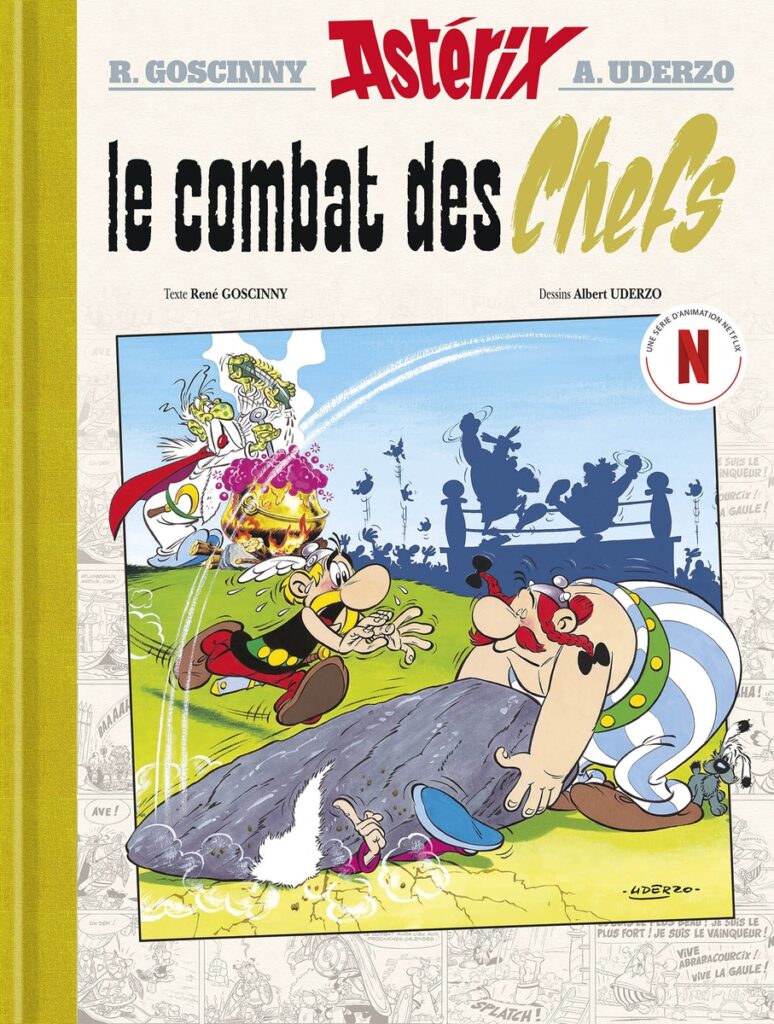
Special Netflix edition of the album were published in many translations.




Following the expansive, outward-looking narrative of Asterix and Cleopatra, the seventh album in the series, Asterix and the Big Fight (Le Combat des chefs), brought the focus decisively back to Gaulish soil. Published as a standalone album in 1966, it occupies a distinctive place in the early development of the series. Rather than relying on travel, exotic settings, or large-scale spectacle, the story explores what happens when the internal structures that sustain the Gaulish village cease to function.
The result is an album in which disorder arises not from external conquest, but from the suspension of memory, authority, and shared custom. In doing so, The Big Fight combines topical parody with longer historical resonances, while also functioning as one of the most tightly constructed narratives of the early Asterix period.
A Presidential Parody in the Pages of Pilote
Before the story itself began, René Goscinny and Albert Uderzo drew attention to the forthcoming album through an unusual promotional page published in Pilote. In issue #260, dated 15 October 1964, readers were presented with a full-page illustration entitled “The Press Conference.”
The image depicts Chief Vitalstatistix standing behind a lectern surrounded by microphones, addressing an unseen audience. The staging closely mirrors the televised press conferences held by General Charles de Gaulle, then President of France, and would have been immediately recognizable to contemporary readers. As such, the illustration situates the forthcoming story within a visual and cultural framework drawn from modern political life, even before a single page of the narrative had appeared.
This introductory parody encouraged political readings of the album. Both at the time and in later commentary, the story has often been discussed in relation to the political climate preceding the 1965 French presidential elections. Some readers have also noted parallels between the ritualized Gaulish contest for leadership and modern electoral mechanisms such as the second round of voting, or ballottage. While these connections are not made explicit within the narrative itself, the promotional context clearly invited such associations.
Historical Memory and the Theme of Collaboration
In later interviews and recollections, Albert Uderzo emphasized that the album’s underlying inspiration should not be understood solely in terms of contemporary politics. Instead, he pointed to the influence of historical memory, particularly the experience of the Second World War and the moral ambiguities associated with collaboration during the Occupation.
Viewed in this light, Asterix and the Big Fight operates as a historical transposition rather than a direct allegory. The Roman occupation of Gaul provides a framework in which questions of accommodation, loyalty, and legitimacy can be explored at a distance, without reference to specific modern events. The tension arises not from open violence, but from the willingness of certain characters to align themselves with power in exchange for security or advantage.
This theme is embodied most clearly by Cassius Ceramix (Aplusbégalix), a Gallo-Roman chief who has embraced Roman customs, language, and material culture. His residence, filled with Roman-style furnishings and “modern” comforts, visually distinguishes him from the other chiefs and underscores his rejection of traditional Gaulish identity. Through this character, the album presents collaboration as a gradual process of cultural and political accommodation rather than an act of overt betrayal.
Serialization and the Breakdown of the Village
The story itself was serialized weekly in Pilote, beginning with issue #261 on 22 October 1964 and concluding in issue #302 in 1965. This extended publication period allowed the narrative to unfold slowly, with the consequences of each development accumulating over time.
The central crisis is triggered when Getafix is struck on the head by a menhir thrown by Obelix, causing him to lose both his memory and his reason. With the druid incapacitated for most of the story, the village is deprived of the one figure capable of producing the magic potion on which its collective strength depends. Unlike many earlier adventures, this loss is not quickly reversed, and the village is forced to confront its vulnerability directly.
Several notable episodes emerge from this situation:
- The Roman legionary Plutoqueprévus drinks one of Getafix’s unstable experimental potions and becomes buoyant, floating helplessly into the sky. This episode marks the first appearance of a Roman soldier rendered literally airborne by potion mishaps and highlights the dangers of power divorced from knowledge.
- In an attempt to restore Getafix’s sanity, the villagers summon Amnésix (Psychoanalytix in English translations), a druid whose methods parody contemporary psychoanalytic practices. His forest “consulting room,” emphasis on diagnosis, and abstract theorizing contrast sharply with the practical role traditionally played by druids in the series. Ultimately, Amnésix suffers the same fate as Getafix, leaving the village without guidance.
- With the village thus weakened, the ritual “Big Fight” between chiefs becomes unavoidable. According to Gaulish custom, a victorious challenger gains control over the defeated chief’s village. The impending duel between Vitalstatistix and Cassius Ceramix therefore represents not merely a personal contest, but a legally sanctioned transfer of authority.
Through these developments, the album depicts a community whose collapse is driven as much by its own traditions and assumptions as by Roman intervention.
Publication and Reception
When Asterix and the Big Fight appeared as a standalone album in 1966, the Asterix series was already experiencing rapid growth in readership. The earliest Asterix album is generally reported to have had an initial print run of around 6,000 copies, a figure that reflects the modest expectations surrounding the series in its early years.
By contrast, later albums were released in much larger numbers. The Big Fight is commonly cited as having debuted with an initial print run in the hundreds of thousands, illustrating the extent to which Asterix had become an established publishing success by the mid-1960s. This expansion coincided with a noticeable tightening of narrative structure and an increasing confidence in visual storytelling, as Goscinny and Uderzo explored more complex themes within the familiar comedic framework.
Adaptations and Continuing Influence
The central premise of Asterix and the Big Fight has proven particularly adaptable to other media. In 1989, it formed the basis of the animated feature Asterix and the Big Fight (Le Coup du Menhir in French), which combined the amnesia storyline with elements from Asterix and the Soothsayer.
More recently, the album served as a major point of reference for the 2025 animated Netflix series directed by Alain Chabat. This adaptation returned to the idea of a Gaulish village deprived of its stabilizing institutions, presenting the struggle for leadership and legitimacy in a format suited to serialized animation. The continued reuse of this material reflects the album’s importance within the broader Asterix canon, particularly as a study of what happens when strength, memory, and authority no longer align.
Special Netflix edition of the album were published in many translations.