Jaap Toorenaar is a classicist, teacher, and above all a close reader of Asterix. Born and raised in Kapelle-Biezelinge in the Dutch province of Zeeland, he studied Classical Languages in Leiden and later in Würzburg, Germany. From 1985 onward he taught Latin and Greek at the Stedelijk Gymnasium in Leiden, where he remained until his retirement in July this year. His love of antiquity, combined with a sharp eye for language and detail, forms the foundation of his book Asterix en de Vrolijke Wetenschap (Asterix and the Joyful Science), the fifth edition of which will be published in early January.
Remarkably, Toorenaar did not consciously experience the great Asterix boom of the 1960s as a child. His comic reading at the time was largely limited to Donald Duck. It was only during his student years in Germany that Asterix truly entered his life. Friends persuaded him to buy his first album, Asterix in Britain. While travelling by bus with a Bach choir on tour in Italy, he realised he had forgotten to bring a book. At every petrol station another Asterix album was added, and within a few months he owned the entire series.
Favorite album?
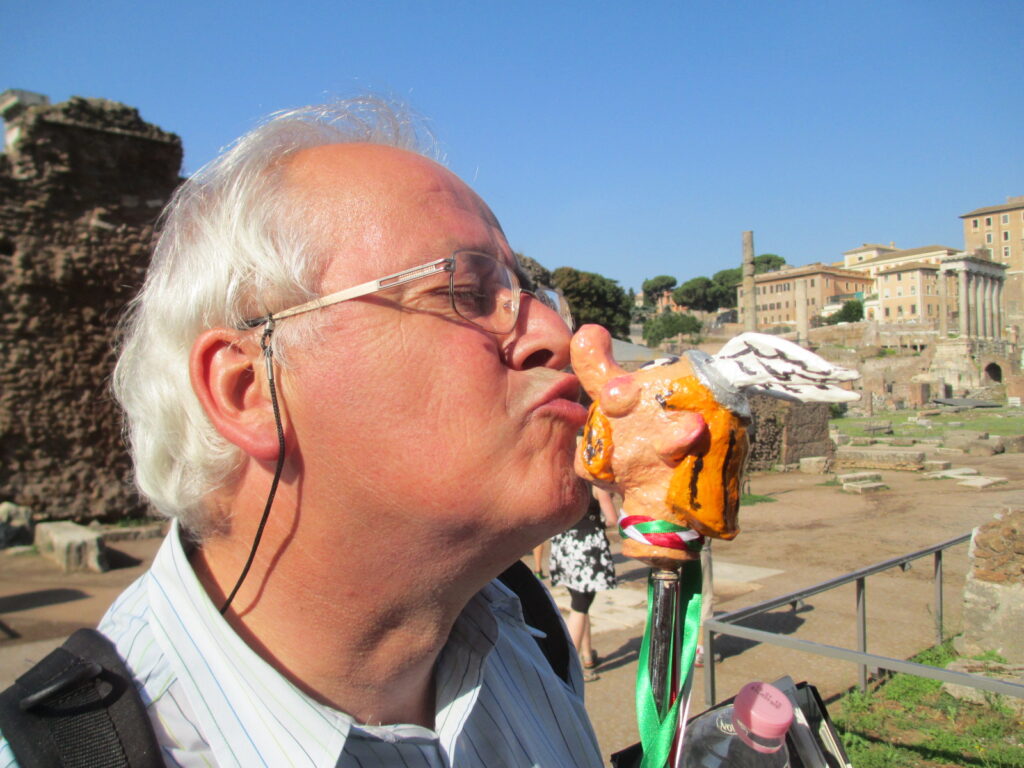
Toorenaar finds it difficult to single out one favourite story. Among his personal favourites are Asterix in Britain, Asterix the Legionary, The Chieftain’s Shield, The Soothsayer, and Asterix in Corsica. What unites these albums for him are their strong storylines and the sparkling, multilayered humour of René Goscinny.
Why write a book?
The origin of his book lies in his work as a teacher. As a Latin teacher, Toorenaar began writing short pieces for the school magazine about what was historically or linguistically accurate—or inaccurate—in the Asterix stories set in 50 BC. He soon realised that such analyses had to start from the French original, because not every joke can be translated directly into Dutch. After about twenty articles, he increasingly heard the suggestion that he should turn them into a book. Publisher Arboris was kind enough to publish it in 2010.
Since then, the book has continued to grow. Early January will see the publication of the fifth edition. Before long it was issued in colour, and each new edition became longer than the previous one, simply because new Asterix adventures kept appearing. The fifth edition also discusses Asterix in Lusitania, adventure number 41, which was released at the end of October 2025.
Research
When working on a new album, Toorenaar follows a fairly fixed routine. On the day of publication—23 October, including in the Netherlands—he starts reading with the website comedix.de open on his laptop, where German readers share discoveries and analyses. Within a few days he received the French deluxe edition, containing the original ink drawings as well as several chapters explaining hidden secrets. He was also able to ask questions of Margreet van Muijlwijk, the translator of the Dutch edition, who responded very quickly and, in Toorenaar’s words, understands French far better than he does. Hans van den Boom of publisher Arboris was likewise able to point out various relevant details.
New edition
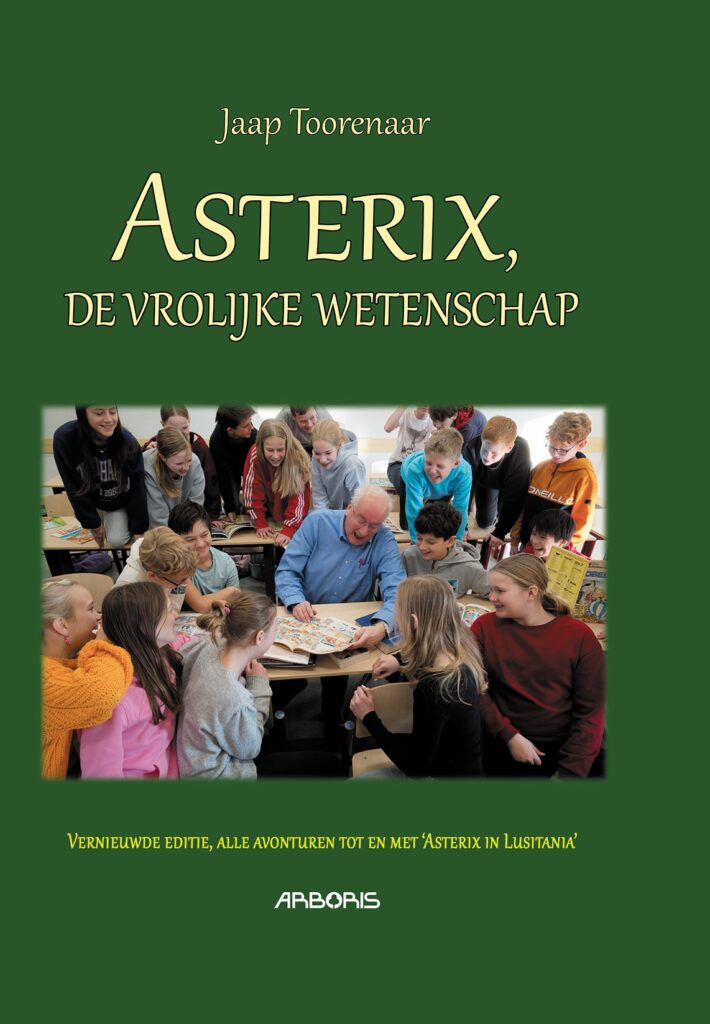
The fifth edition includes an additional short chapter on Asterix in Afrikaans, a language Toorenaar greatly enjoys. At one point he rewrote his book entirely in German, but for obscure reasons that publication turned into a failure. That project has therefore been abandoned.
Before approaching Arboris, Toorenaar had gone to Les Éditions Albert-René (EAR) in Paris to present his writings. Ultimately, they decided not to publish the book themselves and also forbade Arboris from using images from the comics. At first this was deeply disappointing after so much work, but when Arboris asked whether the book could also function without direct illustrations, Toorenaar answered with an unequivocal “yes.” His book is a close reading, and readers will already have the original comics open alongside it. Photographs of the real-life figures on whom certain caricatures are based then form a useful addition.
The reason EAR gave for refusing permission was brief: “we don’t give permission for a thesis book,” implying something akin to an academic dissertation. Why other books were allowed to use visual material remains unclear to Toorenaar. As he wryly suggests, it may have had something to do with the importance of personal connections.
Main theme
An important theme in his book is the recolouring and retranslation of the albums. From 2003 onwards, the oldest strips were recoloured, partly because Uderzo was colour-blind and modern computer techniques made better results possible. In the Netherlands, it was also decided to modernise the translations. The reasoning was that no language variety changes as quickly as that of teenagers. There is certainly something to be said for this approach. In his book, Toorenaar often compares the first and second Dutch translations, with the latter frequently emerging as the better one. At the same time, it hurt many fans—and himself—that familiar names such as Petibonum, Babaorum, Abraracourcix and Assurancetourix were changed to Grootmocum, Adfundum, Heroïx and Kakofonix. As an example of an improved joke, he points to a scene in Asterix and Cleopatra: in the revised translation, a line is rendered in a six-foot iamb, restoring a classical wordplay that was completely lost in the first translation.
Dogmatix not included?
Toorenaar is critical of spin-off productions. In addition to the regular albums, there have been films and, more recently, the Dogmatix adventures. He finds these all more superficial than the main Asterix albums and notes that they contain far fewer hidden jokes.
The presentation of the fifth edition of Asterix and the Joyful Science will take place on Tuesday 13 January at the Stedelijk Gymnasium in Leiden. There is also a possibility of a second presentation during the spring break at the end of February, at the National Museum of Antiquities in Leiden.


Jaap Toorenaar is a classicist, teacher, and above all a close reader of Asterix. Born and raised in Kapelle-Biezelinge in the Dutch province of Zeeland, he studied Classical Languages in Leiden and later in Würzburg, Germany. From 1985 onward he taught Latin and Greek at the Stedelijk Gymnasium in Leiden, where he remained until his retirement in July this year. His love of antiquity, combined with a sharp eye for language and detail, forms the foundation of his book Asterix en de Vrolijke Wetenschap (Asterix and the Joyful Science), the fifth edition of which will be published in early January.
Remarkably, Toorenaar did not consciously experience the great Asterix boom of the 1960s as a child. His comic reading at the time was largely limited to Donald Duck. It was only during his student years in Germany that Asterix truly entered his life. Friends persuaded him to buy his first album, Asterix in Britain. While travelling by bus with a Bach choir on tour in Italy, he realised he had forgotten to bring a book. At every petrol station another Asterix album was added, and within a few months he owned the entire series.
Favorite album?
Toorenaar finds it difficult to single out one favourite story. Among his personal favourites are Asterix in Britain, Asterix the Legionary, The Chieftain’s Shield, The Soothsayer, and Asterix in Corsica. What unites these albums for him are their strong storylines and the sparkling, multilayered humour of René Goscinny.
Why write a book?
The origin of his book lies in his work as a teacher. As a Latin teacher, Toorenaar began writing short pieces for the school magazine about what was historically or linguistically accurate—or inaccurate—in the Asterix stories set in 50 BC. He soon realised that such analyses had to start from the French original, because not every joke can be translated directly into Dutch. After about twenty articles, he increasingly heard the suggestion that he should turn them into a book. Publisher Arboris was kind enough to publish it in 2010.
Since then, the book has continued to grow. Early January will see the publication of the fifth edition. Before long it was issued in colour, and each new edition became longer than the previous one, simply because new Asterix adventures kept appearing. The fifth edition also discusses Asterix in Lusitania, adventure number 41, which was released at the end of October 2025.
Research
When working on a new album, Toorenaar follows a fairly fixed routine. On the day of publication—23 October, including in the Netherlands—he starts reading with the website comedix.de open on his laptop, where German readers share discoveries and analyses. Within a few days he received the French deluxe edition, containing the original ink drawings as well as several chapters explaining hidden secrets. He was also able to ask questions of Margreet van Muijlwijk, the translator of the Dutch edition, who responded very quickly and, in Toorenaar’s words, understands French far better than he does. Hans van den Boom of publisher Arboris was likewise able to point out various relevant details.
New edition
The fifth edition includes an additional short chapter on Asterix in Afrikaans, a language Toorenaar greatly enjoys. At one point he rewrote his book entirely in German, but for obscure reasons that publication turned into a failure. That project has therefore been abandoned.
Before approaching Arboris, Toorenaar had gone to Les Éditions Albert-René (EAR) in Paris to present his writings. Ultimately, they decided not to publish the book themselves and also forbade Arboris from using images from the comics. At first this was deeply disappointing after so much work, but when Arboris asked whether the book could also function without direct illustrations, Toorenaar answered with an unequivocal “yes.” His book is a close reading, and readers will already have the original comics open alongside it. Photographs of the real-life figures on whom certain caricatures are based then form a useful addition.
The reason EAR gave for refusing permission was brief: “we don’t give permission for a thesis book,” implying something akin to an academic dissertation. Why other books were allowed to use visual material remains unclear to Toorenaar. As he wryly suggests, it may have had something to do with the importance of personal connections.
Main theme
An important theme in his book is the recolouring and retranslation of the albums. From 2003 onwards, the oldest strips were recoloured, partly because Uderzo was colour-blind and modern computer techniques made better results possible. In the Netherlands, it was also decided to modernise the translations. The reasoning was that no language variety changes as quickly as that of teenagers. There is certainly something to be said for this approach. In his book, Toorenaar often compares the first and second Dutch translations, with the latter frequently emerging as the better one. At the same time, it hurt many fans—and himself—that familiar names such as Petibonum, Babaorum, Abraracourcix and Assurancetourix were changed to Grootmocum, Adfundum, Heroïx and Kakofonix. As an example of an improved joke, he points to a scene in Asterix and Cleopatra: in the revised translation, a line is rendered in a six-foot iamb, restoring a classical wordplay that was completely lost in the first translation.
Dogmatix not included?
Toorenaar is critical of spin-off productions. In addition to the regular albums, there have been films and, more recently, the Dogmatix adventures. He finds these all more superficial than the main Asterix albums and notes that they contain far fewer hidden jokes.
The presentation of the fifth edition of Asterix and the Joyful Science will take place on Tuesday 13 January at the Stedelijk Gymnasium in Leiden. There is also a possibility of a second presentation during the spring break at the end of February, at the National Museum of Antiquities in Leiden.