First published in 1970, La Zizanie—known in English as Asterix and the Roman Agent—is one of the most language-driven albums in the series. Written by René Goscinny and illustrated by Albert Uderzo, the story introduces a different kind of conflict: not brute force, but psychological manipulation.
For readers unfamiliar with French, much of the album’s humor is not immediately visible. The original text is built on idioms, double meanings, and cultural references that are often difficult to reproduce in translation. What follows is a breakdown of how the French version works, how the English adaptation handles these elements, and where additional context helps clarify the jokes.
The Title: La Zizanie
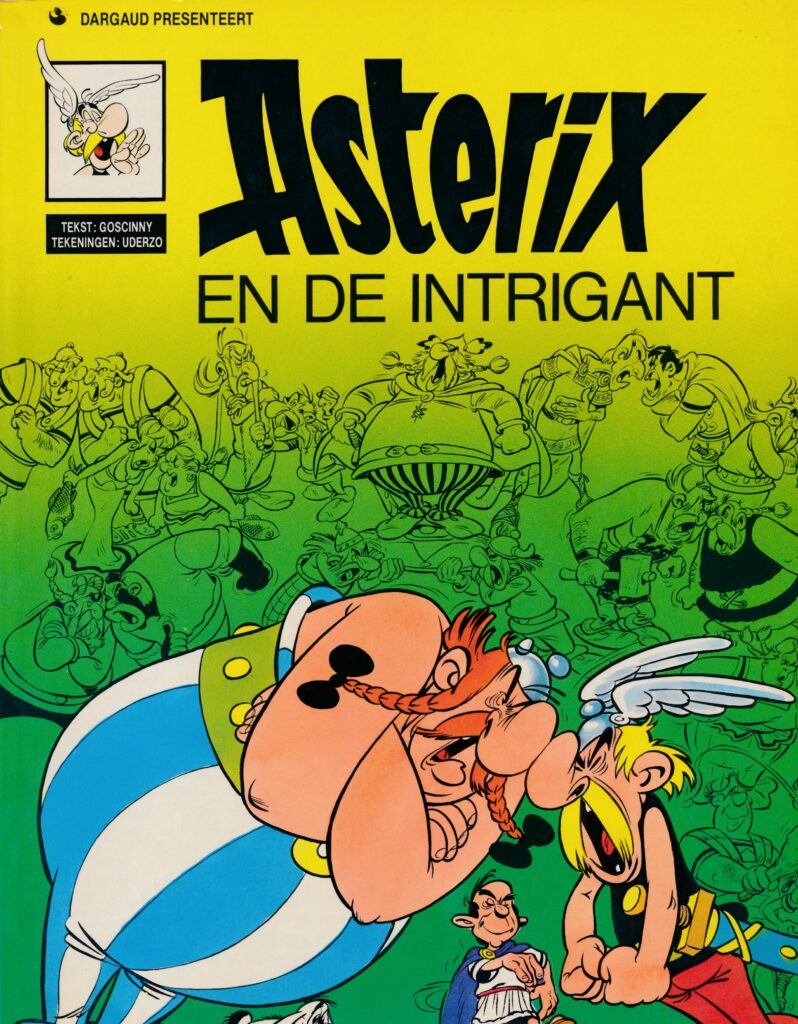
The French title La Zizanie means discord or strife. The word comes from the Greek zizania, referring to a weed that grows among wheat. In French, the expression semer la zizanie means to sow discord between people, which directly reflects the plot.
The English title, Asterix and the Roman Agent, shifts the emphasis toward the character causing the disruption rather than the concept itself. The Dutch title, De Intrigant (think: intrigue), follows the same approach.
The title also carried a personal dimension for Goscinny. In the aftermath of the social unrest of May 1968 protests in France, he faced internal criticism at Pilote magazine, where younger contributors accused him of siding with management. This episode, which Goscinny himself described as a kind of “trial,” informed the album’s focus on division, suspicion, and rumor.
With fake news being rampant in modern times, this album could have been written in 2026.
The Story: Psychological Warfare
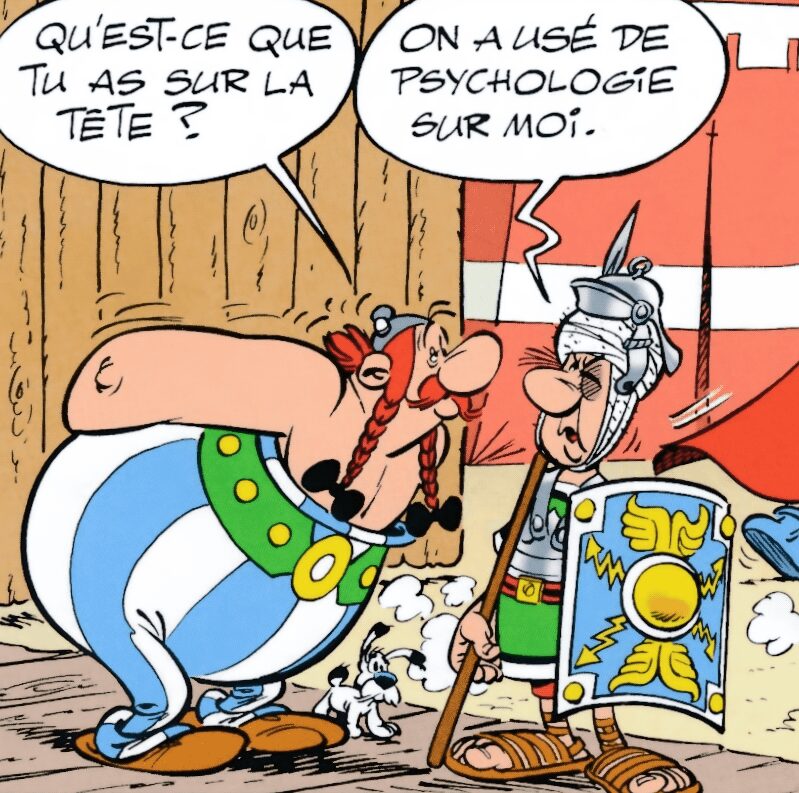
In this album, Julius Caesar sends an agent, Tullius Détritus, into the village to divide the Gauls from within. Instead of direct confrontation, the story focuses on rumor, suspicion, and misunderstanding as tools of disruption.
This approach reflects both historical and contemporary ideas. Roman strategy did at times exploit internal divisions among enemies, while the concept of “psychological warfare” had become widely known in the context of the Cold War era.
The album marks a shift in tone within the series. The usually unified village is shown as fragmented, with tensions emerging between characters who had previously acted as a cohesive group. The failed banquet scene illustrates this breakdown, presenting a community temporarily unable to function as a whole.
Tullius Détritus and the “Green Face of Discord”

The name Tullius Détritus comes from the French word détritus, meaning waste or rubbish, reflecting his role in spreading harmful talk.
In the English version, he is renamed Tortuous Convolvulus, referring to bindweed, a plant that entangles and spreads. While the reference changes, the underlying idea remains similar.
Visually, the album reinforces his influence through a specific device: when he successfully creates tension, the speech bubbles of other characters turn green.
The color choice aligns with established symbolism. Green is commonly associated with jealousy, and the visual change signals to the reader that dialogue has become “contaminated” by suspicion or hostility.
A Mirror to Contemporary Society
La Zizanie is often regarded as one of the more socially grounded albums in the series. While Asterix generally avoids explicit political commentary, the themes in this story align with the atmosphere of late-1960s France.

The depiction of a divided village reflects broader societal tensions of the period. The narrative moves beyond physical comedy into a study of group dynamics, rumor, and the fragility of social cohesion. Elements such as public suspicion, shifting alliances, and the breakdown of trust echo contemporary concerns about bureaucracy, authority, and social change. The album could have been written in modern times as well.
First appearances and Cultural References
The album also introduces the wifes of Geriatrix and Fulliautomatix, expanding the social dynamics of the village and contributing to several key scenes of conflict. The women aren’t named but are known to us a Mrs. Geriatrix and Mrs. Fulliautomatix.
The Role of Rumor
Détritus does not invent conflict out of nothing; he amplifies existing tensions. Characters such as the blacksmith and the fishmonger already have rivalries, which he exploits by suggesting favoritism toward Asterix.

By publicly elevating Asterix as “the most important man in the village,” he disrupts the balance between characters. Much of the conflict spreads through conversation, showing how quickly suspicion can circulate once introduced.
The album also places the village women in a prominent role during these disputes. They are often the first to react to perceived slights, leading to escalating confrontations that mirror the spread of rumor itself.
The “Symposium” Joke vs. the English Version
In the French version, Caesar proposes: « Organisons un symposium ! », answered by « Ça s’impose, ô César ! », a phonetic pun between symposium and ça s’impose (“it is necessary”).
This joke does not exist in English. Instead, the translators created a new pun. Caesar says: “For Jupiter’s sake, give that pleb a seat,” which is misheard as “A plebiscite!”—a pun based on the similarity between “pleb a seat” and “plebiscite.”
Expressions Adapted to the Asterix World
On page 13, the French line « copains comme sangliers » plays on copains comme cochons (“very close friends”). The substitution of sangliers (wild boars) adapts the idiom to the Gauls’ environment.
In the English version, this becomes: “they are full of team spirit.” The idiom and its wordplay are not preserved, and the meaning is conveyed more directly with a link between potion and spirit perhaps.
On page 34, the French line « ne vendez pas la peau du sanglier avant de l’avoir tué » adapts a well-known proverb about not selling a bear’s skin before killing it. The structure remains intact, but the animal is changed to a wild boar to fit the setting.
The English version replaces this with a different construction: “let’s not count on valuable vases … you might get a nasty jar.” Here, the translators introduce a new pun based on “jar,” moving away from the original proverb.
The reference to the vase is tied to a narrative detail: it is implied that the centurion obtained it as part of the spoils after the Battle of Munda. This suggests a connection to earlier events referenced in Asterix in Spain, even though neither the character nor the vase appears in that album.

Idioms with Double Meanings
On page 23, « Je ne mange pas de ça ! » echoes the idiom « je ne mange pas de ce pain-là » (“I don’t accept those methods”), combining literal and figurative meanings of manger.
On page 39, « Ça me chiffonne aussi de les voir repliés ! » combines chiffonner (“to upset” / “to crumple”) and repliés (“to retreat” / “to fold”), allowing both interpretations simultaneously.
On page 41, « Ils vont pouvoir déguster » works as a double meaning: the Gauls will “taste” the potion, while the Romans will “take a beating.”
On page 45, « Il agit parfois comme un déséquilibré ! » uses déséquilibré in both a physical and mental sense.
Also on page 45, « on va finir par le laisser tomber ! » plays on laisser tomber (“to give up on someone”) and tomber (“to fall”).
In the English version, this becomes: “if he carries on like this we’ll let him down one of these days.” The wording fits the situation of the shield-bearers carrying the chief, and the humor aligns with the recurring gag that the chief frequently falls from his shield due to their clumsiness.
Historical and Literary References
The album refers to the Battle of Munda (45 BC), a historical victory of Julius Caesar. It also includes the phrase auri sacra fames, taken from Virgil’s Aeneid, meaning “accursed hunger for gold.”
Asterix’s Response

Unlike many opponents in the series, Détritus is not defeated through physical force or the Magic Potion alone. Instead, his own method is turned against him. Asterix spreads confusion within the Roman ranks, causing suspicion to circulate among the legionaries. The same mechanism that disrupts the village is redirected toward the Roman camp, leading to internal conflict.
Conclusion
La Zizanie is built around the idea that conflict can be created through language alone. The French original relies on idioms, sound-based puns, and cultural references that often cannot be translated directly.
The English adaptation replaces many of these with new jokes, such as “plebiscite” or “nasty jar,” preserving the comedic effect even when the original wordplay is lost. At the same time, the album stands out within the series for its focus on social dynamics, showing how easily unity can give way to division when trust breaks down.


First published in 1970, La Zizanie—known in English as Asterix and the Roman Agent—is one of the most language-driven albums in the series. Written by René Goscinny and illustrated by Albert Uderzo, the story introduces a different kind of conflict: not brute force, but psychological manipulation.
For readers unfamiliar with French, much of the album’s humor is not immediately visible. The original text is built on idioms, double meanings, and cultural references that are often difficult to reproduce in translation. What follows is a breakdown of how the French version works, how the English adaptation handles these elements, and where additional context helps clarify the jokes.
The Title: La Zizanie
The French title La Zizanie means discord or strife. The word comes from the Greek zizania, referring to a weed that grows among wheat. In French, the expression semer la zizanie means to sow discord between people, which directly reflects the plot.
The English title, Asterix and the Roman Agent, shifts the emphasis toward the character causing the disruption rather than the concept itself. The Dutch title, De Intrigant (think: intrigue), follows the same approach.
The title also carried a personal dimension for Goscinny. In the aftermath of the social unrest of May 1968 protests in France, he faced internal criticism at Pilote magazine, where younger contributors accused him of siding with management. This episode, which Goscinny himself described as a kind of “trial,” informed the album’s focus on division, suspicion, and rumor.
With fake news being rampant in modern times, this album could have been written in 2026.
The Story: Psychological Warfare
In this album, Julius Caesar sends an agent, Tullius Détritus, into the village to divide the Gauls from within. Instead of direct confrontation, the story focuses on rumor, suspicion, and misunderstanding as tools of disruption.
This approach reflects both historical and contemporary ideas. Roman strategy did at times exploit internal divisions among enemies, while the concept of “psychological warfare” had become widely known in the context of the Cold War era.
The album marks a shift in tone within the series. The usually unified village is shown as fragmented, with tensions emerging between characters who had previously acted as a cohesive group. The failed banquet scene illustrates this breakdown, presenting a community temporarily unable to function as a whole.
Tullius Détritus and the “Green Face of Discord”
The name Tullius Détritus comes from the French word détritus, meaning waste or rubbish, reflecting his role in spreading harmful talk.
In the English version, he is renamed Tortuous Convolvulus, referring to bindweed, a plant that entangles and spreads. While the reference changes, the underlying idea remains similar.
Visually, the album reinforces his influence through a specific device: when he successfully creates tension, the speech bubbles of other characters turn green.
The color choice aligns with established symbolism. Green is commonly associated with jealousy, and the visual change signals to the reader that dialogue has become “contaminated” by suspicion or hostility.
A Mirror to Contemporary Society
La Zizanie is often regarded as one of the more socially grounded albums in the series. While Asterix generally avoids explicit political commentary, the themes in this story align with the atmosphere of late-1960s France.
The depiction of a divided village reflects broader societal tensions of the period. The narrative moves beyond physical comedy into a study of group dynamics, rumor, and the fragility of social cohesion. Elements such as public suspicion, shifting alliances, and the breakdown of trust echo contemporary concerns about bureaucracy, authority, and social change. The album could have been written in modern times as well.
First appearances and Cultural References
The album also introduces the wifes of Geriatrix and Fulliautomatix, expanding the social dynamics of the village and contributing to several key scenes of conflict. The women aren’t named but are known to us a Mrs. Geriatrix and Mrs. Fulliautomatix.
The Role of Rumor
Détritus does not invent conflict out of nothing; he amplifies existing tensions. Characters such as the blacksmith and the fishmonger already have rivalries, which he exploits by suggesting favoritism toward Asterix.
By publicly elevating Asterix as “the most important man in the village,” he disrupts the balance between characters. Much of the conflict spreads through conversation, showing how quickly suspicion can circulate once introduced.
The album also places the village women in a prominent role during these disputes. They are often the first to react to perceived slights, leading to escalating confrontations that mirror the spread of rumor itself.
The “Symposium” Joke vs. the English Version
In the French version, Caesar proposes: « Organisons un symposium ! », answered by « Ça s’impose, ô César ! », a phonetic pun between symposium and ça s’impose (“it is necessary”).
This joke does not exist in English. Instead, the translators created a new pun. Caesar says: “For Jupiter’s sake, give that pleb a seat,” which is misheard as “A plebiscite!”—a pun based on the similarity between “pleb a seat” and “plebiscite.”
Expressions Adapted to the Asterix World
On page 13, the French line « copains comme sangliers » plays on copains comme cochons (“very close friends”). The substitution of sangliers (wild boars) adapts the idiom to the Gauls’ environment.
In the English version, this becomes: “they are full of team spirit.” The idiom and its wordplay are not preserved, and the meaning is conveyed more directly with a link between potion and spirit perhaps.
On page 34, the French line « ne vendez pas la peau du sanglier avant de l’avoir tué » adapts a well-known proverb about not selling a bear’s skin before killing it. The structure remains intact, but the animal is changed to a wild boar to fit the setting.
The English version replaces this with a different construction: “let’s not count on valuable vases … you might get a nasty jar.” Here, the translators introduce a new pun based on “jar,” moving away from the original proverb.
The reference to the vase is tied to a narrative detail: it is implied that the centurion obtained it as part of the spoils after the Battle of Munda. This suggests a connection to earlier events referenced in Asterix in Spain, even though neither the character nor the vase appears in that album.
Idioms with Double Meanings
On page 23, « Je ne mange pas de ça ! » echoes the idiom « je ne mange pas de ce pain-là » (“I don’t accept those methods”), combining literal and figurative meanings of manger.
On page 39, « Ça me chiffonne aussi de les voir repliés ! » combines chiffonner (“to upset” / “to crumple”) and repliés (“to retreat” / “to fold”), allowing both interpretations simultaneously.
On page 41, « Ils vont pouvoir déguster » works as a double meaning: the Gauls will “taste” the potion, while the Romans will “take a beating.”
On page 45, « Il agit parfois comme un déséquilibré ! » uses déséquilibré in both a physical and mental sense.
Also on page 45, « on va finir par le laisser tomber ! » plays on laisser tomber (“to give up on someone”) and tomber (“to fall”).
In the English version, this becomes: “if he carries on like this we’ll let him down one of these days.” The wording fits the situation of the shield-bearers carrying the chief, and the humor aligns with the recurring gag that the chief frequently falls from his shield due to their clumsiness.
Historical and Literary References
The album refers to the Battle of Munda (45 BC), a historical victory of Julius Caesar. It also includes the phrase auri sacra fames, taken from Virgil’s Aeneid, meaning “accursed hunger for gold.”
Asterix’s Response
Unlike many opponents in the series, Détritus is not defeated through physical force or the Magic Potion alone. Instead, his own method is turned against him. Asterix spreads confusion within the Roman ranks, causing suspicion to circulate among the legionaries. The same mechanism that disrupts the village is redirected toward the Roman camp, leading to internal conflict.
Conclusion
La Zizanie is built around the idea that conflict can be created through language alone. The French original relies on idioms, sound-based puns, and cultural references that often cannot be translated directly.
The English adaptation replaces many of these with new jokes, such as “plebiscite” or “nasty jar,” preserving the comedic effect even when the original wordplay is lost. At the same time, the album stands out within the series for its focus on social dynamics, showing how easily unity can give way to division when trust breaks down.