Dutch

The Netherlands and Belgium are neighboring countries in Western Europe. The Netherlands is known for its flat landscape, windmills, and extensive canal systems. Belgium, with its regions of Flanders and Wallonia, is famous for medieval towns, chocolate, and beer. Both countries have rich histories influenced by trade and European conflicts. They are founding members of the European Union.
Dutch
Dutch is a West Germanic language within the Indo-European family. It sits alongside German, English, and the smaller languages Frisian, Afrikaans, and Low Saxon. Among these, Dutch is most closely related to German and Afrikaans. In fact, Afrikaans developed directly from 17th-century Dutch spoken by settlers in South Africa, and the two remain mutually intelligible to a high degree.
The language developed from Old Dutch, spoken from roughly the 6th to 12th centuries, which gradually evolved into Middle Dutch and then into Modern Dutch around the 16th century. Over time, Dutch absorbed influences from French, Latin, and more recently English, while maintaining its core Germanic vocabulary.
Dutch uses the standard Latin alphabet without extra letters, though it employs combinations such as ij and ei that represent specific vowel sounds. The spelling system is fairly phonetic, thanks to regular reforms, though learners sometimes struggle with doubled consonants, vowel length, and the difference between ij and ei.
Grammatically, Dutch occupies a middle ground between English and German. Like English, it has mostly lost the old case system, though remnants survive in set expressions and pronouns (e.g., hem “him,” hun “them”). Nouns have two genders in practice—common and neuter—though the distinction is less prominent than in German. Definite articles (de for common, het for neuter) reflect this. Word order is flexible but follows the Germanic pattern of verb-second in main clauses and verb-final in subordinate clauses. Verbs are conjugated for tense and person, but the system is simpler than German’s.
Dutch phonology includes a range of vowel sounds, some of which are difficult for outsiders, such as the back rounded vowels written ui or eu. The language is also known for its guttural consonants, especially the g and ch, which are pronounced in the throat as fricatives. This feature makes Dutch sound harsher compared to its Scandinavian or Romance neighbors.
The vocabulary is largely Germanic, but French contributed many words during centuries of cultural influence, and English has become a strong source of borrowings in modern Dutch, especially in business, technology, and popular culture.
Today, Dutch is spoken by about 25 million people worldwide. It is the official language of the Netherlands and one of the official languages of Belgium (where it is often called Flemish in everyday use). It also holds official status in Suriname and the Caribbean parts of the Kingdom of the Netherlands (Aruba, Curaçao, Sint Maarten). Afrikaans, with around 7–8 million first-language speakers, is a direct descendant of Dutch, extending its linguistic reach further.
I am Dutch
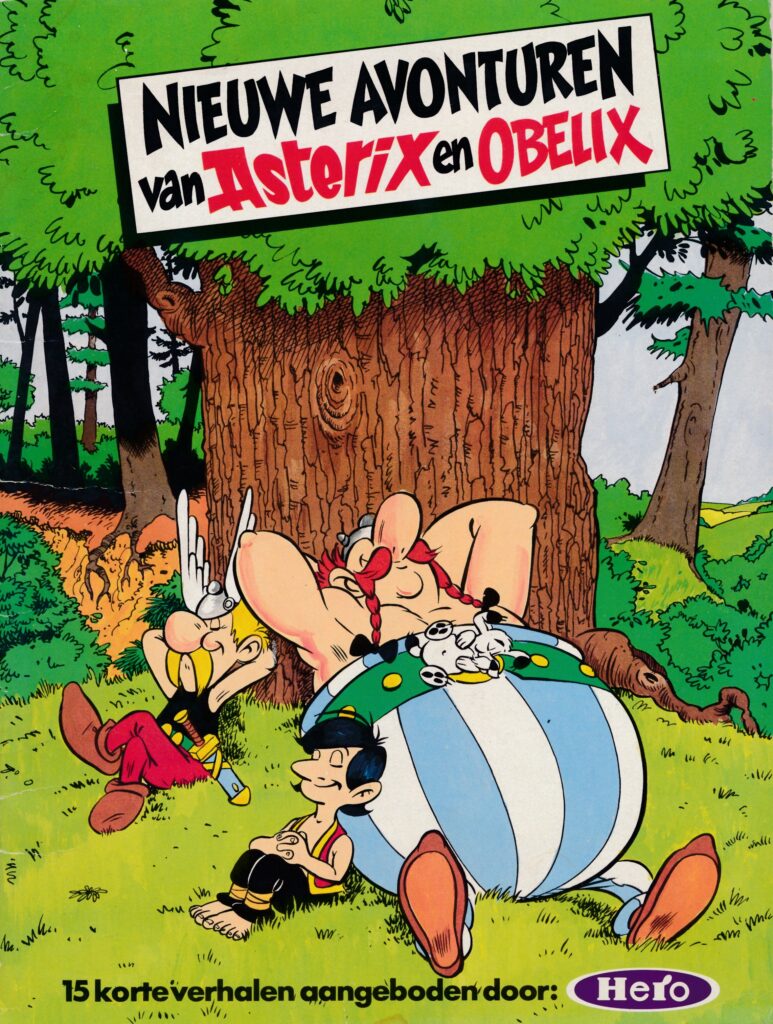
Since Dutch is my native language, my first introduction to Asterix was in Dutch. When Hachette took over, they also did a retranslating of the albums. In my youth the chief and bard were Abraracourcix and Assurancetourix (just as in French), but in the new albums their names have become Heroïx and Kakofonix. Some of the albums have been renamed to match the French titles closer.
I remember how I bought Asterix and Son when it was released in 1983, but I already knew who they were because we had a few albums at home, Asterix and the Goths for sure. Asterix has been released in Dutch dialects like Limburgish, Twents, Antwerps and Gents. I know of a few enthusiasts who are trying to persuade Editions Albert Rene to publish albums in Dutch Low Saxon as well. Bootlegged albums have been released in the 1990’s. A few albums have been translated to Frisian as well.

Asterix speaks Dutch
Asterix was first published in Dutch in 1966 with Asterix de Galliër. It was the first time Asterix ever got translated. Several companies have been responsible for publishing Asterix in Dutch. Early albums were published by Geïllustreerde Pers and Amsterdam Boek, followed by Dargaud Benelux and Oberon. Lombard published for the Belgian market. Hachette has published the most recent editions with new translations, new colors, and hardcover releases in the original French order, now also available in softcover mixed with older translations.
Asterix in the Netherlands
The Netherlands is primarily associated with Dutch, the national and official language, but it has a rich linguistic landscape including regional dialects, minority languages, and urban sociolects. These languages differ in pronunciation, grammar, vocabulary, and cultural usage, reflecting the country’s geographic and historical diversity.
Standard Dutch and Its Dialects
Dutch (Nederlands) belongs to the West Germanic branch of the Indo-European language family, closely related to German and English. Standard Dutch is based on the Hollandic dialects but has been influenced by Brabantian and other regional varieties.
Regional Dutch dialects are highly diverse and are generally divided into Northern, Central, and Southern dialect groups:
- Hollandic and West Frisian-influenced dialects: Spoken in the provinces of North and South Holland, Zeeland, and Utrecht. These dialects have distinctive vowel pronunciations and some lexical differences from standard Dutch.
- Brabantian and Limburgish dialects: Brabantian is spoken in North Brabant, while Limburgish in the southeastern Limburg province exhibits tonal distinctions and unique vowel length patterns.
- Gronings, Twents, and other Low Saxon dialects: Spoken in the northeast, part of the Low Saxon language group, these dialects differ significantly in pronunciation and grammar from standard Dutch.
Dutch dialects vary in mutual intelligibility: speakers of Southern Limburgish or Low Saxon may need time to fully understand Northern Hollandic varieties. Dialects are most commonly spoken in informal settings, while standard Dutch dominates education, media, and administration.

Frisian Languages
The Frisian languages are officially recognized minority languages in the Netherlands:
- West Frisian (Frysk): Spoken in the province of Friesland (Fryslân). It is a Germanic language closely related to English and Dutch but distinct in grammar, phonology, and vocabulary. West Frisian is used in education, media, and official signage and remains robust with tens of thousands of speakers.
- Saterland Frisian: Very small communities in Germany speak this dialect, but historically related forms existed in eastern parts of the Netherlands.
Frisian languages are mutually unintelligible with standard Dutch, reflecting a separate Germanic lineage within the same language family.
Low Saxon
Dutch Low Saxon (Nedersaksisch) is spoken in the northeastern provinces, including Groningen, Drenthe, Overijssel, and parts of Gelderland. It is a West Germanic language related to German Low Saxon dialects. Dutch Low Saxon differs from standard Dutch in phonology, verb conjugations, and vocabulary, and it is partially protected under the European Charter for Regional or Minority Languages.
Limburgish
Limburgish (Limburgs) is spoken in the southeastern Limburg province and extends into neighboring Belgium and Germany. Limburgish is a West Germanic language, often classified as a regional language rather than a Dutch dialect due to its tonal features and grammatical distinctions. It retains unique vowel and consonant patterns and a tonal system that distinguishes meaning.
Urban Slang and Sociolects
Urban slang varieties exist in major Dutch cities, with Amsterdam and Rotterdam having their own sociolects influenced by migration, youth culture, and multilingual contact. These sociolects are largely informal and heavily influenced by Dutch, but they create a strong local identity.
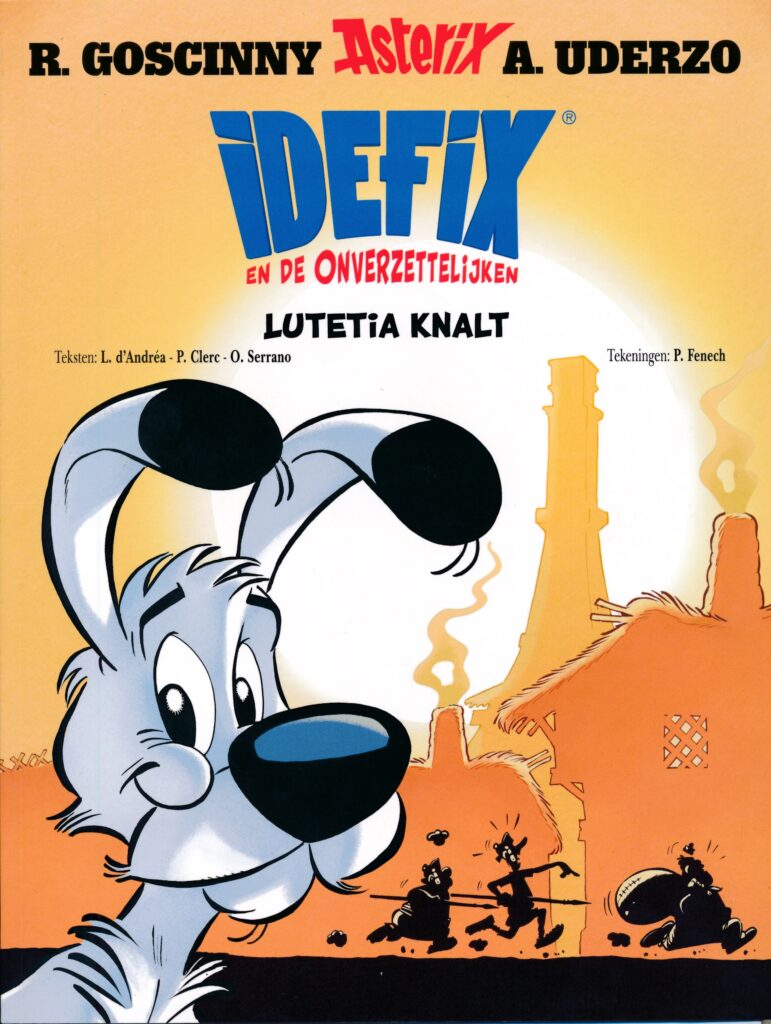
Dogmatix speaks Dutch as well
The Dutch name of Dogmatix is Idefix, like in French but without the accent on the e. His books have been translated to Dutch as well. They are usually one issue behind on the original French albums.