Creating a bande dessinée like Asterix in the 1960s and 1970s was a manual, multi‑stage process involving writers, artists, and print technicians working with physical materials and analog technologies. This overview explains how Asterix was produced from script to printed album, based on historical practices of comic production and the specific collaboration between René Goscinny and Albert Uderzo.

Script Writing: Detailed Scénario
The process began with the script, known in French as the scénario. René Goscinny wrote full scripts for each Asterix story that included complete dialogue, descriptions of the action in each panel, and narrative cues. Unlike the American “Marvel Method,” where artists work from plot outlines and improvise much of the visual storytelling, Goscinny’s scripts provided detailed guidance for the artist.
Layout and Pencilling: Planning the Page
Once the script was complete, Albert Uderzo began with rough layouts or thumbnails to plan how each panel would fit on the page. After establishing pacing and composition, Uderzo pencilled full‑sized pages on heavy art board (commonly Bristol board), often at a size larger than the final printed album. This technique allowed fine detail and clarity when reduced in printing.

Inking: Defining the Artwork
Inking (encrage) was a separate stage of art production. Uderzo or an assistant used brushes and India ink to go over the pencil drawings, refining line weight and defining the final artwork. Inking was not mere tracing; variations in line thickness helped convey depth, movement, and character expression. Corrections at this stage were made with opaque white paint (gouache) or, if necessary, by replacing small sections of art board.

Lettering: Handwritten Text
Lettering was done by hand directly on the art board or occasionally by a specialist letterer. Artists drew light pencil guidelines and then inked the dialogue balloons and captions in a clear, legible style. Because this was manual, each balloon retained a “human” quality distinct from later computer‑generated fonts.
Coloring and Color Guides
Before digital methods, color was prepared manually. A colorist used a copy of the inked page to paint or annotate colors according to the publisher’s palette. These “color guides” were physical art objects painted or marked with codes indicating the proportions of the primary printing inks (cyan, magenta, yellow, and black) to be used. Technicians then used these guides to create the color separations that would translate into printing plates.
Color Separation and Printing Plates
Comic printing relied on four‑color process printing. The black line art and each of the three primary printing colors—cyan, magenta, and yellow—were separated into individual plates. Photographic techniques, often involving halftone screens or patterns of tiny Ben‑Day dots, translated the color guides into printable negatives. These negatives were then used to etch images onto metal plates for the printing press.
Offset Lithography and Mass Printing

The final step was printing. Offset lithography was the standard printing process: inked images on metal plates were transferred to rubber blankets and then onto paper. Multiple passes through the press applied each of the four color layers in registration. Once printed, the pages were folded, bound, and trimmed into the finished albums familiar to readers.
Collaboration Between Goscinny and Uderzo
Throughout the 1960s and 1970s, the creative partnership of René Goscinny (scriptwriter) and Albert Uderzo (artist and often letterer) defined Asterix’s production. Their workflow reflected the professional standards of Franco‑Belgian comics at the time: clear division of labor, meticulous planning, and high artistic quality. This method contributed to Asterix becoming a defining example of the European comic tradition.
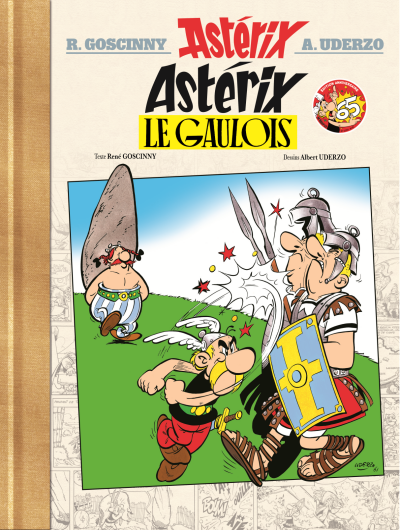
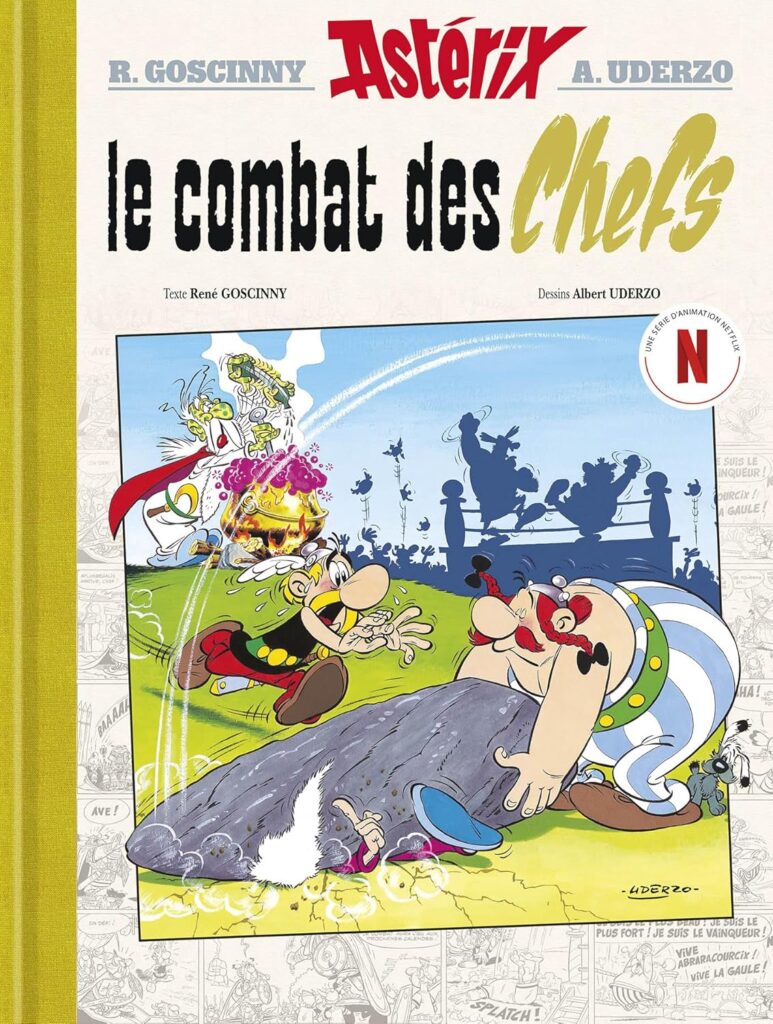
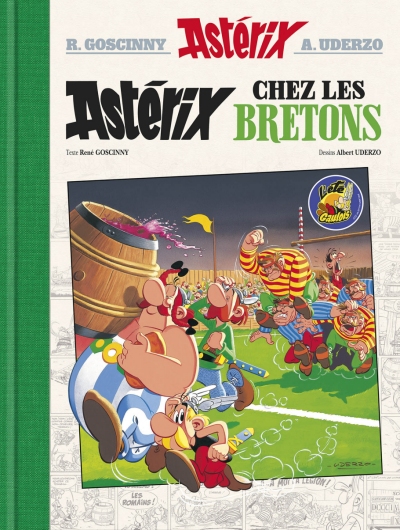
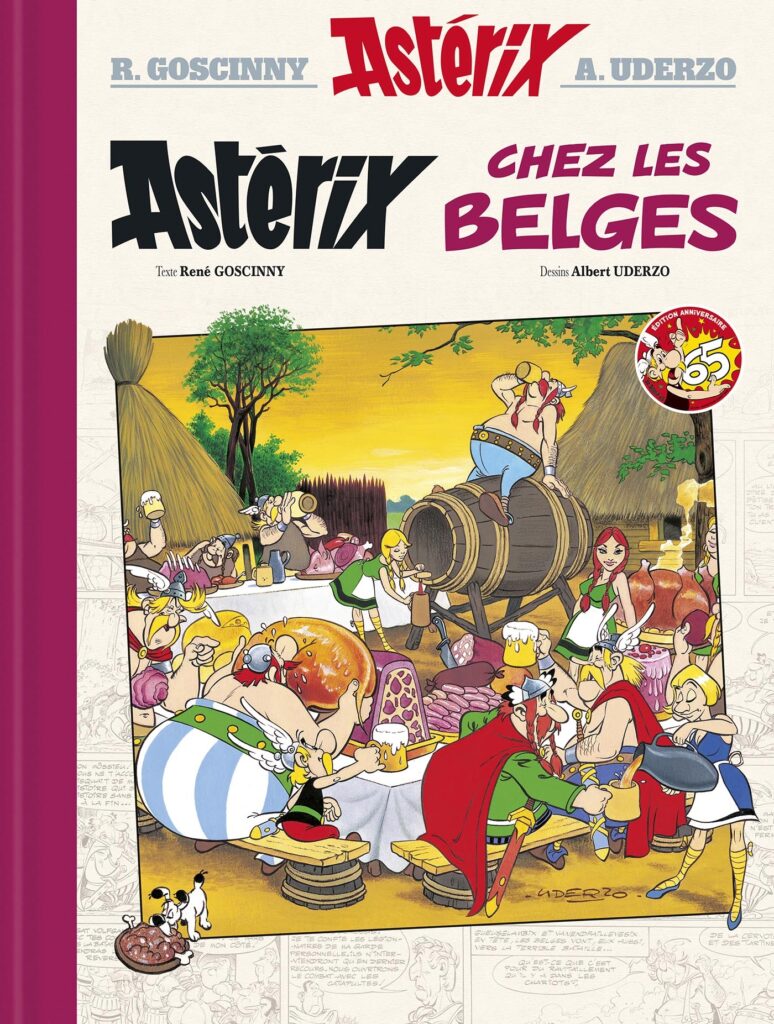
In 2006 all the comics were digitized in a project that was known as refondation. The deluxe albums contain the original line drawings by Uderzo. They will usually show some of the scenario’s written by Goscinny as well. The 65th anniversary album of Asterix the Gaul gives you the complete scenario.




Creating a bande dessinée like Asterix in the 1960s and 1970s was a manual, multi‑stage process involving writers, artists, and print technicians working with physical materials and analog technologies. This overview explains how Asterix was produced from script to printed album, based on historical practices of comic production and the specific collaboration between René Goscinny and Albert Uderzo.
Script Writing: Detailed Scénario
The process began with the script, known in French as the scénario. René Goscinny wrote full scripts for each Asterix story that included complete dialogue, descriptions of the action in each panel, and narrative cues. Unlike the American “Marvel Method,” where artists work from plot outlines and improvise much of the visual storytelling, Goscinny’s scripts provided detailed guidance for the artist.
Layout and Pencilling: Planning the Page
Once the script was complete, Albert Uderzo began with rough layouts or thumbnails to plan how each panel would fit on the page. After establishing pacing and composition, Uderzo pencilled full‑sized pages on heavy art board (commonly Bristol board), often at a size larger than the final printed album. This technique allowed fine detail and clarity when reduced in printing.
Inking: Defining the Artwork
Inking (encrage) was a separate stage of art production. Uderzo or an assistant used brushes and India ink to go over the pencil drawings, refining line weight and defining the final artwork. Inking was not mere tracing; variations in line thickness helped convey depth, movement, and character expression. Corrections at this stage were made with opaque white paint (gouache) or, if necessary, by replacing small sections of art board.
Lettering: Handwritten Text
Lettering was done by hand directly on the art board or occasionally by a specialist letterer. Artists drew light pencil guidelines and then inked the dialogue balloons and captions in a clear, legible style. Because this was manual, each balloon retained a “human” quality distinct from later computer‑generated fonts.
Coloring and Color Guides
Before digital methods, color was prepared manually. A colorist used a copy of the inked page to paint or annotate colors according to the publisher’s palette. These “color guides” were physical art objects painted or marked with codes indicating the proportions of the primary printing inks (cyan, magenta, yellow, and black) to be used. Technicians then used these guides to create the color separations that would translate into printing plates.
Color Separation and Printing Plates
Comic printing relied on four‑color process printing. The black line art and each of the three primary printing colors—cyan, magenta, and yellow—were separated into individual plates. Photographic techniques, often involving halftone screens or patterns of tiny Ben‑Day dots, translated the color guides into printable negatives. These negatives were then used to etch images onto metal plates for the printing press.
Offset Lithography and Mass Printing
The final step was printing. Offset lithography was the standard printing process: inked images on metal plates were transferred to rubber blankets and then onto paper. Multiple passes through the press applied each of the four color layers in registration. Once printed, the pages were folded, bound, and trimmed into the finished albums familiar to readers.
Collaboration Between Goscinny and Uderzo
Throughout the 1960s and 1970s, the creative partnership of René Goscinny (scriptwriter) and Albert Uderzo (artist and often letterer) defined Asterix’s production. Their workflow reflected the professional standards of Franco‑Belgian comics at the time: clear division of labor, meticulous planning, and high artistic quality. This method contributed to Asterix becoming a defining example of the European comic tradition.
In 2006 all the comics were digitized in a project that was known as refondation. The deluxe albums contain the original line drawings by Uderzo. They will usually show some of the scenario’s written by Goscinny as well. The 65th anniversary album of Asterix the Gaul gives you the complete scenario.