If you’ve ever chuckled at a Roman legionary shouting a cryptic Latin phrase before being launched into the air by a Gaulish punch, you’ve encountered the “Greats.” The Asterix creators, René Goscinny and Albert Uderzo, peppered their adventures with nods to the intellectual traditions of Rome. While these figures lived during the final centuries of the Roman Republic and the early Empire, their writings did not disappear with them—they helped shape the foundations of Western literature, law, and philosophy.
Not all of them have made it into Asterix (yet), but do deserve a mention here. Julius Caesar isn’t on the list, but I guess you already know who he was and are familiar with at least one famous quote of him.
The Architects of Language and Law
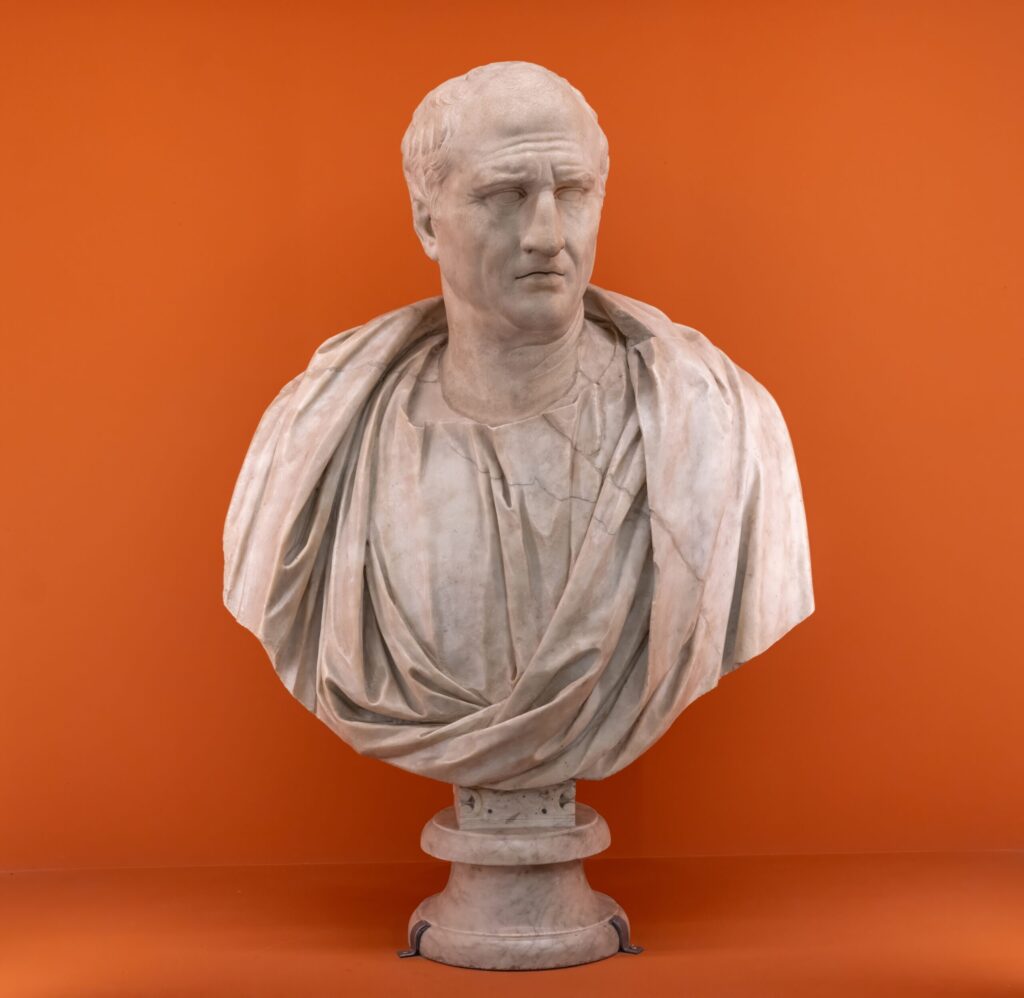
Cicero (106–43 BC) was more than just a politician; he was a master of rhetoric. In a time when persuasive speech played a decisive role in public life, Cicero’s command of Latin prose set a standard that influenced writers for centuries. His works on duty, justice, and the state became central references in later political thought and legal tradition, especially during the long history of Roman-influenced governance.
O tempora o mores
(“What times, what customs”)
The Epic Voice of Rome
Virgil (70–19 BC) is widely regarded as Rome’s greatest poet. His masterpiece, the Aeneid, tells the story of Aeneas, a Trojan hero who becomes associated with the origins of Rome. By linking Rome’s beginnings to the legacy of Troy, Virgil helped shape a Roman sense of identity. His influence extended far beyond antiquity and continued into later literature, including medieval and Renaissance works such as Dante’s Divine Comedy, where Virgil appears as a guiding figure.
Auri sacra fames
(“Accursed hunger for gold”)
The Chroniclers of Nature and Experience
The Plinys—Pliny the Elder and Pliny the Younger—represent Roman dedication to knowledge and documentation. Pliny the Elder compiled the Naturalis Historia, a vast encyclopedic work covering a wide range of subjects including geography, biology, and mineralogy. His nephew, Pliny the Younger, is known for his letters, which provide a detailed firsthand account of Roman society. Among these is his description of the Eruption of Mount Vesuvius in 79 AD, offering one of the most vivid contemporary records of the event.

The Master of Myth
Ovid (43 BC–17/18 AD) brought creativity and narrative flair to Roman literature. His Metamorphoses collects mythological stories centered on transformation, ranging from well-known tales such as Midas’s golden touch to the flight of Icarus. The work became one of the most important sources of classical mythology for later European art and literature, influencing generations of writers and artists from the Renaissance onward.
Donec eris felix, multos numerabis amicos
(“As long as you are fortunate, you will count many friends”)
The Poet of “Seize the Day”
Horace (65–8 BC) is known for his lyrical poetry and philosophical reflections on life. He is associated with the phrase carpe diem, encouraging readers to make the most of the present moment. His work combines technical precision with a focus on practical wisdom, which helped secure its place in European education for many centuries.
Ira furor brevis est
(“Anger is a brief madness”)
The Stoic Mentor
Seneca (c. 4 BC–65 AD) was a Stoic thinker who served as a tutor and advisor in the court of Emperor Nero. His essays and letters explore themes such as self-control, grief, anger, and the nature of a good life. Seneca’s writings are notable for their clarity and directness, and they continue to be read as accessible introductions to Stoic philosophy.

The Critic of Power
Tacitus (c. 56–120 AD) wrote detailed historical accounts of the Roman Empire. Works such as the Annals and Histories present a critical view of imperial rule, highlighting political intrigue, corruption, and the human consequences of concentrated power. His concise and often sharp style remains influential in the field of historical writing.
Ubi solitudinem faciunt, pacem appellant
(“They make a desert and call it peace”)
A Legacy in Every Line
These authors are not merely names preserved in textbooks; they represent the intellectual tradition that helped Latin remain a dominant language of scholarship, science, and the Church for more than a thousand years. When Latin phrases appear in literature, historical accounts, or even a comic like Asterix, they echo a long continuum of thought shaped by these writers.


If you’ve ever chuckled at a Roman legionary shouting a cryptic Latin phrase before being launched into the air by a Gaulish punch, you’ve encountered the “Greats.” The Asterix creators, René Goscinny and Albert Uderzo, peppered their adventures with nods to the intellectual traditions of Rome. While these figures lived during the final centuries of the Roman Republic and the early Empire, their writings did not disappear with them—they helped shape the foundations of Western literature, law, and philosophy.
Not all of them have made it into Asterix (yet), but do deserve a mention here. Julius Caesar isn’t on the list, but I guess you already know who he was and are familiar with at least one famous quote of him.
The Architects of Language and Law
Cicero (106–43 BC) was more than just a politician; he was a master of rhetoric. In a time when persuasive speech played a decisive role in public life, Cicero’s command of Latin prose set a standard that influenced writers for centuries. His works on duty, justice, and the state became central references in later political thought and legal tradition, especially during the long history of Roman-influenced governance.
O tempora o mores
(“What times, what customs”)
The Epic Voice of Rome
Virgil (70–19 BC) is widely regarded as Rome’s greatest poet. His masterpiece, the Aeneid, tells the story of Aeneas, a Trojan hero who becomes associated with the origins of Rome. By linking Rome’s beginnings to the legacy of Troy, Virgil helped shape a Roman sense of identity. His influence extended far beyond antiquity and continued into later literature, including medieval and Renaissance works such as Dante’s Divine Comedy, where Virgil appears as a guiding figure.
Auri sacra fames
(“Accursed hunger for gold”)
The Chroniclers of Nature and Experience
The Plinys—Pliny the Elder and Pliny the Younger—represent Roman dedication to knowledge and documentation. Pliny the Elder compiled the Naturalis Historia, a vast encyclopedic work covering a wide range of subjects including geography, biology, and mineralogy. His nephew, Pliny the Younger, is known for his letters, which provide a detailed firsthand account of Roman society. Among these is his description of the Eruption of Mount Vesuvius in 79 AD, offering one of the most vivid contemporary records of the event.
The Master of Myth
Ovid (43 BC–17/18 AD) brought creativity and narrative flair to Roman literature. His Metamorphoses collects mythological stories centered on transformation, ranging from well-known tales such as Midas’s golden touch to the flight of Icarus. The work became one of the most important sources of classical mythology for later European art and literature, influencing generations of writers and artists from the Renaissance onward.
Donec eris felix, multos numerabis amicos
(“As long as you are fortunate, you will count many friends”)
The Poet of “Seize the Day”
Horace (65–8 BC) is known for his lyrical poetry and philosophical reflections on life. He is associated with the phrase carpe diem, encouraging readers to make the most of the present moment. His work combines technical precision with a focus on practical wisdom, which helped secure its place in European education for many centuries.
Ira furor brevis est
(“Anger is a brief madness”)
The Stoic Mentor
Seneca (c. 4 BC–65 AD) was a Stoic thinker who served as a tutor and advisor in the court of Emperor Nero. His essays and letters explore themes such as self-control, grief, anger, and the nature of a good life. Seneca’s writings are notable for their clarity and directness, and they continue to be read as accessible introductions to Stoic philosophy.
The Critic of Power
Tacitus (c. 56–120 AD) wrote detailed historical accounts of the Roman Empire. Works such as the Annals and Histories present a critical view of imperial rule, highlighting political intrigue, corruption, and the human consequences of concentrated power. His concise and often sharp style remains influential in the field of historical writing.
Ubi solitudinem faciunt, pacem appellant
(“They make a desert and call it peace”)
A Legacy in Every Line
These authors are not merely names preserved in textbooks; they represent the intellectual tradition that helped Latin remain a dominant language of scholarship, science, and the Church for more than a thousand years. When Latin phrases appear in literature, historical accounts, or even a comic like Asterix, they echo a long continuum of thought shaped by these writers.