Long before Asterix and Obelix set out to conquer the Roman world, René Goscinny and Albert Uderzo were already testing their sea legs. Their earliest major collaboration, Jehan Pistolet (John Pistol), first appeared in 1952 and today remains one of the most overlooked corners of their shared legacy.
It may not have the polish of their later work, but for fans, it offers something just as valuable: a glimpse of the formula in the making.
A Series in Search of Itself

Jehan Pistolet debuted on June 26, 1952, in La Libre Junior, the youth supplement of La Libre Belgique. At the time, pirate stories were in vogue, and the young duo followed the trend with a light-hearted take on the corsair genre.
The series, however, never quite settled into a stable identity. When it moved to Pistolin in 1954, Jehan was briefly renamed Jehan Soupolet—a change that did little to strengthen recognition. A later attempt by Goscinny to revive the character in Pilote in 1960 also failed to give the series lasting momentum.
In contrast to the carefully built world of Asterix, Jehan Pistolet always felt like a work in progress.
The Crew of La Brave
The heart of the series lies in the camaraderie of the crew members who inhabit the dilapidated ship, La Brave. Each character brings a specific dynamic to their missions for the French Crown.
Core Crew Members

- Jehan Pistolet: A brave young man from Nantes who transitions from a tavern waiter to a royal corsair. He is the moral center of the group, leading with idealism despite his lack of maritime experience.
- Pierrot: The ship’s loyal cabin boy and a former pastry delivery boy. His background in the culinary trades often clashes with the rugged realities of life at sea.
- Gilles: The master gunner in charge of the ship’s artillery. He is characterized by a hot-headed temperament and a tendency to exaggerate his own heroic feats.
- Bertrand: The ship’s cook and a former tavern owner. His culinary experiments frequently lead to comedic mishaps, providing a lighter domestic tone to their dangerous voyages.
- Hugues: The reliable second-in-command who often provides the strategic grounding the more eccentric crew members lack.
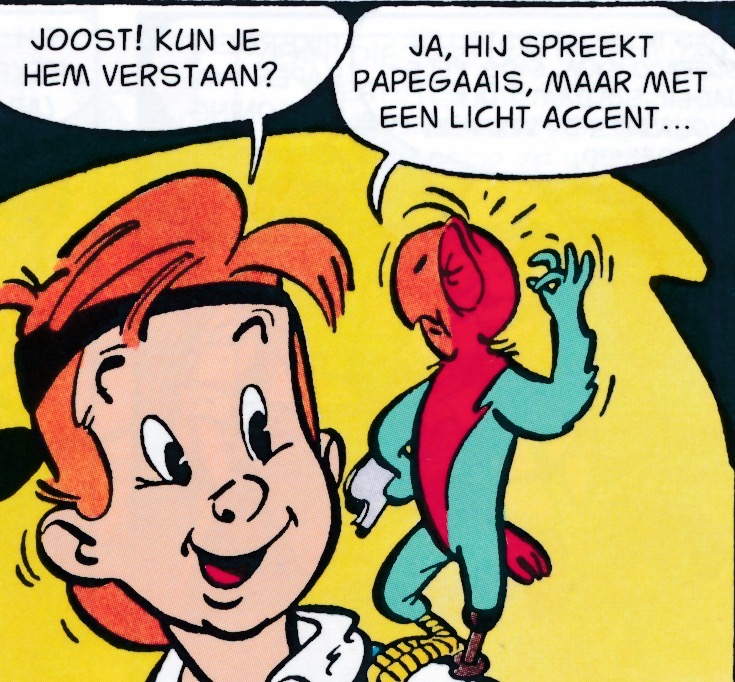
- Jasmin: A parrot and the ship’s mascot. Jasmin serves as a silent observer, using visual reactions and expressive antics to provide non-verbal comedy.
- P’tit René: A tiny, mischievous character drawn by Uderzo as a direct caricature of René Goscinny, establishing an early tradition of authorial self-insertion.
The Story: Corsairs, Chaos, and Comedy
Set in the 18th century, the series follows Jehan, a young man from Nantes who dreams of becoming a royal corsair. His ship, La Brave, is anything but impressive, and his crew is even less so—a collection of misfits who stumble from one adventure to the next.
Across five main stories, the tone shifts between classic adventure and early comedy. The original French titles are shown first, with English translations in parentheses:
- Jehan Pistolet corsaire prodigieux (Jehan Pistolet, Prodigious Corsair) introduces Jehan and pits him against the pirate Barbe Verte.
- Jehan Pistolet corsaire du Roi (Jehan Pistolet, Corsair of the King) sends the crew on a treasure hunt to a skull-shaped island.
- Jehan Pistolet et l’espion (Jehan Pistolet and the Spy) leans into intrigue, a theme later refined in albums like Asterix and the Goths.
- Jehan Pistolet en Amérique (Jehan Pistolet in America) follows a mission to retrieve a medicinal plant for the King.
- Jehan Pistolet et le savant fou (Jehan Pistolet and the Mad Scientist), left unfinished, hints at the increasingly absurd humor that would define Goscinny’s later writing.
These titles originate from later compiled editions—most notably those published by Les Éditions Albert René—as the original stories were serialized rather than released as standalone albums in the 1950s.
Early Signs of the Asterix Formula

Reading Jehan Pistolet today, the similarities with later works are unmistakable.
The idea of a tight-knit group facing the world together is already present in Jehan’s crew—an early version of the village dynamic. The parrot Jasmin functions much like Dogmatix (Idéfix), offering visual comedy and silent reactions.
Uderzo also began inserting playful caricatures into the story, including a small character named P’tit René, modeled after Goscinny himself—a tradition that would continue throughout their careers.
Most importantly, Goscinny’s writing starts to shift here. Wordplay, irony, and gentle parody begin to replace straightforward adventure storytelling. The seeds of what would make Asterix unique are already visible.
A Curious International Afterlife
While Jehan Pistolet never became a major success in France or Belgium, it found modest recognition abroad—particularly in the Netherlands.
There, the series appeared under multiple names, including Pit Pistool, Matje Madeira, and Johan Pikbroek. This fragmented publication history helped keep the character alive, but also prevented any single, definitive version from becoming widely known.
Why It Never Took Off
Several factors explain why Jehan Pistolet remained in the shadow of later creations.

It began in a relatively small publication, limiting its early reach. Uderzo’s drawing style was still evolving, lacking the expressive “gros nez” look that would later define his characters. And perhaps most importantly, the pirate setting offered little room for the kind of satire and cultural parody that Goscinny would fully exploit in Asterix.
By the time they found that voice, they had already moved on.
A First Step, Not a Footnote

Later reprints by Les Éditions Albert René—including collected “intégrale” editions—have preserved Jehan Pistolet for new generations.
Whether these publications were driven by archival interest or by the commercial success of Asterix, the result is the same: the series is no longer lost.
Today, Jehan Pistolet stands as more than an early experiment. It is the starting point of one of the most successful creative partnerships in European comics—a rough, sometimes uneven, but essential first voyage before the real adventure began.


Long before Asterix and Obelix set out to conquer the Roman world, René Goscinny and Albert Uderzo were already testing their sea legs. Their earliest major collaboration, Jehan Pistolet (John Pistol), first appeared in 1952 and today remains one of the most overlooked corners of their shared legacy.
It may not have the polish of their later work, but for fans, it offers something just as valuable: a glimpse of the formula in the making.
A Series in Search of Itself
Jehan Pistolet debuted on June 26, 1952, in La Libre Junior, the youth supplement of La Libre Belgique. At the time, pirate stories were in vogue, and the young duo followed the trend with a light-hearted take on the corsair genre.
The series, however, never quite settled into a stable identity. When it moved to Pistolin in 1954, Jehan was briefly renamed Jehan Soupolet—a change that did little to strengthen recognition. A later attempt by Goscinny to revive the character in Pilote in 1960 also failed to give the series lasting momentum.
In contrast to the carefully built world of Asterix, Jehan Pistolet always felt like a work in progress.
The Crew of La Brave
The heart of the series lies in the camaraderie of the crew members who inhabit the dilapidated ship, La Brave. Each character brings a specific dynamic to their missions for the French Crown.
Core Crew Members
- Jehan Pistolet: A brave young man from Nantes who transitions from a tavern waiter to a royal corsair. He is the moral center of the group, leading with idealism despite his lack of maritime experience.
- Pierrot: The ship’s loyal cabin boy and a former pastry delivery boy. His background in the culinary trades often clashes with the rugged realities of life at sea.
- Gilles: The master gunner in charge of the ship’s artillery. He is characterized by a hot-headed temperament and a tendency to exaggerate his own heroic feats.
- Bertrand: The ship’s cook and a former tavern owner. His culinary experiments frequently lead to comedic mishaps, providing a lighter domestic tone to their dangerous voyages.
- Hugues: The reliable second-in-command who often provides the strategic grounding the more eccentric crew members lack.
- Jasmin: A parrot and the ship’s mascot. Jasmin serves as a silent observer, using visual reactions and expressive antics to provide non-verbal comedy.
- P’tit René: A tiny, mischievous character drawn by Uderzo as a direct caricature of René Goscinny, establishing an early tradition of authorial self-insertion.
The Story: Corsairs, Chaos, and Comedy
Set in the 18th century, the series follows Jehan, a young man from Nantes who dreams of becoming a royal corsair. His ship, La Brave, is anything but impressive, and his crew is even less so—a collection of misfits who stumble from one adventure to the next.
Across five main stories, the tone shifts between classic adventure and early comedy. The original French titles are shown first, with English translations in parentheses:
- Jehan Pistolet corsaire prodigieux (Jehan Pistolet, Prodigious Corsair) introduces Jehan and pits him against the pirate Barbe Verte.
- Jehan Pistolet corsaire du Roi (Jehan Pistolet, Corsair of the King) sends the crew on a treasure hunt to a skull-shaped island.
- Jehan Pistolet et l’espion (Jehan Pistolet and the Spy) leans into intrigue, a theme later refined in albums like Asterix and the Goths.
- Jehan Pistolet en Amérique (Jehan Pistolet in America) follows a mission to retrieve a medicinal plant for the King.
- Jehan Pistolet et le savant fou (Jehan Pistolet and the Mad Scientist), left unfinished, hints at the increasingly absurd humor that would define Goscinny’s later writing.
These titles originate from later compiled editions—most notably those published by Les Éditions Albert René—as the original stories were serialized rather than released as standalone albums in the 1950s.
Early Signs of the Asterix Formula
Reading Jehan Pistolet today, the similarities with later works are unmistakable.
The idea of a tight-knit group facing the world together is already present in Jehan’s crew—an early version of the village dynamic. The parrot Jasmin functions much like Dogmatix (Idéfix), offering visual comedy and silent reactions.
Uderzo also began inserting playful caricatures into the story, including a small character named P’tit René, modeled after Goscinny himself—a tradition that would continue throughout their careers.
Most importantly, Goscinny’s writing starts to shift here. Wordplay, irony, and gentle parody begin to replace straightforward adventure storytelling. The seeds of what would make Asterix unique are already visible.
A Curious International Afterlife
While Jehan Pistolet never became a major success in France or Belgium, it found modest recognition abroad—particularly in the Netherlands.
There, the series appeared under multiple names, including Pit Pistool, Matje Madeira, and Johan Pikbroek. This fragmented publication history helped keep the character alive, but also prevented any single, definitive version from becoming widely known.
Why It Never Took Off
Several factors explain why Jehan Pistolet remained in the shadow of later creations.
It began in a relatively small publication, limiting its early reach. Uderzo’s drawing style was still evolving, lacking the expressive “gros nez” look that would later define his characters. And perhaps most importantly, the pirate setting offered little room for the kind of satire and cultural parody that Goscinny would fully exploit in Asterix.
By the time they found that voice, they had already moved on.
A First Step, Not a Footnote
Later reprints by Les Éditions Albert René—including collected “intégrale” editions—have preserved Jehan Pistolet for new generations.
Whether these publications were driven by archival interest or by the commercial success of Asterix, the result is the same: the series is no longer lost.
Today, Jehan Pistolet stands as more than an early experiment. It is the starting point of one of the most successful creative partnerships in European comics—a rough, sometimes uneven, but essential first voyage before the real adventure began.