History, Culture, and Language
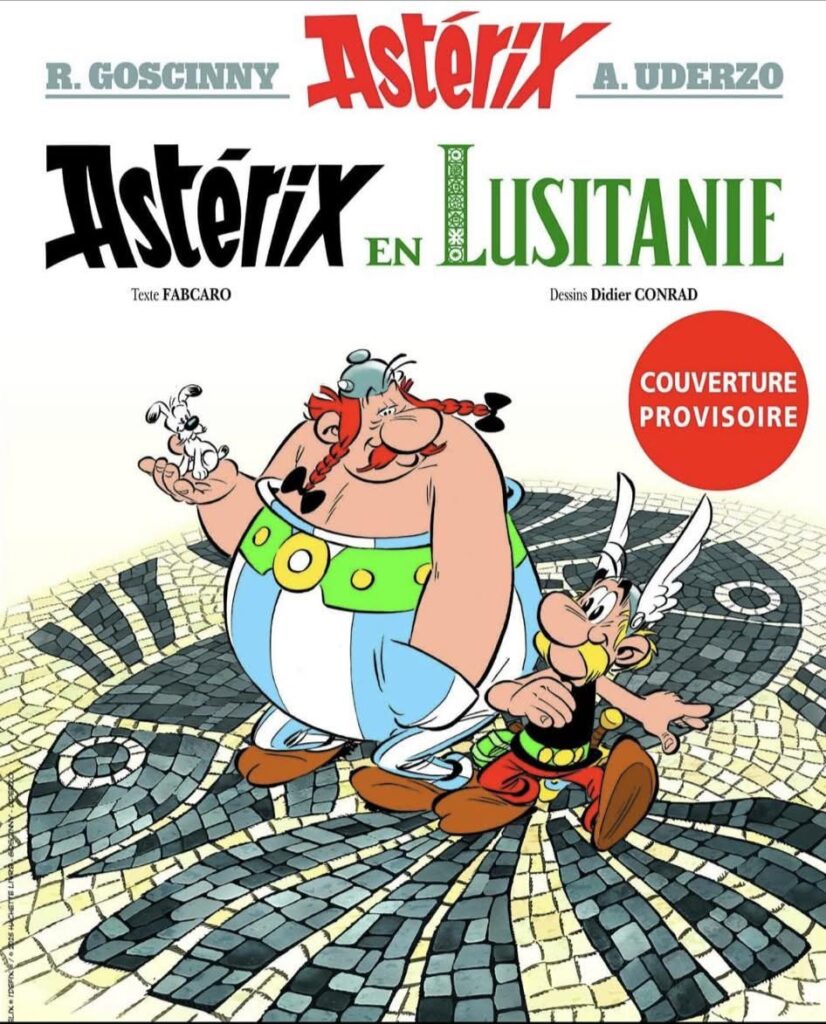
The upcoming 41st Asterix album, Asterix in Lusitania, takes readers to the western edge of the Roman world, a region corresponding roughly to modern Portugal and parts of western Spain. Understanding the historical, cultural, and linguistic background of Lusitania enriches the reading experience and provides context for the adventures of Asterix and Obelix in this distant province.

Geography and Tribal Society

In the 1st century BCE, Lusitania was a rugged territory bounded by the Atlantic Ocean to the west, the Tagus River in the center, and the mountains of the Iberian interior to the east. Its population was divided into numerous tribes, the most prominent being the Lusitani. Neighboring groups included the Vettones, Turduli, and Callaeci, who lived in adjacent regions but had cultural and economic interactions with the Lusitani.
Lusitanian communities were primarily organized in hill forts (castros) — fortified settlements built on elevated ground for defense. The economy relied on pastoralism, hunting, small-scale agriculture, and metalworking, particularly in bronze and iron. Tribal society emphasized warrior culture, kinship ties, and local religious practices.
Resistance and Roman Conquest

Following the Punic Wars, Rome gradually extended control over the Iberian Peninsula. Lusitania resisted fiercely. The most famous leader was Viriathus, a shepherd turned general, who led guerrilla campaigns against Rome from 147 to 139 BCE. His strategic use of the rugged terrain enabled repeated victories over Roman legions, though his assassination in 139 BCE ended major organized resistance.
By approximately 19 BCE, under Emperor Augustus, Lusitania was formally incorporated as a Roman province, with Emerita Augusta (modern Mérida) established as its capital. The conquest allowed Rome to impose administration, taxation, and military garrisons, though much of rural Lusitania remained only lightly Romanized initially.
Collaboration and Cultural Integration: The Lusitano-Roman Identity
Following the conquest, Lusitanian elites often cooperated with Roman authorities, retaining influence over their communities while benefiting from Roman trade, infrastructure, and protection. This pragmatic collaboration laid the groundwork for a process of cultural integration similar to patterns seen in other Roman provinces.
Urban centers such as Emerita Augusta, Olisipo (Lisbon), and Scallabis (Santarém) developed with Roman roads, baths, temples, and forums, becoming hubs of administration and commerce. While many indigenous leaders adopted Roman dress and the Latin language over time, local traditions, festivals, and religious practices continued, creating a distinctive Lusitano-Roman culture rooted in the Iberian context.
Religion and Folk Practices
The Lusitanians practiced polytheism, with gods linked to nature, war, and fertility. Notable deities included Endovelicus, associated with health and prophecy, and Ataegina, linked to the underworld and renewal. Many Lusitanian cults persisted into the Roman period and were gradually syncretized with Roman deities—for example, local war gods could be identified with Mars.
Rural festivals and ritual practices likely retained pre-Roman elements, influencing later folk traditions in Portugal and western Spain. Archaeological evidence, including sanctuaries and votive offerings, attests to the persistence of Lusitanian religious life alongside Roman structures.
Language and Written Records

The Lusitanians spoke Lusitanian, an Indo-European language closely related to Celtic but distinct. Linguists classify it as para-Celtic, preserving features lost in Gaulish or other Celtic languages.
Although Lusitanian disappeared under the spread of Latin, a small number of inscriptions survive, mostly dedicatory or religious texts written in Latin script but in the Lusitanian language. Examples include inscriptions from Cabeço das Fráguas, Lamas de Moledo, and Arroyo de la Luz, often invoking deities like Reve, Trebopala, and Endovelicus.
Lusitanian influence also survives in toponyms (place names) and hydronyms (river names) across Portugal and western Spain. Rivers such as the Tagus (Tejo) and Douro (Durus) preserve pre-Roman names, while towns like Conímbriga reflect Celtic linguistic roots.
Economy and Daily Life
Under Roman rule, Lusitania’s economy gradually expanded. Agriculture, olive oil, wine, cattle, and fish sauce (garum) were major products, and mining of gold, silver, tin, and copper thrived in the Tagus and Guadiana valleys. Roads, ports, and trade networks linked Lusitania to the broader Roman world, fostering urban growth and integration, while rural communities retained many traditional practices.
Legacy of the Lusitanians
Although the Lusitanian language and tribal society disappeared, their cultural and genetic legacy persisted. Modern Portuguese identity retains the name “Lusitania” in poetry, literature, and the term “Lusophone” for Portuguese-speaking peoples. Folk traditions, religious practices, and rural social structures show continuity with pre-Roman Lusitanian culture. Archaeological sites such as castros and warrior stelae provide tangible evidence of their material and artistic heritage.
The story of Lusitania illustrates a transition from resistance to integration, where indigenous culture adapted to empire while leaving an enduring imprint on Iberian identity—a theme that resonates with the humor and historical depth of Asterix in Lusitania.


History, Culture, and Language
The upcoming 41st Asterix album, Asterix in Lusitania, takes readers to the western edge of the Roman world, a region corresponding roughly to modern Portugal and parts of western Spain. Understanding the historical, cultural, and linguistic background of Lusitania enriches the reading experience and provides context for the adventures of Asterix and Obelix in this distant province.
Geography and Tribal Society
In the 1st century BCE, Lusitania was a rugged territory bounded by the Atlantic Ocean to the west, the Tagus River in the center, and the mountains of the Iberian interior to the east. Its population was divided into numerous tribes, the most prominent being the Lusitani. Neighboring groups included the Vettones, Turduli, and Callaeci, who lived in adjacent regions but had cultural and economic interactions with the Lusitani.
Lusitanian communities were primarily organized in hill forts (castros) — fortified settlements built on elevated ground for defense. The economy relied on pastoralism, hunting, small-scale agriculture, and metalworking, particularly in bronze and iron. Tribal society emphasized warrior culture, kinship ties, and local religious practices.
Resistance and Roman Conquest
Following the Punic Wars, Rome gradually extended control over the Iberian Peninsula. Lusitania resisted fiercely. The most famous leader was Viriathus, a shepherd turned general, who led guerrilla campaigns against Rome from 147 to 139 BCE. His strategic use of the rugged terrain enabled repeated victories over Roman legions, though his assassination in 139 BCE ended major organized resistance.
By approximately 19 BCE, under Emperor Augustus, Lusitania was formally incorporated as a Roman province, with Emerita Augusta (modern Mérida) established as its capital. The conquest allowed Rome to impose administration, taxation, and military garrisons, though much of rural Lusitania remained only lightly Romanized initially.
Collaboration and Cultural Integration: The Lusitano-Roman Identity
Following the conquest, Lusitanian elites often cooperated with Roman authorities, retaining influence over their communities while benefiting from Roman trade, infrastructure, and protection. This pragmatic collaboration laid the groundwork for a process of cultural integration similar to patterns seen in other Roman provinces.
Urban centers such as Emerita Augusta, Olisipo (Lisbon), and Scallabis (Santarém) developed with Roman roads, baths, temples, and forums, becoming hubs of administration and commerce. While many indigenous leaders adopted Roman dress and the Latin language over time, local traditions, festivals, and religious practices continued, creating a distinctive Lusitano-Roman culture rooted in the Iberian context.
Religion and Folk Practices
The Lusitanians practiced polytheism, with gods linked to nature, war, and fertility. Notable deities included Endovelicus, associated with health and prophecy, and Ataegina, linked to the underworld and renewal. Many Lusitanian cults persisted into the Roman period and were gradually syncretized with Roman deities—for example, local war gods could be identified with Mars.
Rural festivals and ritual practices likely retained pre-Roman elements, influencing later folk traditions in Portugal and western Spain. Archaeological evidence, including sanctuaries and votive offerings, attests to the persistence of Lusitanian religious life alongside Roman structures.
Language and Written Records
The Lusitanians spoke Lusitanian, an Indo-European language closely related to Celtic but distinct. Linguists classify it as para-Celtic, preserving features lost in Gaulish or other Celtic languages.
Although Lusitanian disappeared under the spread of Latin, a small number of inscriptions survive, mostly dedicatory or religious texts written in Latin script but in the Lusitanian language. Examples include inscriptions from Cabeço das Fráguas, Lamas de Moledo, and Arroyo de la Luz, often invoking deities like Reve, Trebopala, and Endovelicus.
Lusitanian influence also survives in toponyms (place names) and hydronyms (river names) across Portugal and western Spain. Rivers such as the Tagus (Tejo) and Douro (Durus) preserve pre-Roman names, while towns like Conímbriga reflect Celtic linguistic roots.
Economy and Daily Life
Under Roman rule, Lusitania’s economy gradually expanded. Agriculture, olive oil, wine, cattle, and fish sauce (garum) were major products, and mining of gold, silver, tin, and copper thrived in the Tagus and Guadiana valleys. Roads, ports, and trade networks linked Lusitania to the broader Roman world, fostering urban growth and integration, while rural communities retained many traditional practices.
Legacy of the Lusitanians
Although the Lusitanian language and tribal society disappeared, their cultural and genetic legacy persisted. Modern Portuguese identity retains the name “Lusitania” in poetry, literature, and the term “Lusophone” for Portuguese-speaking peoples. Folk traditions, religious practices, and rural social structures show continuity with pre-Roman Lusitanian culture. Archaeological sites such as castros and warrior stelae provide tangible evidence of their material and artistic heritage.
The story of Lusitania illustrates a transition from resistance to integration, where indigenous culture adapted to empire while leaving an enduring imprint on Iberian identity—a theme that resonates with the humor and historical depth of Asterix in Lusitania.