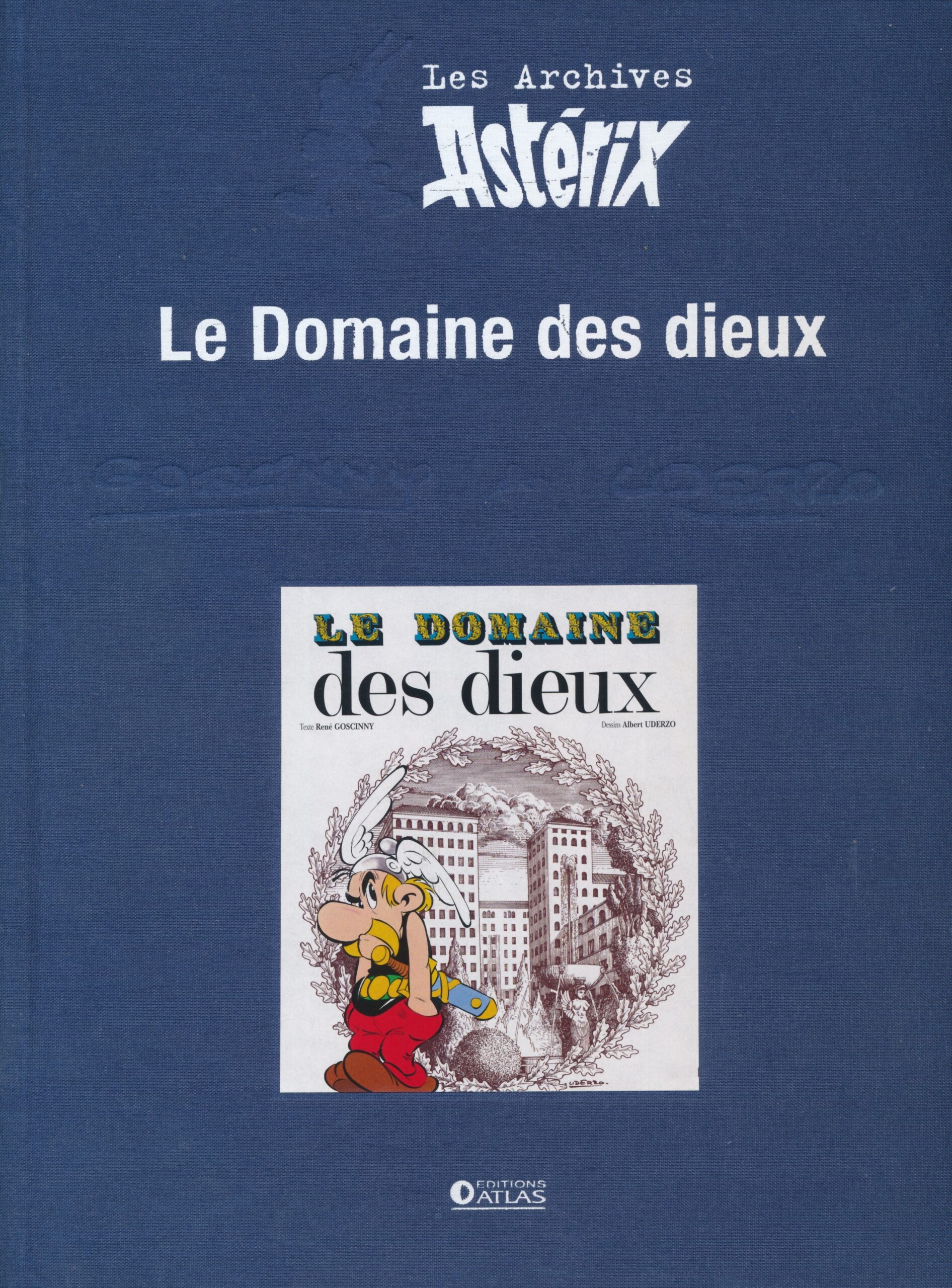
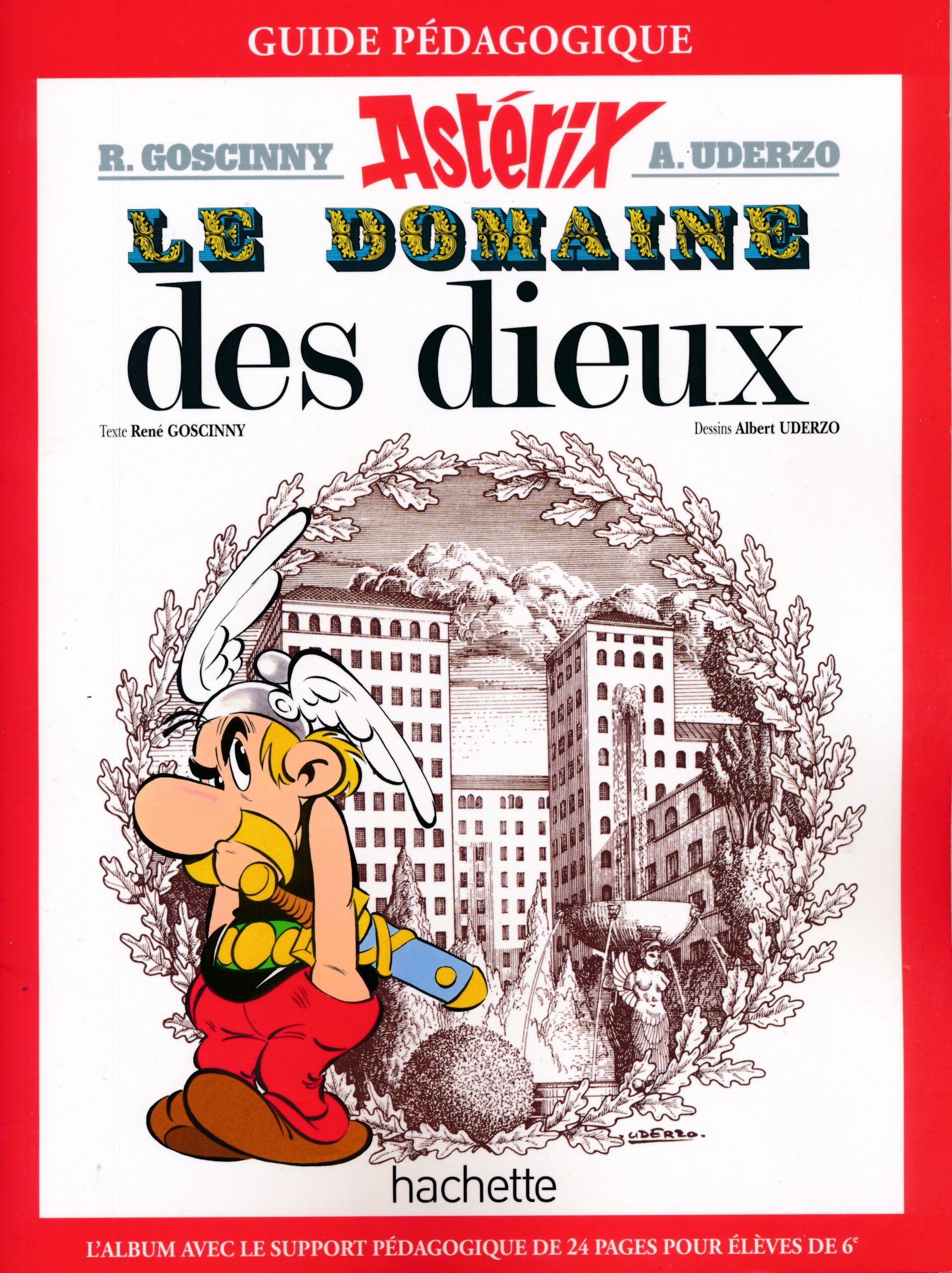
17. The Mansions of the Gods
A Satire on Modernity
Asterix and the Mansions of the Gods, the seventeenth volume in the beloved Asterix comic book series, takes a satirical look at the impact of modern development and consumerism on society. Created by the legendary duo of René Goscinny (stories) and Albert Uderzo (illustrations) in 1971, this album offers a humorous yet insightful commentary on the changing world around them.
This album was also the inspiration for the animated feature length movie with the same title.

Synopsis
The story unfolds when Julius Caesar, in a bid to further Romanize Gaul, decrees that the forest surrounding the indomitable Gaulish village be cleared to make way for “The Mansions of the Gods,” a luxurious colony for wealthy Roman citizens. This ambitious project is spearheaded by the arrogant architect Squaronthehypotenus, who oversees an army of slaves tasked with felling the trees.
However, Asterix and Obelix, aided by Getafix’s magic, cleverly thwart the Roman plans. They plant acorns that instantly grow into mature oaks, halting the deforestation efforts. This unexpected turn of events leads to a series of humorous and unexpected consequences:
- The Slave Rebellion: When Squaronthehypotenus threatens to “work the slaves to death,” Asterix, in a bid to help, gives them the magic potion. Instead of fleeing, the empowered slaves demand better working conditions, fair wages, and eventual freedom, demonstrating a newfound sense of agency.
- The Rise of Consumerism: The arrival of the first Roman residents transforms the village into a tourist trap. The Gauls, eager to capitalize on the influx of Romans, engage in price gouging, selling “antique” weapons and fish to the unsuspecting newcomers.
The idyllic image of Roman life in the “Mansions of the Gods” quickly fades. The Romans find themselves subjected to the whims of their developers, facing unexpected challenges and inconveniences. Ultimately, the “Mansions of the Gods” project collapses under its own weight. The Romans, driven away by the incessant noise of Cacofonix’s lyre playing, abandon their luxurious homes, leaving behind a ghost town.
Critique on Modern Life
“Asterix and the Mansions of the Gods” goes beyond mere slapstick humor. It serves as a poignant satire of modern society, reflecting the social and political climate of the late 1960s. The album critiques:
- The destructive impact of unchecked development: The deforestation of the forest serves as a metaphor for the environmental destruction caused by unchecked human progress.
- The exploitation of labor: The story highlights the plight of the exploited slaves and their struggle for better working conditions, reflecting the growing social awareness of labor rights.
- The rise of consumerism: The album satirizes the allure of consumerism and its potential to erode traditional values and disrupt the harmony of communities.
Latin Quotes
The Latin phrase “Gnothi sauton,” meaning “Know thyself,” appears in the album and is attributed to the ancient Greek philosopher Socrates. This emphasizes the importance of self-awareness and introspection, a timeless philosophical concept that continues to resonate today.
Uderzo’s change
n the original script, Goscinny wrote a line describing how Getafix throws an acorn into a hole:
« Et il envoie son gland dans le trou »
The French word gland means both “acorn” and, in slang, “penis/testicle.” Read literally, the sentence could be interpreted as a sexual joke.
Albert Uderzo, who always paid close attention to how dialogue would be received visually and verbally, found the wording potentially embarrassing. He therefore changed the text in the published album to a more neutral version:
« Il lance une graine de chêne dans le trou » (“He throws an oak seed into the hole.”)
This edit kept the intended meaning (Getafix sowing magical acorns) while avoiding unintended innuendo. It’s a rare recorded case of Uderzo altering Goscinny’s dialogue — usually the text was left exactly as written.
Conclusion
The album balances adventure, humor, and a touch of drama, as it explores themes of sacrifice, friendship, and courage. The story is filled with witty references to various cultural elements and a series of comical yet heroic moments. Asterix and the Magic Carpet is one of the most colorful and exotic entries in the Asterix canon, introducing the first significant reference to India in the series.
Production
- Text: Uderzo
- Drawings: Uderzo
- Release: 1971
Titles
- fr: Le Domaine des dieux
- de: Die Trabantenstadt
- es: La residencia de los Dioses
- it: Asterix e il regno degli dei
- nl: De romeinse lusthof
- pt: O Domínio dos Deuses


Cacofonix’s Hits
In the French original Cacofonix chases the Romans away with his version of Darla Dirladada while in the English translation he uses Twelve Days of Christmas.
Cacofonix is not the only one singing in this album, the slaves parody a line from the Belgium anthem, La Brabançonne, which in the English version becomes an adaptation of Rule Britannia.