For decades, the creators of the Asterix comic book series have delighted readers with layers of visual gags, historical puns, and linguistic wordplay. When Astérix chez les Pictes (Asterix and the Picts) was published in 2013, it introduced a whole tribe of Scottish Highlanders with a penchant for clan-based nomenclature.
Among them is a character whose name packs a particularly clever vehicular punch that is entirely invisible to anyone relying solely on a literal reading: Mac Atrell.
The French Original: A Classic French Hatchback
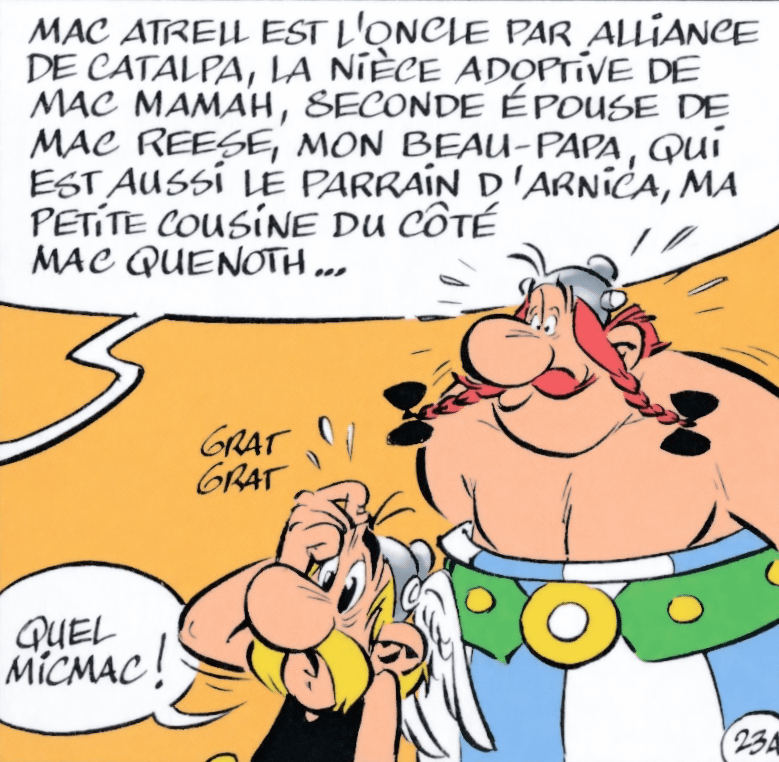
To a French speaker, reading out the name Mac Atrell triggers an immediate auditory pun. Spoken aloud, Mac Atrell sounds identical to “Ma quatre L” (My Four-L).
In France, the iconic Renault 4L (or Renault 4) is a cultural touchstone. Produced from 1961 to 1992, this utilitarian, highly approachable hatchback was ubiquitous on French roads. By naming a Pictish clansman “Ma Quatre L,” the authors lean into a phonetic car joke disguised as a traditional Scottish patronymic prefix (Mac-).
Lost in Translation? Keeping the Wheels Turning
Translating Asterix is notoriously difficult because the humor relies so heavily on French idioms and cultural references. Translators often have to discard the original joke entirely and invent a brand-new one that fits the local language.
Remarkably, translators in both the Netherlands and the English-speaking world decided to respect the spirit of the original gag by keeping the car theme alive, adapting it to their respective linguistic landscapes:
- The Dutch Translation: Mac Atrell transforms into MacLaxon. Spoken aloud in Dutch, this plays on “Ma claxon” (My car horn), maintaining the comedic illusion of a Scottish clan member named after an automotive part.
- The English Translation: The English adaptation steers in a slightly fancier direction, naming the character MacLaren. While sharing its name with a famous high-end British automotive manufacturer and Formula 1 racing team, it fits seamlessly into standard English expectations of a Scottish surname while preserving the underlying vehicular homage.


For decades, the creators of the Asterix comic book series have delighted readers with layers of visual gags, historical puns, and linguistic wordplay. When Astérix chez les Pictes (Asterix and the Picts) was published in 2013, it introduced a whole tribe of Scottish Highlanders with a penchant for clan-based nomenclature.
Among them is a character whose name packs a particularly clever vehicular punch that is entirely invisible to anyone relying solely on a literal reading: Mac Atrell.
The French Original: A Classic French Hatchback
To a French speaker, reading out the name Mac Atrell triggers an immediate auditory pun. Spoken aloud, Mac Atrell sounds identical to “Ma quatre L” (My Four-L).
In France, the iconic Renault 4L (or Renault 4) is a cultural touchstone. Produced from 1961 to 1992, this utilitarian, highly approachable hatchback was ubiquitous on French roads. By naming a Pictish clansman “Ma Quatre L,” the authors lean into a phonetic car joke disguised as a traditional Scottish patronymic prefix (Mac-).
Lost in Translation? Keeping the Wheels Turning
Translating Asterix is notoriously difficult because the humor relies so heavily on French idioms and cultural references. Translators often have to discard the original joke entirely and invent a brand-new one that fits the local language.
Remarkably, translators in both the Netherlands and the English-speaking world decided to respect the spirit of the original gag by keeping the car theme alive, adapting it to their respective linguistic landscapes:
- The Dutch Translation: Mac Atrell transforms into MacLaxon. Spoken aloud in Dutch, this plays on “Ma claxon” (My car horn), maintaining the comedic illusion of a Scottish clan member named after an automotive part.
- The English Translation: The English adaptation steers in a slightly fancier direction, naming the character MacLaren. While sharing its name with a famous high-end British automotive manufacturer and Formula 1 racing team, it fits seamlessly into standard English expectations of a Scottish surname while preserving the underlying vehicular homage.