When people think of Asterix, they often picture an indomitable Gaul standing in a small village somewhere in Armorica. Few realize that the famous comic hero was actually created in a modest apartment in the Paris suburb of Bobigny in 1959.
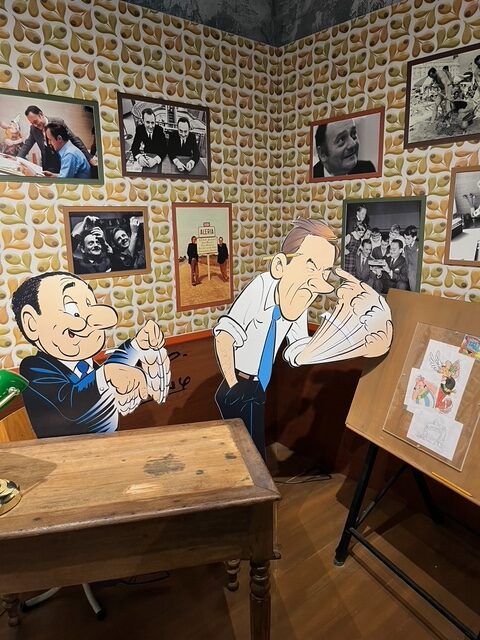
It was there that artist Albert Uderzo lived and worked when he and writer René Goscinny launched what would become one of the most successful comic series in the world. The story of Asterix’s creation is not only a cultural milestone in comic history, but also a small reflection of modern French history.
A Comic Hero Born in Postwar France
In 1959, Uderzo and Goscinny created Asterix for the new magazine Pilote. At the time, comic books in France were still largely regarded as children’s entertainment and were often dismissed as trivial reading.
The partnership between the two creators helped transform that perception. Their stories combined historical references, satire, wordplay, and visual humor that appealed to adults as much as to younger readers. Over time, the Asterix series would become one of the most widely translated comic franchises in the world, with hundreds of millions of albums sold.
The backgrounds of the creators themselves also reflected the diversity of postwar France. Uderzo was the son of Italian immigrants, while Goscinny was born in Paris to Jewish parents of Polish origin and spent much of his youth in Argentina and the United States. Together, they created a hero who would later become one of the most recognizable cultural symbols of France abroad.
Creating Asterix in the New Suburbs

When Asterix was first conceived, Uderzo was living in a newly built housing estate in Bobigny, just northeast of Paris. These types of developments were typical of the period known as the Trente Glorieuses, the thirty years of rapid economic growth and reconstruction in France following the Second World War (roughly 1945–1975).
During this time, large numbers of modern apartment complexes were built around Paris to accommodate a growing urban population. Uderzo lived in Bobigny for roughly a decade, working from his apartment and drawing the early Asterix adventures that would soon bring international recognition.
From this quiet suburban setting emerged the visual world of Gaulish villages, Roman camps, pirates, and traveling heroes that would capture the imagination of readers around the globe.
An Unexpected Archaeological Discovery
More than thirty years after Asterix was created in Bobigny, the town produced a remarkable historical discovery. In the early 1990s, archaeological work carried out during urban development projects uncovered an extensive ancient burial site.
Excavations eventually revealed what archaeologists identified as one of the largest known Gallic cemeteries in Europe. The necropolis contained hundreds of graves dating back to the Iron Age, associated with the Celtic cultures that inhabited Gaul before the Roman conquest.
Many of the burials belonged to the La Tène cultural period, roughly between the 3rd and 2nd centuries BCE. The graves included pottery, jewelry, weapons, and everyday objects that provided valuable insights into the social structure and craftsmanship of the Gallic communities living in the region at that time.
Archaeologists also uncovered evidence of nearby artisanal activity, suggesting the presence of a settlement where metalworking and other crafts were practiced. The scale of the cemetery and associated settlement made the site one of the most significant archaeological discoveries relating to ancient Gaul in the Paris region.

A Symbolic Connection
The coincidence is striking. The suburb where Uderzo drew the first adventures of Asterix later revealed a vast burial ground belonging to the very people his stories celebrated: the ancient Gauls.
Of course, there is no mystical connection between the discovery and the creation of the comic series. Yet the story does highlight an unexpected link between modern French culture and the ancient past that inspired it.
In a quiet apartment in Bobigny, two creators imagined a fictional Gaulish hero who would become famous across the world. Decades later, the same ground yielded real traces of the historical Gauls who once lived there.

If you think this is interesting and master the French language, you might want to read Drôles de gaulois : autour d’Astérix by Jean-Claude Lescure. (ISBN: 9782917191279)


When people think of Asterix, they often picture an indomitable Gaul standing in a small village somewhere in Armorica. Few realize that the famous comic hero was actually created in a modest apartment in the Paris suburb of Bobigny in 1959.
It was there that artist Albert Uderzo lived and worked when he and writer René Goscinny launched what would become one of the most successful comic series in the world. The story of Asterix’s creation is not only a cultural milestone in comic history, but also a small reflection of modern French history.
A Comic Hero Born in Postwar France
In 1959, Uderzo and Goscinny created Asterix for the new magazine Pilote. At the time, comic books in France were still largely regarded as children’s entertainment and were often dismissed as trivial reading.
The partnership between the two creators helped transform that perception. Their stories combined historical references, satire, wordplay, and visual humor that appealed to adults as much as to younger readers. Over time, the Asterix series would become one of the most widely translated comic franchises in the world, with hundreds of millions of albums sold.
The backgrounds of the creators themselves also reflected the diversity of postwar France. Uderzo was the son of Italian immigrants, while Goscinny was born in Paris to Jewish parents of Polish origin and spent much of his youth in Argentina and the United States. Together, they created a hero who would later become one of the most recognizable cultural symbols of France abroad.
Creating Asterix in the New Suburbs
When Asterix was first conceived, Uderzo was living in a newly built housing estate in Bobigny, just northeast of Paris. These types of developments were typical of the period known as the Trente Glorieuses, the thirty years of rapid economic growth and reconstruction in France following the Second World War (roughly 1945–1975).
During this time, large numbers of modern apartment complexes were built around Paris to accommodate a growing urban population. Uderzo lived in Bobigny for roughly a decade, working from his apartment and drawing the early Asterix adventures that would soon bring international recognition.
From this quiet suburban setting emerged the visual world of Gaulish villages, Roman camps, pirates, and traveling heroes that would capture the imagination of readers around the globe.
An Unexpected Archaeological Discovery
More than thirty years after Asterix was created in Bobigny, the town produced a remarkable historical discovery. In the early 1990s, archaeological work carried out during urban development projects uncovered an extensive ancient burial site.
Excavations eventually revealed what archaeologists identified as one of the largest known Gallic cemeteries in Europe. The necropolis contained hundreds of graves dating back to the Iron Age, associated with the Celtic cultures that inhabited Gaul before the Roman conquest.
Many of the burials belonged to the La Tène cultural period, roughly between the 3rd and 2nd centuries BCE. The graves included pottery, jewelry, weapons, and everyday objects that provided valuable insights into the social structure and craftsmanship of the Gallic communities living in the region at that time.
Archaeologists also uncovered evidence of nearby artisanal activity, suggesting the presence of a settlement where metalworking and other crafts were practiced. The scale of the cemetery and associated settlement made the site one of the most significant archaeological discoveries relating to ancient Gaul in the Paris region.
A Symbolic Connection
The coincidence is striking. The suburb where Uderzo drew the first adventures of Asterix later revealed a vast burial ground belonging to the very people his stories celebrated: the ancient Gauls.
Of course, there is no mystical connection between the discovery and the creation of the comic series. Yet the story does highlight an unexpected link between modern French culture and the ancient past that inspired it.
In a quiet apartment in Bobigny, two creators imagined a fictional Gaulish hero who would become famous across the world. Decades later, the same ground yielded real traces of the historical Gauls who once lived there.
If you think this is interesting and master the French language, you might want to read Drôles de gaulois : autour d’Astérix by Jean-Claude Lescure. (ISBN: 9782917191279)