With the announcement of a rerelease of Astérix et les Normands in a deluxe 2026 edition, the time may finally be ripe for a long-awaited version in the Norman language. This potential feels especially poignant as a recent translation of Asterix into Gaumais demonstrates that the indomitable Gauls still have a place in the diverse linguistic landscape of the Oïl languages.
The Legacy of Earlier Attempts

This is not the first time enthusiasts have sought to bring the Norse visitors of the 1966 classic into their regional tongue. In February 2014, the regional webzine L’Étoile de Normandie highlighted an ambitious initiative by the Université Rurale Cauchoise (U.R.C.) to produce a translation specifically in Cauchois, the variety of Norman spoken in the Pays de Caux.
Preliminary work on the Cauchois script had already begun, but the project faced a major setback when the original project leader passed away, leaving progress stalled for years. Despite this, members of the URC—including the storyteller Michel Lecouteux—expressed a strong desire to revive the effort. They saw the translation not merely as a novelty, but as a vital tool for language exposure and preservation, inviting local supporters to help transform a manuscript into a published reality.
A Modern Literary Landscape
The URC’s efforts reflect a broader ambition to see Norman treated as a living literary language. Translating global icons like Asterix or Tintin can attract younger readers and raise the language’s cultural profile.
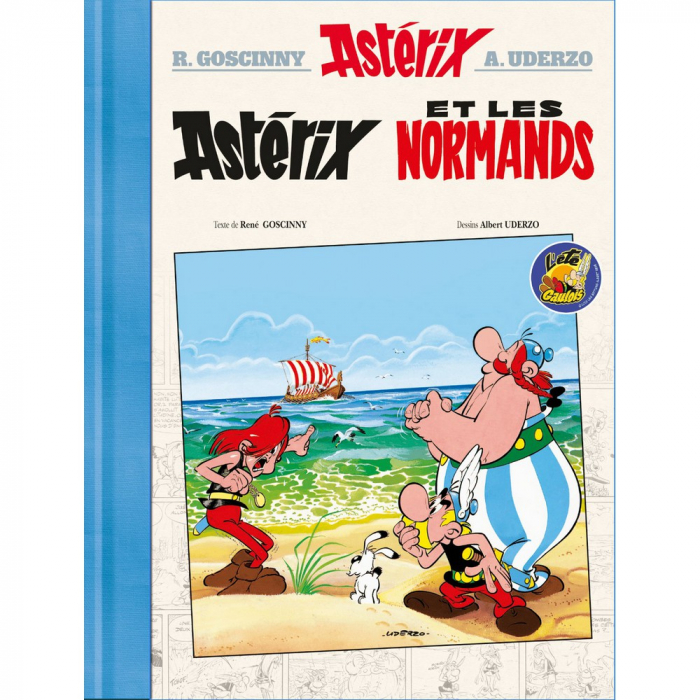
While several regional languages, including Picard and Breton, have long enjoyed their own Asterix editions, an official Norman version remains the “missing piece” of the collection. With the 2026 deluxe edition on the horizon, the Norman-speaking community may finally have the perfect catalyst to turn this decade-old dream into a reality, ensuring Asterix becomes a permanent part of Normandy’s modern literary scene.


With the announcement of a rerelease of Astérix et les Normands in a deluxe 2026 edition, the time may finally be ripe for a long-awaited version in the Norman language. This potential feels especially poignant as a recent translation of Asterix into Gaumais demonstrates that the indomitable Gauls still have a place in the diverse linguistic landscape of the Oïl languages.
The Legacy of Earlier Attempts
This is not the first time enthusiasts have sought to bring the Norse visitors of the 1966 classic into their regional tongue. In February 2014, the regional webzine L’Étoile de Normandie highlighted an ambitious initiative by the Université Rurale Cauchoise (U.R.C.) to produce a translation specifically in Cauchois, the variety of Norman spoken in the Pays de Caux.
Preliminary work on the Cauchois script had already begun, but the project faced a major setback when the original project leader passed away, leaving progress stalled for years. Despite this, members of the URC—including the storyteller Michel Lecouteux—expressed a strong desire to revive the effort. They saw the translation not merely as a novelty, but as a vital tool for language exposure and preservation, inviting local supporters to help transform a manuscript into a published reality.
A Modern Literary Landscape
The URC’s efforts reflect a broader ambition to see Norman treated as a living literary language. Translating global icons like Asterix or Tintin can attract younger readers and raise the language’s cultural profile.
While several regional languages, including Picard and Breton, have long enjoyed their own Asterix editions, an official Norman version remains the “missing piece” of the collection. With the 2026 deluxe edition on the horizon, the Norman-speaking community may finally have the perfect catalyst to turn this decade-old dream into a reality, ensuring Asterix becomes a permanent part of Normandy’s modern literary scene.