Titus Labienus was one of the most prominent Roman officers of the late Republic and a key figure in Julius Caesar’s conquest of Gaul. Although he remains far less familiar to the general public than Caesar or Pompey, Labienus’s military career was defined by strategic discipline, operational independence, and several decisive engagements that shaped the course of the Gallic Wars. His documented movements around Lutetia (modern Paris) provide the strongest factual link to the Roman commander named Labienus in the Dogmatix and the Indomitables spin-off series, making the historical general the most plausible inspiration for the fictional character.
Titus Labienus in the Gallic Wars
As Caesar’s senior legate during the Gallic campaigns (58–50 BCE), Labienus was entrusted with high-stakes operations that required both tactical precision and independent judgment. Caesar’s Commentarii de Bello Gallico consistently presents him as one of Rome’s most capable commanders.

In 52 BCE, during the widespread Gallic revolt, Labienus led Roman forces against the Parisii, whose territory included Lutetia. Caesar describes Labienus marching on the region, engaging Parisii forces, and executing a well-planned series of river crossings over the Seine to secure Roman control of the area. This campaign is the closest historical association between the real Labienus and Lutetia.
While Rome did not impose individual “governors” or “rulers” over Gallic settlements at this stage, Labienus’s command in the region explains why his name can be credibly linked to a Roman authority figure in a fictional narrative set near Lutetia. His historical actions—leading troops, negotiating the terrain, and defeating the Parisii near their principal town—align neatly with the type of Roman presence the Dogmatix series depicts.
Labienus and the Roman Civil War
Labienus’s career took a dramatic turn during the Roman Civil War. When conflict erupted in 49 BCE, he abandoned Caesar and aligned himself with Pompey, becoming one of Caesar’s most resolute adversaries. He fought against his former commander in multiple campaigns and ultimately died in 45 BCE at the Battle of Munda. This defection and his subsequent role in the war contribute to his reputation as a politically and militarily significant figure of the late Republic.
Influence on Dogmatix and the Indomitables
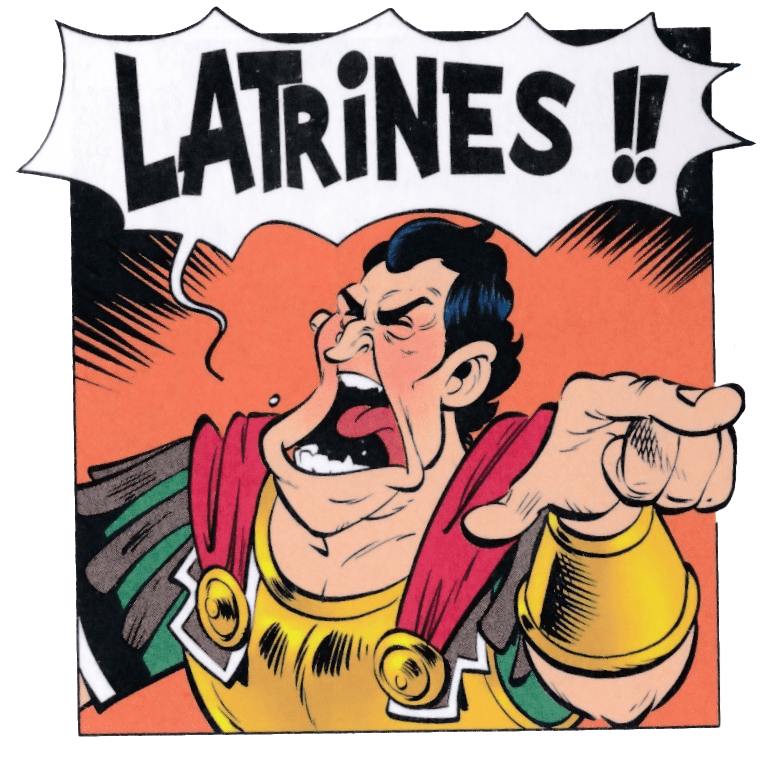
Titus Labienus stands out as the only Roman officer securely documented in the Lutetia region during Caesar’s campaigns. The name and geographical association strongly suggest that he was the model—at least nominally—for the fictional commander. Beyond the shared name and setting, however, the comic’s Labienus is entirely invented.
A Long-Delayed Return to the Spotlight
After two millennia of relative obscurity, Titus Labienus finally finds himself in the spotlights. Although no ancient portrait, inscription, or later artistic tradition preserved his memory, he now reaches a contemporary audience that may be larger than anything possible in his own lifetime. If we assume he would have welcomed the renewed interest, it is fitting that the Asterix universe—famous for blending history with humor—has brought his name back into circulation. For a commander who played a decisive role in Caesar’s campaigns yet slipped from public consciousness, this belated recognition represents a remarkable postscript to his historical legacy.

Another Titus Labienus: The Historian
A separate individual known as Titus Labienus lived during the early Roman Empire. Often referred to as Labienus the historian, he wrote works critical of Augustus. His writings were condemned and publicly burned, and ancient accounts state that he committed suicide after their suppression. This Labienus bears no connection to Caesar’s legate but is occasionally confused with him due to the identical name.


Titus Labienus was one of the most prominent Roman officers of the late Republic and a key figure in Julius Caesar’s conquest of Gaul. Although he remains far less familiar to the general public than Caesar or Pompey, Labienus’s military career was defined by strategic discipline, operational independence, and several decisive engagements that shaped the course of the Gallic Wars. His documented movements around Lutetia (modern Paris) provide the strongest factual link to the Roman commander named Labienus in the Dogmatix and the Indomitables spin-off series, making the historical general the most plausible inspiration for the fictional character.
Titus Labienus in the Gallic Wars
As Caesar’s senior legate during the Gallic campaigns (58–50 BCE), Labienus was entrusted with high-stakes operations that required both tactical precision and independent judgment. Caesar’s Commentarii de Bello Gallico consistently presents him as one of Rome’s most capable commanders.
In 52 BCE, during the widespread Gallic revolt, Labienus led Roman forces against the Parisii, whose territory included Lutetia. Caesar describes Labienus marching on the region, engaging Parisii forces, and executing a well-planned series of river crossings over the Seine to secure Roman control of the area. This campaign is the closest historical association between the real Labienus and Lutetia.
While Rome did not impose individual “governors” or “rulers” over Gallic settlements at this stage, Labienus’s command in the region explains why his name can be credibly linked to a Roman authority figure in a fictional narrative set near Lutetia. His historical actions—leading troops, negotiating the terrain, and defeating the Parisii near their principal town—align neatly with the type of Roman presence the Dogmatix series depicts.
Labienus and the Roman Civil War
Labienus’s career took a dramatic turn during the Roman Civil War. When conflict erupted in 49 BCE, he abandoned Caesar and aligned himself with Pompey, becoming one of Caesar’s most resolute adversaries. He fought against his former commander in multiple campaigns and ultimately died in 45 BCE at the Battle of Munda. This defection and his subsequent role in the war contribute to his reputation as a politically and militarily significant figure of the late Republic.
Influence on Dogmatix and the Indomitables
Titus Labienus stands out as the only Roman officer securely documented in the Lutetia region during Caesar’s campaigns. The name and geographical association strongly suggest that he was the model—at least nominally—for the fictional commander. Beyond the shared name and setting, however, the comic’s Labienus is entirely invented.
A Long-Delayed Return to the Spotlight
After two millennia of relative obscurity, Titus Labienus finally finds himself in the spotlights. Although no ancient portrait, inscription, or later artistic tradition preserved his memory, he now reaches a contemporary audience that may be larger than anything possible in his own lifetime. If we assume he would have welcomed the renewed interest, it is fitting that the Asterix universe—famous for blending history with humor—has brought his name back into circulation. For a commander who played a decisive role in Caesar’s campaigns yet slipped from public consciousness, this belated recognition represents a remarkable postscript to his historical legacy.
Another Titus Labienus: The Historian
A separate individual known as Titus Labienus lived during the early Roman Empire. Often referred to as Labienus the historian, he wrote works critical of Augustus. His writings were condemned and publicly burned, and ancient accounts state that he committed suicide after their suppression. This Labienus bears no connection to Caesar’s legate but is occasionally confused with him due to the identical name.