In the world of Asterix, beneath the humor, puns, and boar roasts, there is a remarkably structured echo of Iron Age social order: the three learned classes of druids, seers (vates), and bards. Goscinny and Uderzo may have exaggerated for comedy, but their inspiration comes from real ethnographic traditions recorded by ancient authors such as Posidonius (through Diodorus Siculus) and Strabo.
Druids: The Supreme Counselors of Gaul
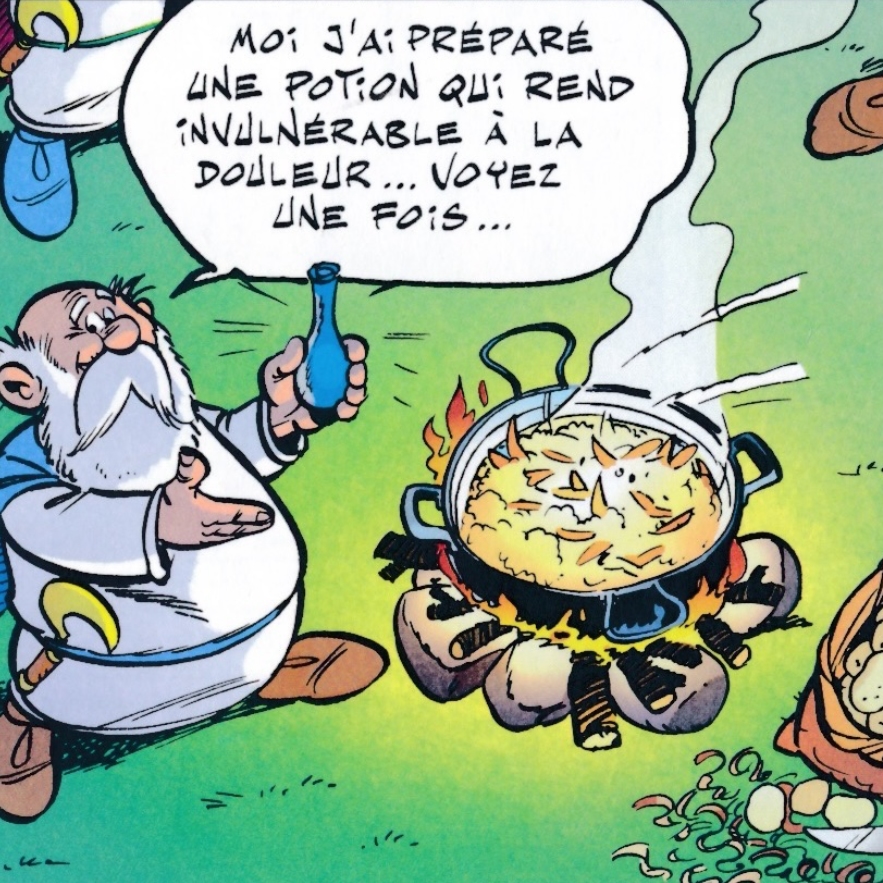
Classical writers viewed druids as Gaul’s intellectual elite. They were religious leaders, philosophers, judges, and teachers. According to Julius Caesar, druids were exempt from military service and taxation — a sign of their very high social standing.
In Asterix, Getafix (Panoramix) plays this role almost perfectly. He brews the village potion, meditates on difficult questions, and settles disputes. He also travels to the annual Druid assembly in the Forest of the Carnutes — an event inspired by Caesar’s mention that druids met annually in Carnutes territory to deliberate on grave matters.
The iconic image of Getafix with a golden sickle, used to harvest mistletoe, also draws on classical tradition: Pliny the Elder describes druids harvesting mistletoe with a golden sickle, in white robes.
Vates / Seers: Inspectors of Omens and Prophecy

Alongside druidic authority, ancient sources report a second class known as the vates (also called ouateis) who served as diviners and seers. These individuals handled practices connected to sacrifices, augury, and interpreting the will of the gods. Their function was distinct from druidic governance, yet they formed part of the same intellectual elite.
In Asterix and the Soothsayer, this class is embodied by Prolix, a self-styled prophet who manipulates the beliefs of the villagers for his own advantage. The contrast with Getafix is telling: where Getafix represents socially sanctioned ritual knowledge, Prolix represents superstition and showmanship. While the vates of ancient Gaul probably carried serious ritual responsibility, Asterix satirizes the misuse of prophecy in village life.
Bards: Memory-Keepers and Poets

The third class in ancient Gaelic society was the bardi, or bards — poets, singers, and oral historians who preserved genealogies, legends, and tradition. According to classical sources, they composed both praise and satire, reciting heroic legends at feasts and public gatherings.
In Asterix, the village bard is Cacofonix (Assurancetourix). Though he holds a place on the village council and lives in a treehouse, his musical “talent” is notoriously awful; his singing leads villagers to tie him up at celebrations. This is a playful inversion: historically, bards were important for preserving memory and exerting cultural influence, but Asterix turns the role into comic fodder — the bard who can’t actually sing.
How Asterix Honors (and Parodies) Historical Structure
- Faithful foundation: The tripartite division (druids, seers, bards) is historically attested by Greek and Roman authors.
- Condensed characters: Rather than full communities of learned men, the comics give us singular characters: Getafix as the wise druid, Prolix as the questionable seer, Cacofonix as the hapless bard.
- Satire rooted in reality: While the Asterix stories exaggerate, they echo genuine social tensions — between ritual authority and opportunistic prophecy, between cultural prestige and comedic ineptitude.
Historical Nuances to Consider
- The functions of vates and druids may have overlapped in ancient times; the clean separation Asterix uses is a modern simplification.
- Some traditional beliefs about bards — for example, that their satire could physically harm a target — come from Insular Celtic (Irish) sources, not clearly from Continental Gaul.
- While Asterix draws on authors such as Caesar and Pliny (particularly the mistletoe ritual), there is no strong evidence that Goscinny and Uderzo were directly reading or interpreting all of Strabo or Diodorus Siculus — their picture is filtered through popular Celticist knowledge of their time.
Why This Matters for Asterix Fans
Understanding the real social structure behind the learned classes in ancient Gaul doesn’t just deepen our appreciation of the Asterix universe — it shows how Goscinny and Uderzo turned snippets of ancient ethnography into living, funny characters. When Getafix speaks wisely, or Prolix wheedles with prophecy, or Cacofonix insists on singing, we’re not just watching jokes — we’re glimpsing a comic mirror held up to real Iron Age institutions.


In the world of Asterix, beneath the humor, puns, and boar roasts, there is a remarkably structured echo of Iron Age social order: the three learned classes of druids, seers (vates), and bards. Goscinny and Uderzo may have exaggerated for comedy, but their inspiration comes from real ethnographic traditions recorded by ancient authors such as Posidonius (through Diodorus Siculus) and Strabo.
Druids: The Supreme Counselors of Gaul
Classical writers viewed druids as Gaul’s intellectual elite. They were religious leaders, philosophers, judges, and teachers. According to Julius Caesar, druids were exempt from military service and taxation — a sign of their very high social standing.
In Asterix, Getafix (Panoramix) plays this role almost perfectly. He brews the village potion, meditates on difficult questions, and settles disputes. He also travels to the annual Druid assembly in the Forest of the Carnutes — an event inspired by Caesar’s mention that druids met annually in Carnutes territory to deliberate on grave matters.
The iconic image of Getafix with a golden sickle, used to harvest mistletoe, also draws on classical tradition: Pliny the Elder describes druids harvesting mistletoe with a golden sickle, in white robes.
Vates / Seers: Inspectors of Omens and Prophecy
Alongside druidic authority, ancient sources report a second class known as the vates (also called ouateis) who served as diviners and seers. These individuals handled practices connected to sacrifices, augury, and interpreting the will of the gods. Their function was distinct from druidic governance, yet they formed part of the same intellectual elite.
In Asterix and the Soothsayer, this class is embodied by Prolix, a self-styled prophet who manipulates the beliefs of the villagers for his own advantage. The contrast with Getafix is telling: where Getafix represents socially sanctioned ritual knowledge, Prolix represents superstition and showmanship. While the vates of ancient Gaul probably carried serious ritual responsibility, Asterix satirizes the misuse of prophecy in village life.
Bards: Memory-Keepers and Poets
The third class in ancient Gaelic society was the bardi, or bards — poets, singers, and oral historians who preserved genealogies, legends, and tradition. According to classical sources, they composed both praise and satire, reciting heroic legends at feasts and public gatherings.
In Asterix, the village bard is Cacofonix (Assurancetourix). Though he holds a place on the village council and lives in a treehouse, his musical “talent” is notoriously awful; his singing leads villagers to tie him up at celebrations. This is a playful inversion: historically, bards were important for preserving memory and exerting cultural influence, but Asterix turns the role into comic fodder — the bard who can’t actually sing.
How Asterix Honors (and Parodies) Historical Structure
- Faithful foundation: The tripartite division (druids, seers, bards) is historically attested by Greek and Roman authors.
- Condensed characters: Rather than full communities of learned men, the comics give us singular characters: Getafix as the wise druid, Prolix as the questionable seer, Cacofonix as the hapless bard.
- Satire rooted in reality: While the Asterix stories exaggerate, they echo genuine social tensions — between ritual authority and opportunistic prophecy, between cultural prestige and comedic ineptitude.
Historical Nuances to Consider
- The functions of vates and druids may have overlapped in ancient times; the clean separation Asterix uses is a modern simplification.
- Some traditional beliefs about bards — for example, that their satire could physically harm a target — come from Insular Celtic (Irish) sources, not clearly from Continental Gaul.
- While Asterix draws on authors such as Caesar and Pliny (particularly the mistletoe ritual), there is no strong evidence that Goscinny and Uderzo were directly reading or interpreting all of Strabo or Diodorus Siculus — their picture is filtered through popular Celticist knowledge of their time.
Why This Matters for Asterix Fans
Understanding the real social structure behind the learned classes in ancient Gaul doesn’t just deepen our appreciation of the Asterix universe — it shows how Goscinny and Uderzo turned snippets of ancient ethnography into living, funny characters. When Getafix speaks wisely, or Prolix wheedles with prophecy, or Cacofonix insists on singing, we’re not just watching jokes — we’re glimpsing a comic mirror held up to real Iron Age institutions.