Cleopatra VII: The Last Pharaoh of Egypt
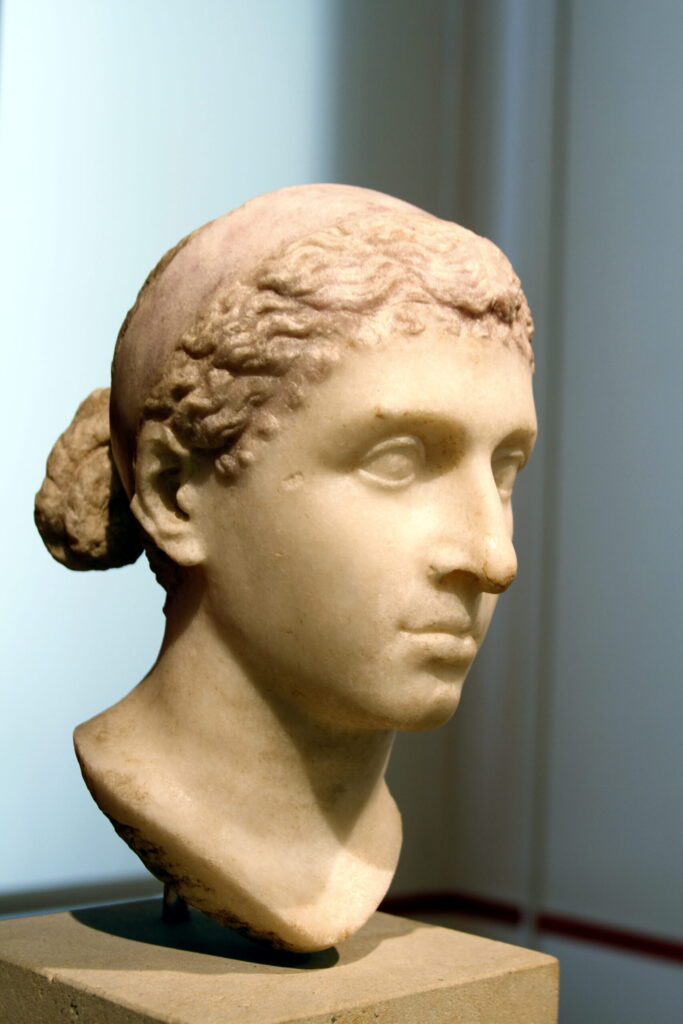
Cleopatra VII Philopator (69 BC – 30 BC) was the final active ruler of the Ptolemaic dynasty in Egypt. A descendant of one of Alexander the Great’s generals, she stood out by embracing Egyptian culture more fully than her predecessors. She spoke several languages, portrayed herself as the goddess Isis, and became a symbol of both political intelligence and personal charisma.
Her reign overlapped with the expansion of the Roman Republic. Cleopatra formed alliances with Julius Caesar and later with Mark Antony, hoping to safeguard Egypt’s independence. She bore Caesar a son, Caesarion, and shared both political and personal ties with Antony. Their defeat by Octavian (later Augustus) at the Battle of Actium in 31 BC marked the downfall of the Ptolemaic dynasty. Cleopatra’s suicide in 30 BC ended centuries of pharaonic rule and turned Egypt into a Roman province.
Cleopatra in the Asterix Comics
First Appearance: Astérix et Cléopâtre (1965)
Cleopatra’s debut in Astérix et Cléopâtre (Asterix and Cleopatra) parodies her legendary pride and beauty. In this story, she wagers with Julius Caesar that her people can still achieve greatness. To prove it, she commissions her architect Numérobis (En. Edifis) to build a magnificent palace within three months. When sabotage threatens the project, Asterix, Obelix, and Getafix step in to help.

She is portrayed as regal, quick-tempered, and extremely sensitive about her nose, a humorous nod to Blaise Pascal’s famous remark that “Cleopatra’s nose, had it been shorter, the whole face of the earth would have been different.” Uderzo’s illustrations exaggerate her elegance and vanity, making her both imposing and comical.
Second Appearance: Le Fils d’Astérix (1983)
Cleopatra’s second appearance comes almost two decades later in Le Fils d’Astérix (Asterix and Son). Her role is more limited but still rooted in her historical relationship with the Roman leader. Her inclusion underscores continuity with her earlier portrayal.
Cleopatra in Asterix Films
Astérix et Cléopâtre (1968 Animated Film)
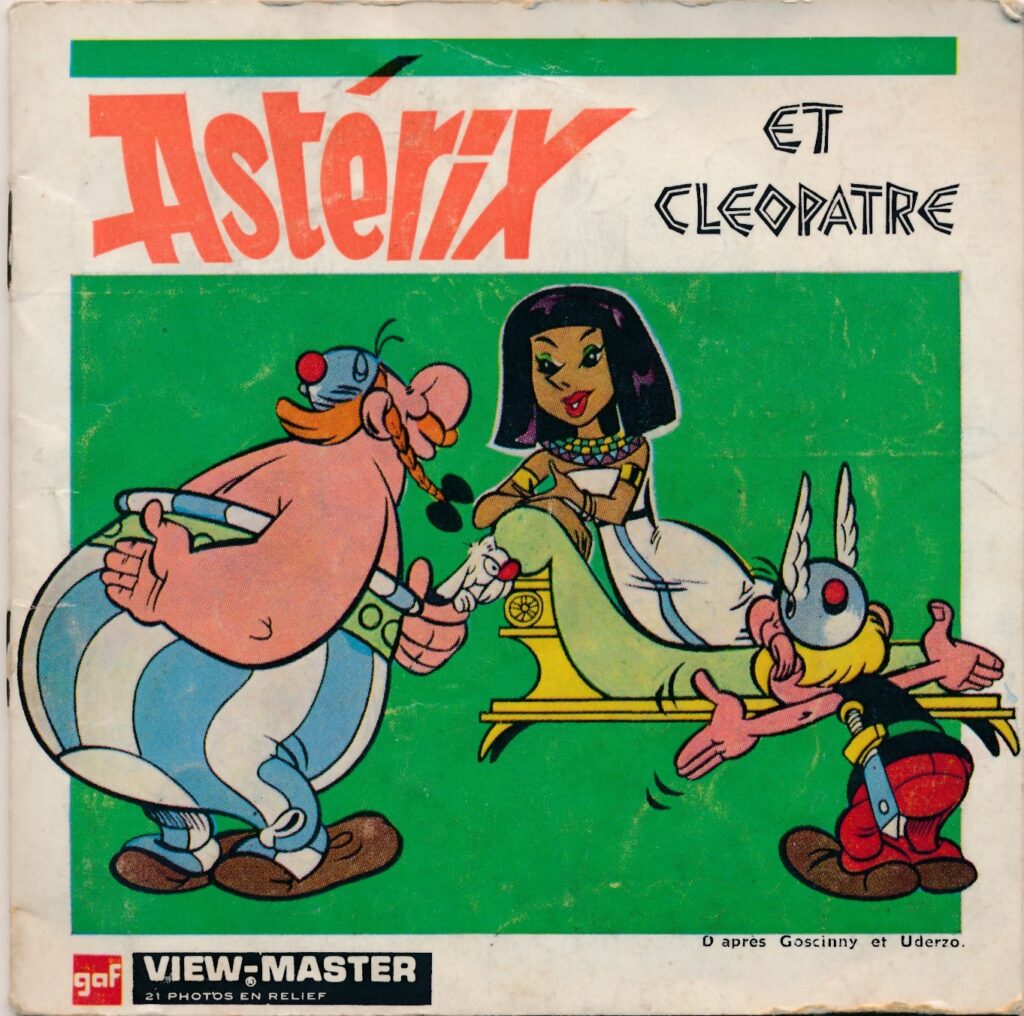
In 1968, Cleopatra appeared in the animated adaptation Astérix et Cléopâtre (Asterix and Cleopatra). Closely based on the comic, the film emphasizes her vanity, temper, and rivalry with Caesar, while providing a colorful setting for the Gauls’ adventures in Egypt.
Astérix & Obélix: Mission Cléopâtre (2002 Live-Action Film)
Cleopatra returned to the big screen in Astérix & Obélix: Mission Cléopâtre (Asterix & Obelix: Mission Cleopatra), directed by Alain Chabat. Portrayed by Monica Bellucci, she combines elegance with comic exaggeration, staying faithful to Uderzo’s visual caricature. The film became a major success in France, praised for its humor, visual effects, and clever reinterpretation of the classic album.
Satire and Legacy of Cleopatra in Asterix
In the Asterix universe, Cleopatra is less the political strategist of history and more a comic foil to Julius Caesar and the Gauls. Her fiery temper, pride, and vanity provide humor, yet her determination mirrors the historical queen’s resolve to defend Egypt’s honor.
Her appearances show how Goscinny and Uderzo drew on European cultural traditions that often depict Cleopatra as both a capable monarch and a mythical femme fatale. By blending history with parody, they ensured she remains one of the most iconic historical characters to appear in the Asterix series.


Cleopatra VII: The Last Pharaoh of Egypt
Cleopatra VII Philopator (69 BC – 30 BC) was the final active ruler of the Ptolemaic dynasty in Egypt. A descendant of one of Alexander the Great’s generals, she stood out by embracing Egyptian culture more fully than her predecessors. She spoke several languages, portrayed herself as the goddess Isis, and became a symbol of both political intelligence and personal charisma.
Her reign overlapped with the expansion of the Roman Republic. Cleopatra formed alliances with Julius Caesar and later with Mark Antony, hoping to safeguard Egypt’s independence. She bore Caesar a son, Caesarion, and shared both political and personal ties with Antony. Their defeat by Octavian (later Augustus) at the Battle of Actium in 31 BC marked the downfall of the Ptolemaic dynasty. Cleopatra’s suicide in 30 BC ended centuries of pharaonic rule and turned Egypt into a Roman province.
Cleopatra in the Asterix Comics
First Appearance: Astérix et Cléopâtre (1965)
Cleopatra’s debut in Astérix et Cléopâtre (Asterix and Cleopatra) parodies her legendary pride and beauty. In this story, she wagers with Julius Caesar that her people can still achieve greatness. To prove it, she commissions her architect Numérobis (En. Edifis) to build a magnificent palace within three months. When sabotage threatens the project, Asterix, Obelix, and Getafix step in to help.
She is portrayed as regal, quick-tempered, and extremely sensitive about her nose, a humorous nod to Blaise Pascal’s famous remark that “Cleopatra’s nose, had it been shorter, the whole face of the earth would have been different.” Uderzo’s illustrations exaggerate her elegance and vanity, making her both imposing and comical.
Second Appearance: Le Fils d’Astérix (1983)
Cleopatra’s second appearance comes almost two decades later in Le Fils d’Astérix (Asterix and Son). Her role is more limited but still rooted in her historical relationship with the Roman leader. Her inclusion underscores continuity with her earlier portrayal.
Cleopatra in Asterix Films
Astérix et Cléopâtre (1968 Animated Film)
In 1968, Cleopatra appeared in the animated adaptation Astérix et Cléopâtre (Asterix and Cleopatra). Closely based on the comic, the film emphasizes her vanity, temper, and rivalry with Caesar, while providing a colorful setting for the Gauls’ adventures in Egypt.
Astérix & Obélix: Mission Cléopâtre (2002 Live-Action Film)
Cleopatra returned to the big screen in Astérix & Obélix: Mission Cléopâtre (Asterix & Obelix: Mission Cleopatra), directed by Alain Chabat. Portrayed by Monica Bellucci, she combines elegance with comic exaggeration, staying faithful to Uderzo’s visual caricature. The film became a major success in France, praised for its humor, visual effects, and clever reinterpretation of the classic album.
Satire and Legacy of Cleopatra in Asterix
In the Asterix universe, Cleopatra is less the political strategist of history and more a comic foil to Julius Caesar and the Gauls. Her fiery temper, pride, and vanity provide humor, yet her determination mirrors the historical queen’s resolve to defend Egypt’s honor.
Her appearances show how Goscinny and Uderzo drew on European cultural traditions that often depict Cleopatra as both a capable monarch and a mythical femme fatale. By blending history with parody, they ensured she remains one of the most iconic historical characters to appear in the Asterix series.