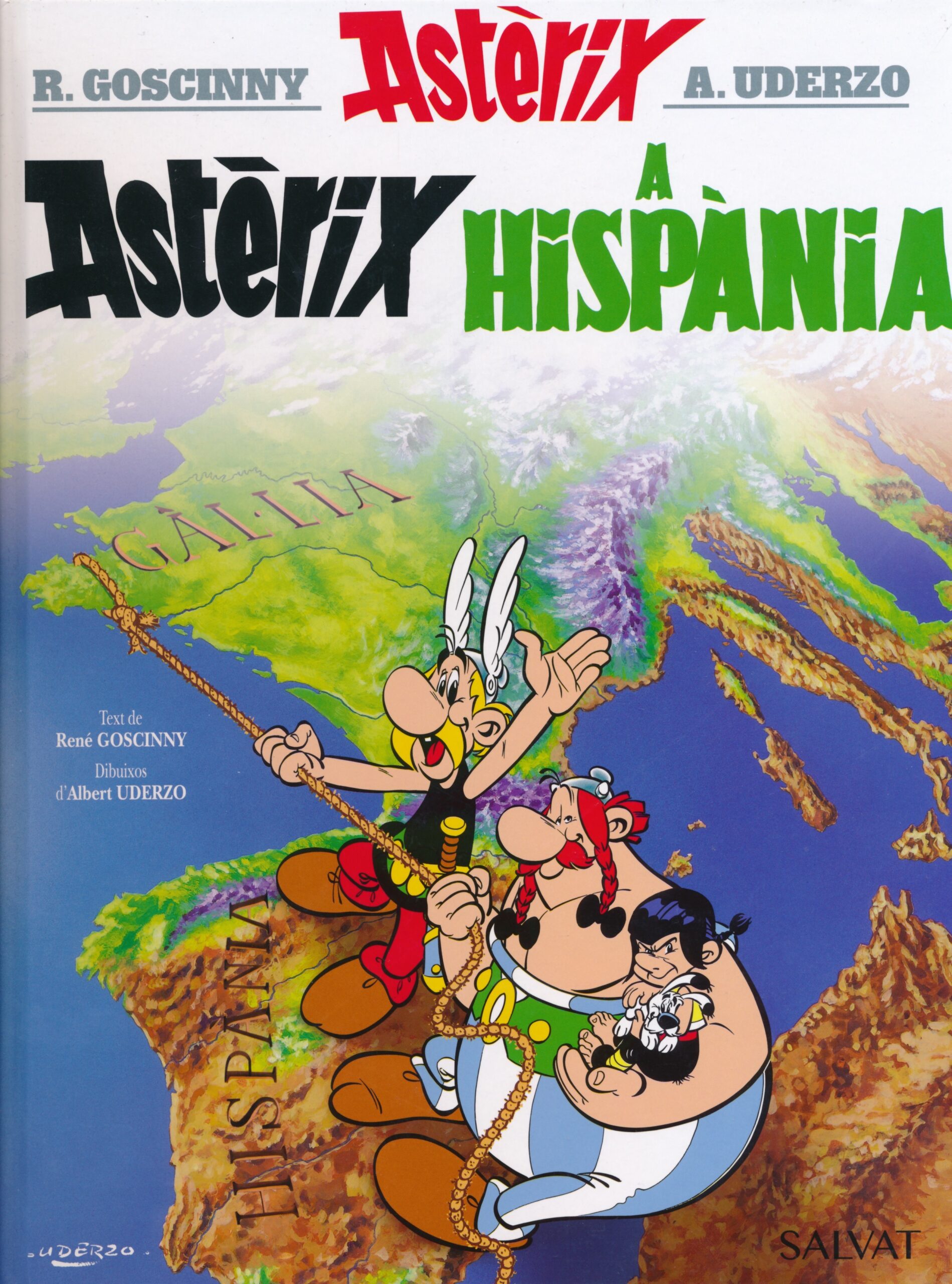
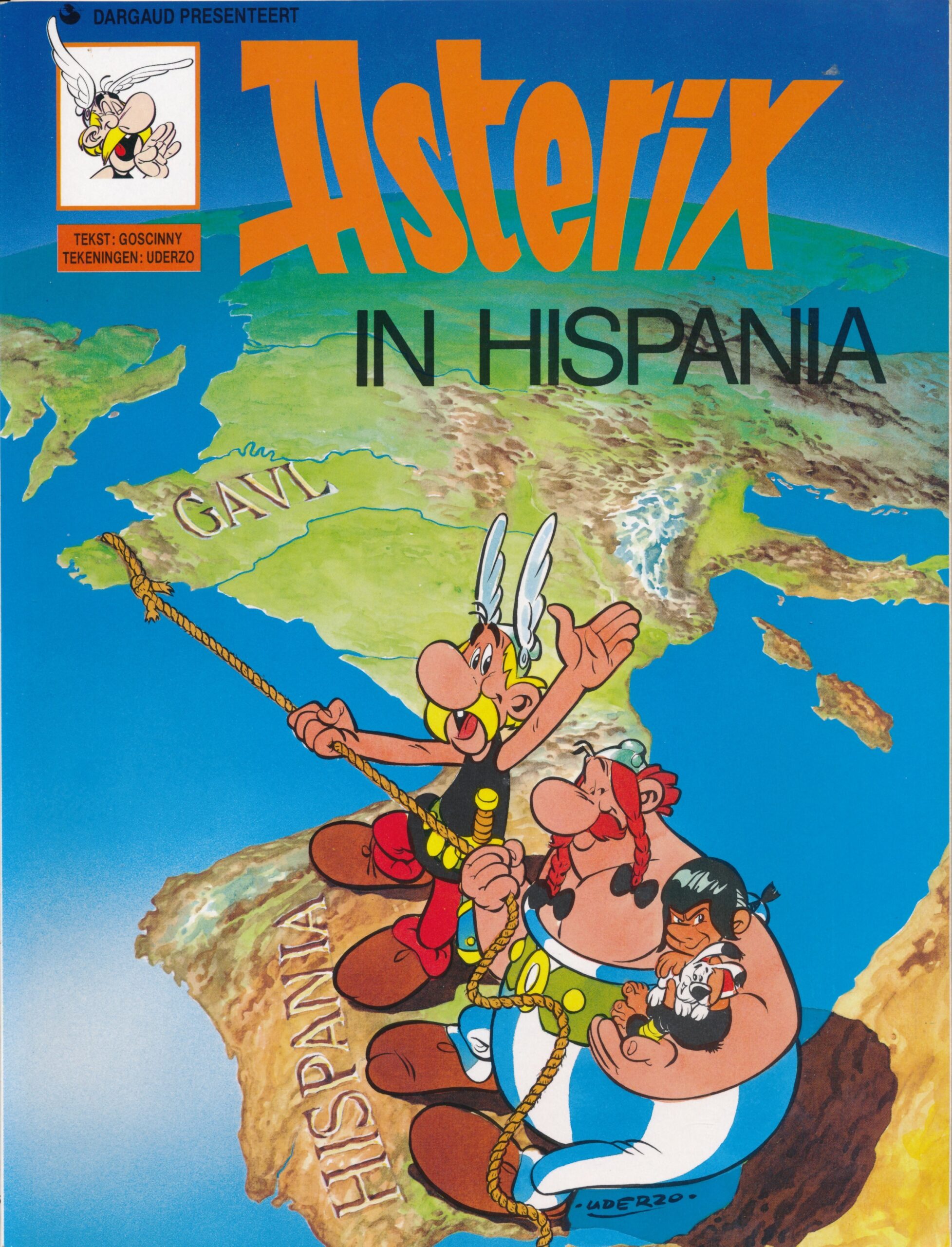
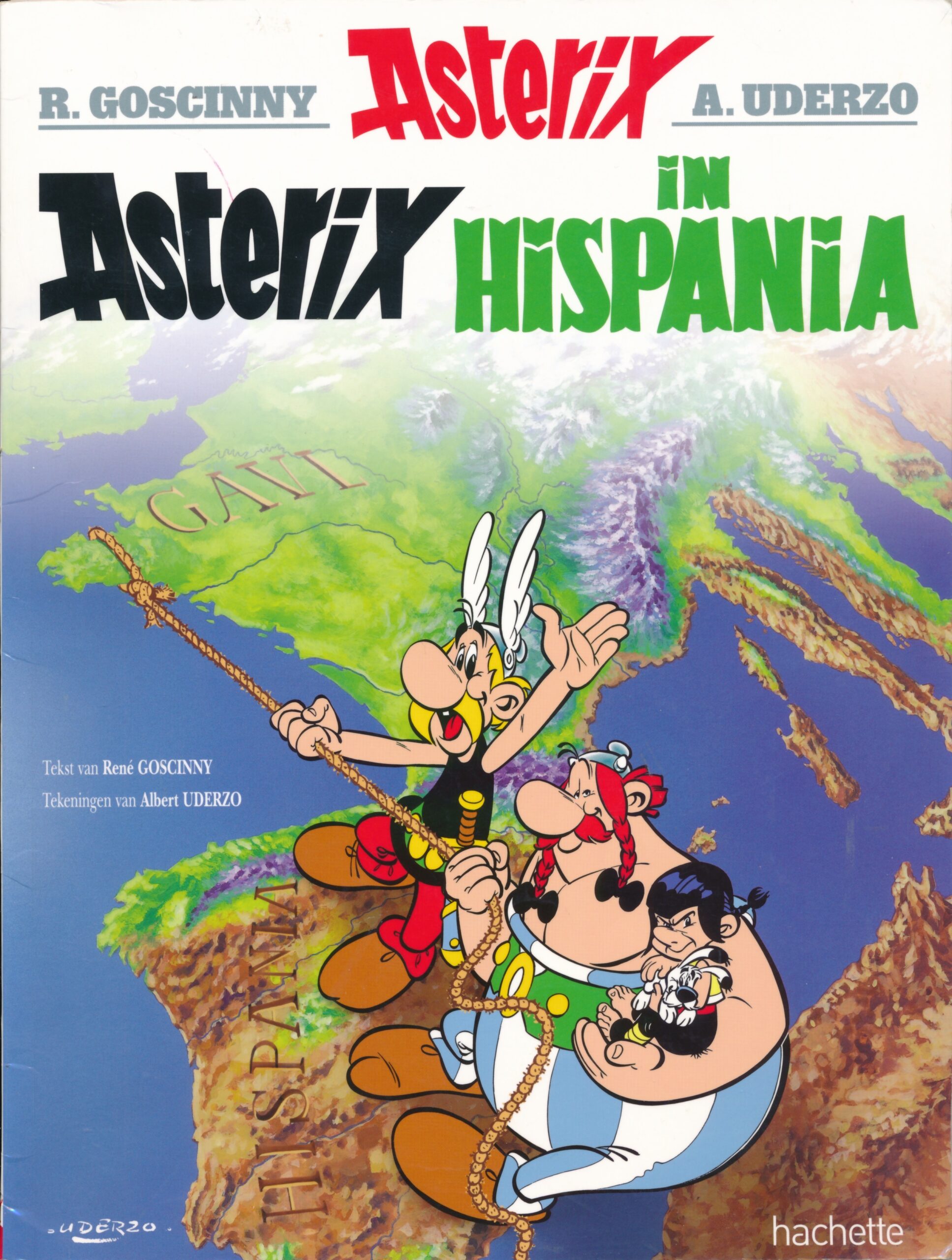
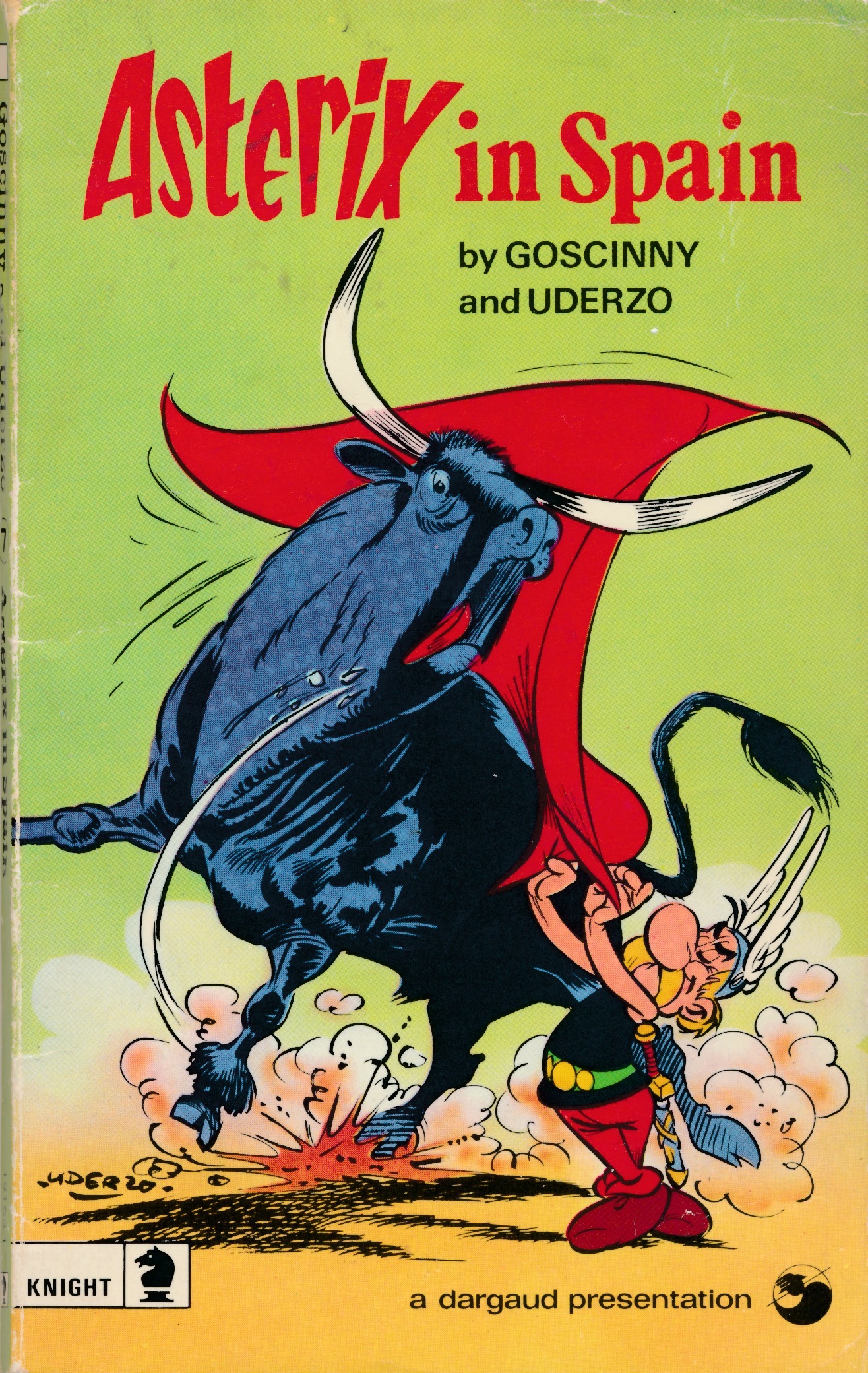
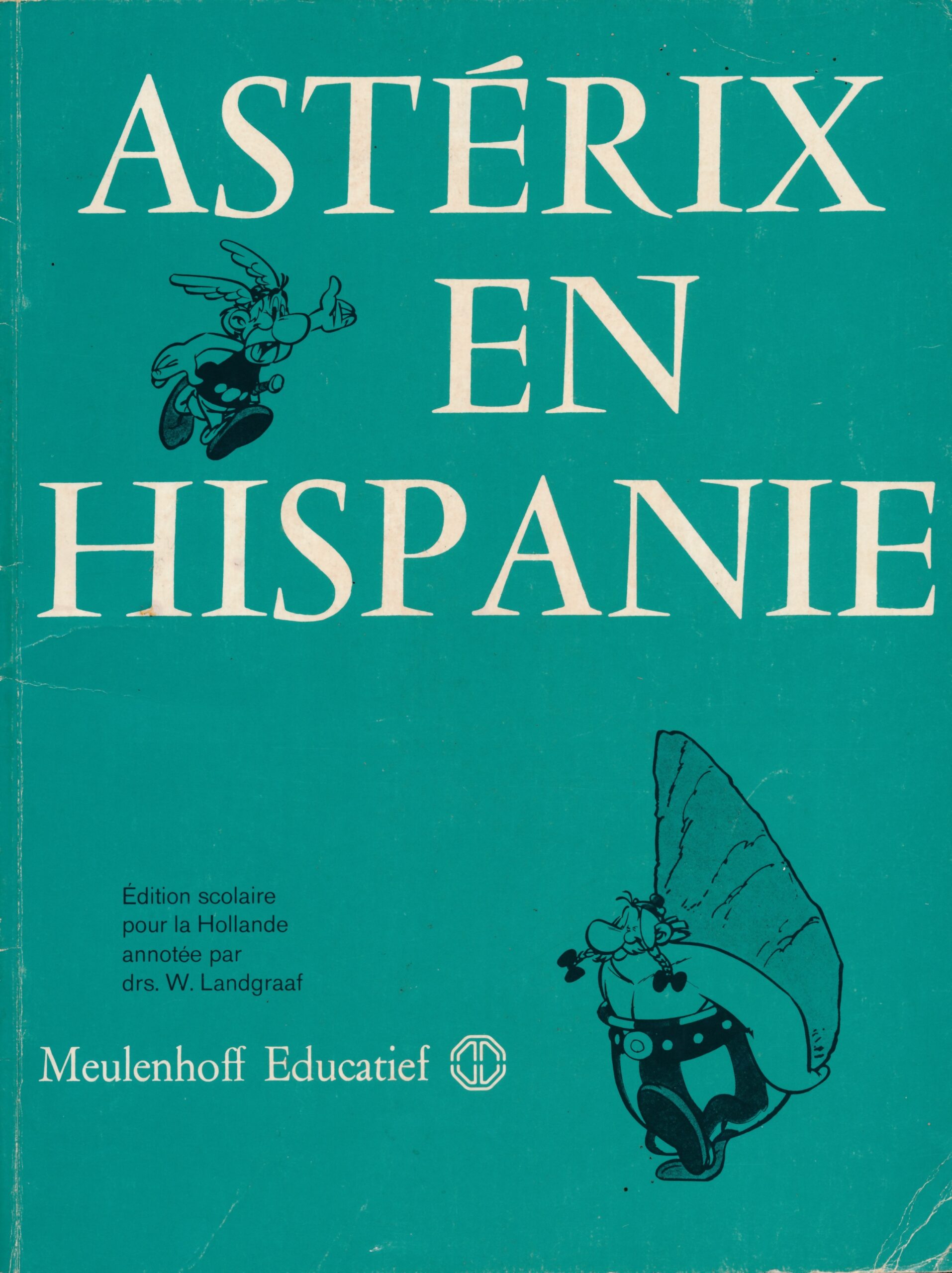
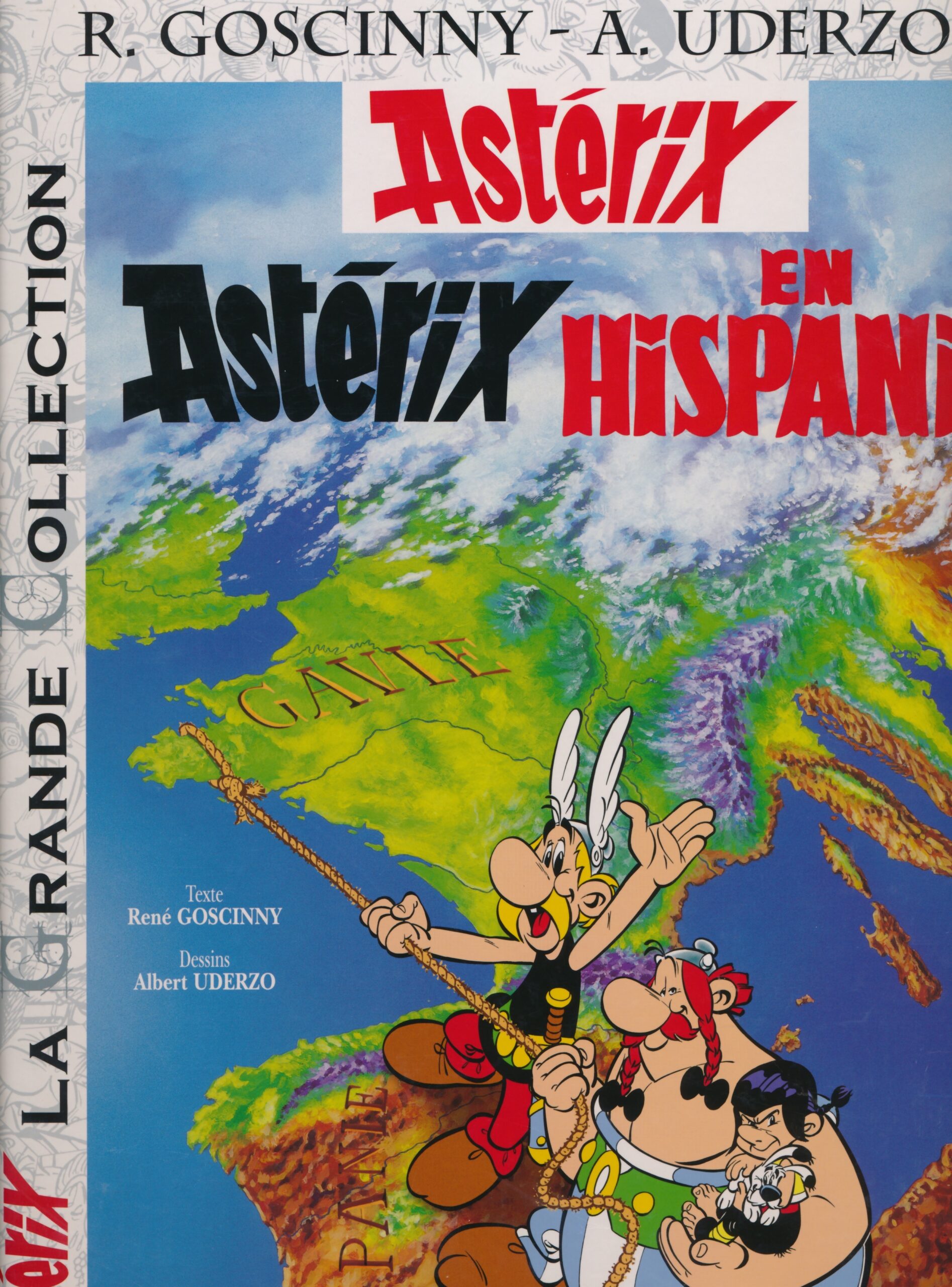
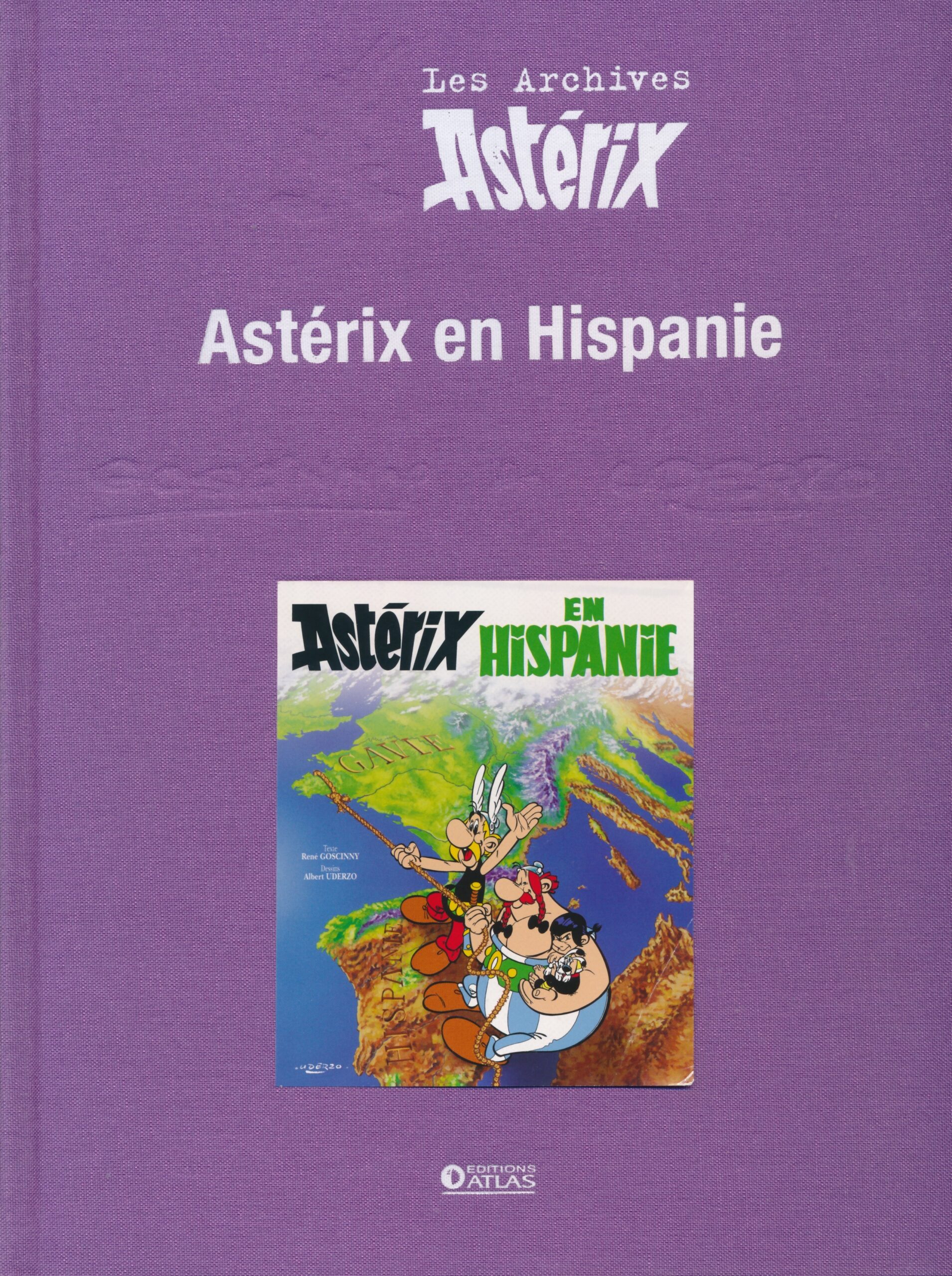
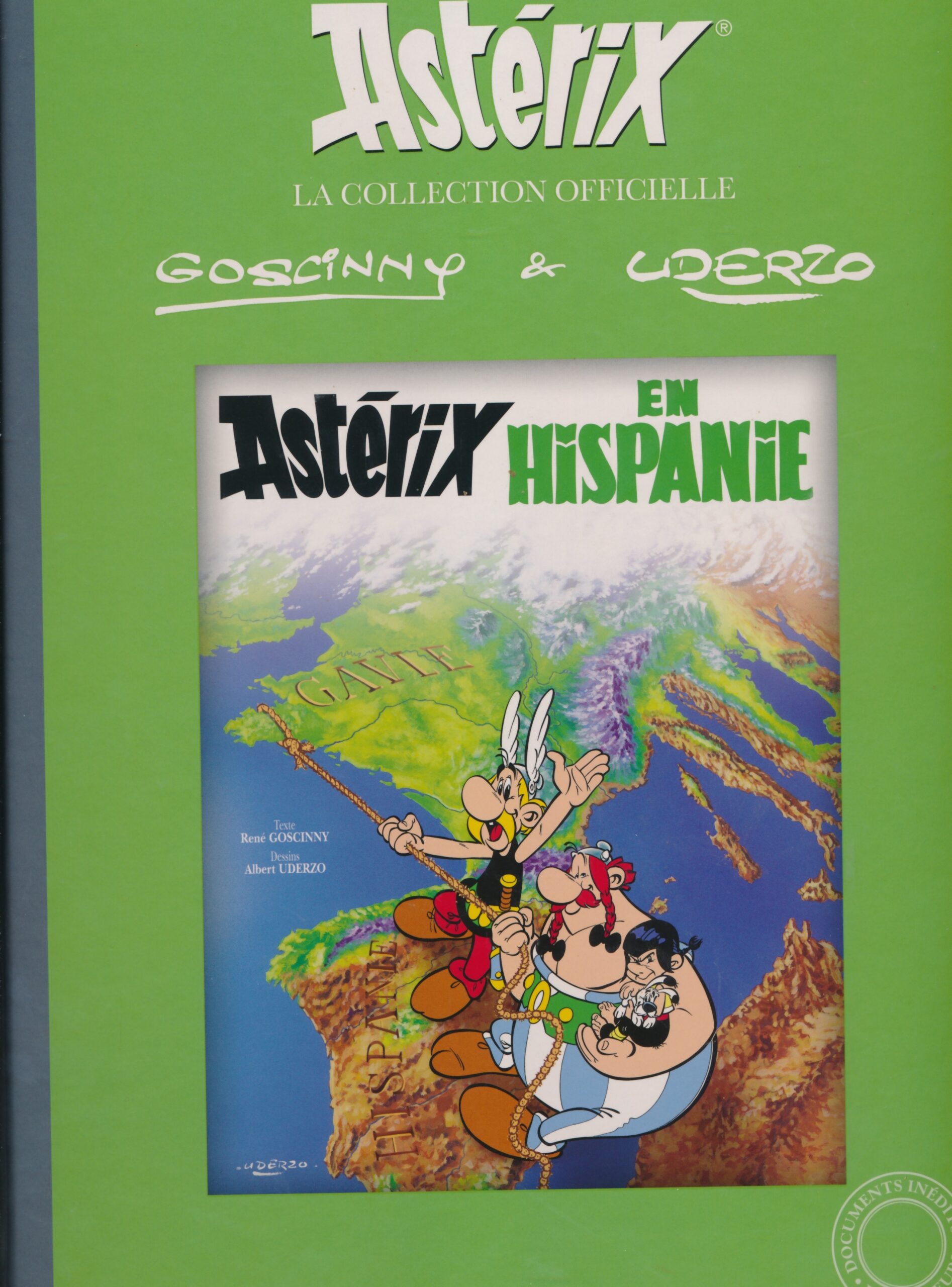
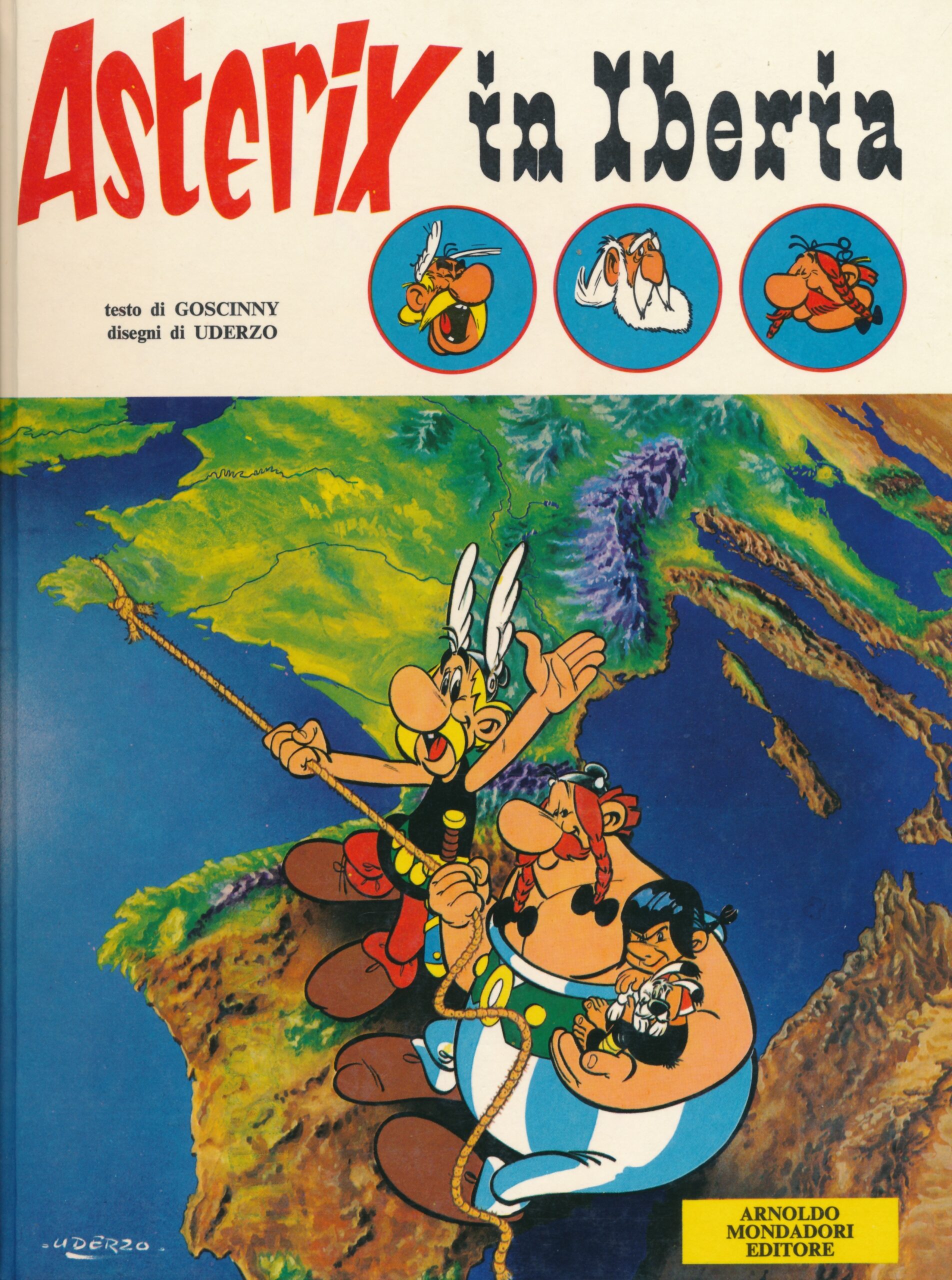
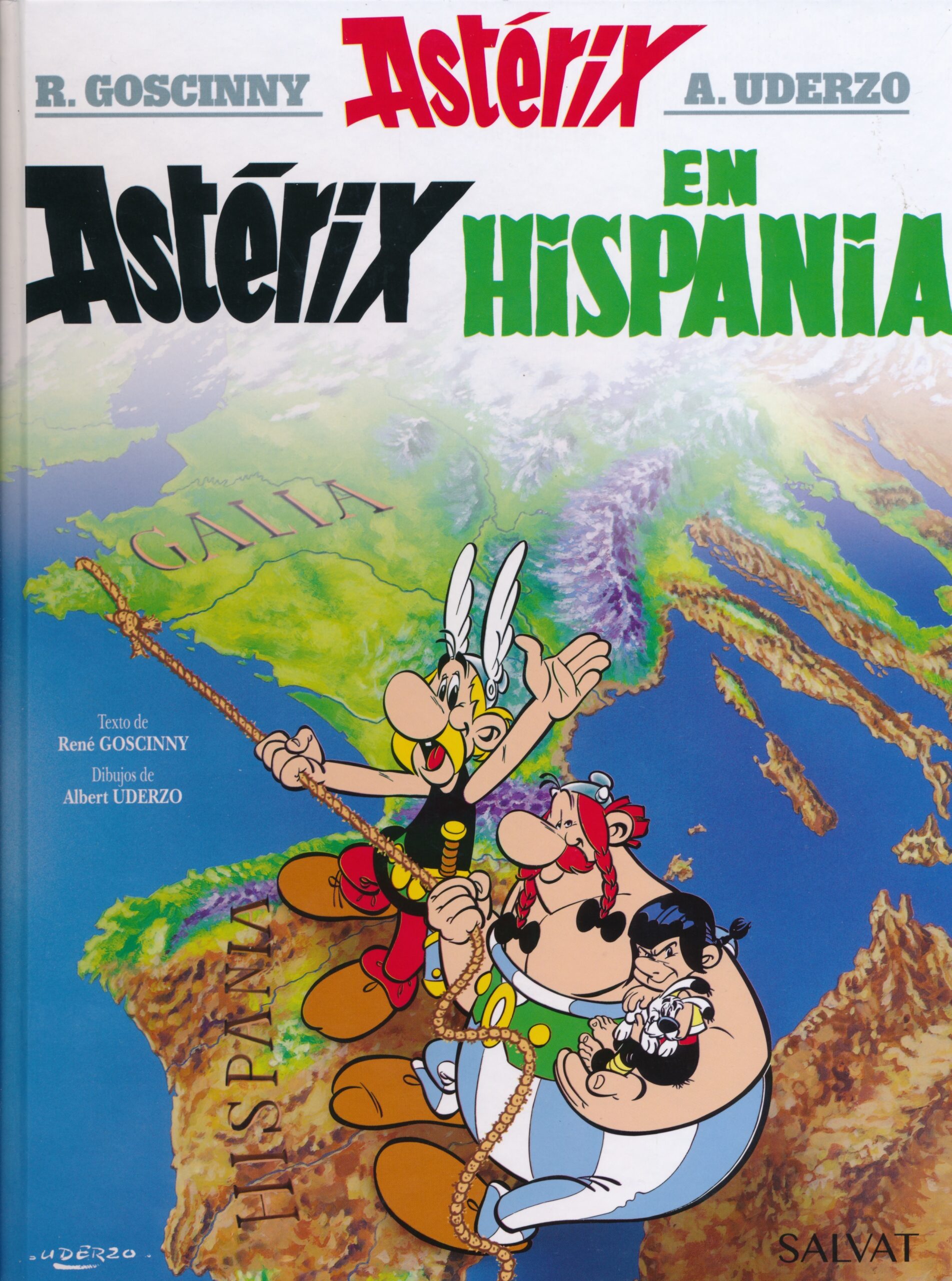
14. Asterix in Spain
An adventure across the Pyrenees
Asterix in Spain is the fourteenth volume of the beloved Asterix comic book series, created by the brilliant duo of René Goscinny (stories) and Albert Uderzo (illustrations). First published in 1969, this adventure takes our indomitable Gauls on a journey to the Iberian Peninsula.

Synopsis
When Julius Caesar struggles to subdue a defiant Iberian village, he orders the kidnapping of Pepe, the spirited young son of Chief Huevos y Bacon. The boy is sent to Gaul as a hostage to discourage further rebellion. However, when the Roman convoy transporting him passes near the Gaulish village, Asterix and Obelix intervene, free Pepe, and take on the task of returning him safely to his homeland.
Their journey begins in Gaul and leads them southward through Roman-occupied territories and across the Pyrenees into Hispania. Along the way, they are pursued by the ambitious and blundering Roman centurion Spurius Brontosaurus, who seeks to capture both the boy and the Gauls—and even attempts to steal a flask of the druid’s magic potion.
In Hispania, the trio passes through several regions and cities under Roman control. They visit Pompaelo (modern-day Pamplona), where they witness a form of early bullfighting, and later reach Hispalis (modern-day Seville), where the local Roman authorities continue to search for them. The Gauls navigate these threats with their usual mix of wit and strength, all while trying to manage Pepe’s proud and stubborn personality.
In the end, they succeed in returning him to his village, which remains defiantly outside Caesar’s control. Obelix disperses a Roman siege almost single-handedly, and Asterix earns the admiration of the locals by entering the bullring. After a warm farewell, the two friends return to Gaul. There, Obelix enthusiastically attempts to introduce flamenco-style music and dance to his fellow villagers—much to the dismay of the blacksmith Fulliautomatix.


Interesting Facts and Details
- The story marks the first reference to India in the Asterix series, featuring elements of ancient Indian culture, such as Rigvedic deities and fakirs, though the architecture and clothing style also include Islamic influences.
- The plot brings a rare dramatic tone, as seen in Asterix in Switzerland and Asterix and Son, with the urgency of rescuing an innocent from death.
- Princess Orinjade’s name is a playful nod to the drink “Orangeade,” and in the original French version, she is named Rahàzade, a pun on Scheherazade from One Thousand and One Nights.
- The gag of Cacofonix’s singing causing rain was first introduced here and later reused in Asterix and the Secret Weapon.
- Several cultural references and humorous nods are found throughout the album, such as Cacofonix singing “Raindrops Keep Fallin’ on My Head,” and Hoodunnit’s catchphrase “I will be Rajah,” a reference to Iznogoud, another Goscinny character.

Latin Quotes
“Beati pauperes spiritu”
- Translation: “Blessed are the poor in spirit.”
- Origin: This phrase is taken from the Sermon on the Mount in the Gospel of Matthew in the New Testament of the Bible.
- Meaning: It is one of the Beatitudes, a series of blessings pronounced by Jesus Christ. This particular beatitude emphasizes humility and a recognition of one’s spiritual needs and dependence on God.
- Usage: This phrase has become a cornerstone of Christian theology and is often used to describe those who are humble, meek, and spiritually receptive. It emphasizes inner peace and a lack of worldly ambition.
Conclusion
Asterix in Spain is a delightful adventure that combines humor, historical references, and cultural observations. It remains a beloved entry in the Asterix series, entertaining readers of all ages with its witty dialogue, captivating artwork, and unforgettable characters.
Production
-
Text: Uderzo
-
Drawings: Uderzo
-
Release: 1969
Titles
-
fr: Astérix en Hispanie
-
de: Asterix in Spanien
-
es: Asterix en Hispania
-
it: Asterix in Iberia
-
nl: Asterix in Hispania
-
pt: Astérix na Hispânia
New Characters
-
Bégonia
-
Claudius Nonpossumus
-
Fercorus
-
Ielosubmarine
-
Lachélechampignon Y Causon
-
La Mamam de Pépé
-
Namaspamus
-
Ordralfabétix
-
Pépé
-
Soupalognon y Crouton

Cacofonix’s Hits
Pepe seems to like the songs Cacofonix plays, and so we get to enjoy them as well; White Christmas and a medley of Rock-a-bye Baby and Wonderful! Wonderful!
In the original French stories we get to enjoy Petit Garçon by Graeme Allwright and Les Bonbons by Jacques Brel.