Serbo-Croatian
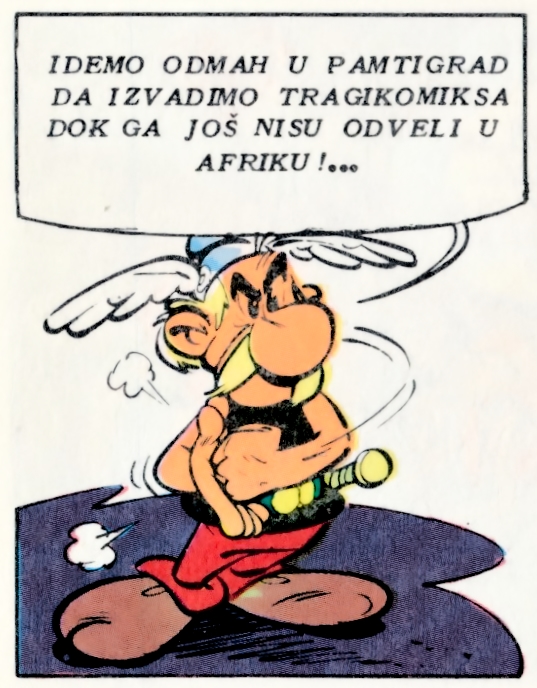
Before the breakup of Yugoslavia in the 1990s, Asterix was already familiar to readers across the country. The adventures of the little Gaul appeared in Serbo-Croatian, the language that served as a common literary and administrative language in much of Yugoslavia. Although regional differences existed, readers in Serbia, Croatia, Bosnia and Herzegovina, and Montenegro could generally enjoy the same translations without difficulty.
One of the most noticeable differences within Serbo-Croatian was the distinction between Ekavian and Ijekavian pronunciation. Both were accepted forms of the language, and the choice between them often reflected regional linguistic traditions. This page focuses on the Ijekavian editions of Asterix published during the Yugoslav period.
Albums published in Serbian or Croatian after the breakup of Yugoslavia are covered separately on the Serbian and Croatian language pages.
What Is Ijekavian?
Ijekavian (ijekavski) is not a separate language but a pronunciation pattern found in several South Slavic languages. Its origins go back to an ancient Slavic vowel known as yat, traditionally written as ѣ. As the Slavic languages developed, this vowel changed in different ways depending on the region.
In the dialects that eventually developed into modern Serbian, Croatian, Bosnian, and Montenegrin, three main pronunciation patterns emerged. The differences are easy to recognize in the word for milk: mleko in Ekavian, mliko in Ikavian, and mlijeko in Ijekavian. Another example is the word for time, which appears as vreme, vrime, or vrijeme.
These variations developed over centuries and existed long before Yugoslavia was established. They did not correspond neatly to national boundaries, and speakers of different varieties could generally understand one another.
Ijekavian in Yugoslavia
During the Yugoslav period, Serbo-Croatian was commonly written in both the Latin and Cyrillic alphabets. It also had two principal standard pronunciation variants: Ekavian and Ijekavian. Ekavian was particularly associated with Serbia, while Ijekavian predominated in Croatia, Bosnia and Herzegovina, and Montenegro.
The distinction was linguistic rather than strictly national. Ijekavian was also used by Serbian speakers, while the different varieties of Serbo-Croatian shared much of their vocabulary and grammar.
For publishers, this meant that books could appear in different linguistic versions while remaining accessible to readers throughout much of the country. Asterix was no exception, and the language used in a particular edition can help identify the publishing tradition to which it belonged.
From Yugoslavia to Separate Language Editions
The breakup of Yugoslavia in the 1990s brought significant political and cultural changes, including the development of separate language standards. What had commonly been called Serbo-Croatian came to be represented by four national standards: Serbian, Croatian, Bosnian, and Montenegrin.
These languages remain closely related and largely mutually intelligible, but they now have their own official conventions, dictionaries, and publishing traditions. Ijekavian continues to be the standard pronunciation in Croatian, Bosnian, and Montenegrin, while Serbian recognizes both Ijekavian and Ekavian.
For collectors of Asterix, this history is particularly relevant. An album published in Yugoslavia belongs to a different historical publishing context from one released in independent Croatia or Serbia, even when the language of the translation is very similar.
The albums presented on this page belong to the Yugoslav period and use the Ijekavian variety of Serbo-Croatian. Later publications are listed separately under Serbian and Croatian, reflecting the publishing history of Asterix after the dissolution of Yugoslavia.
Publishing history
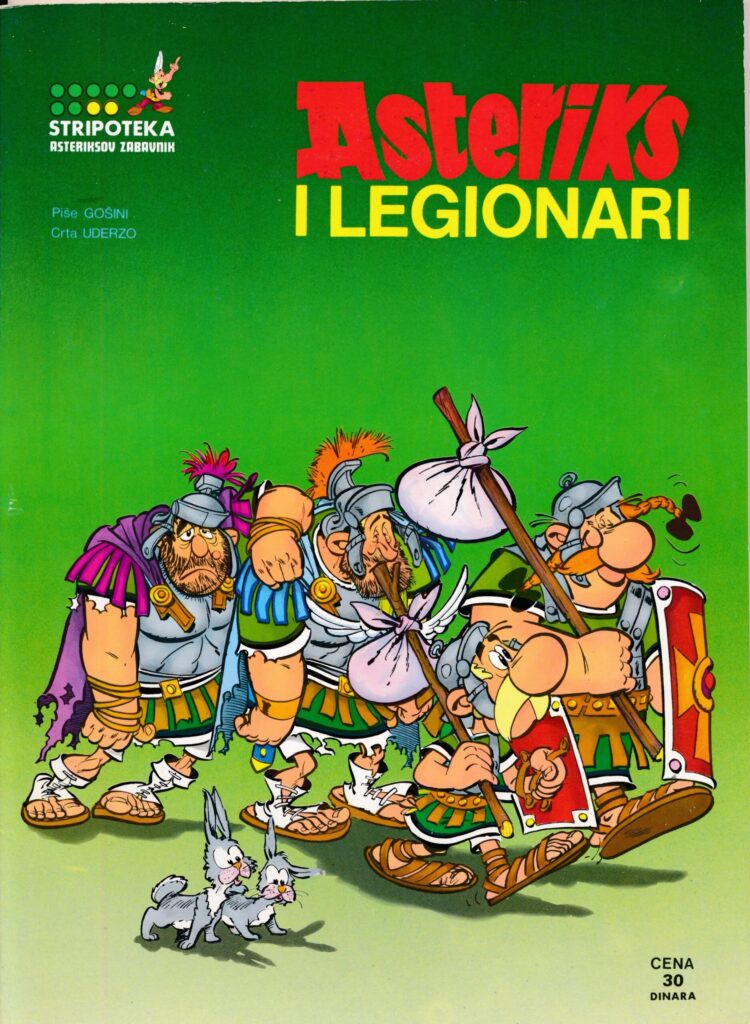
During the Yugoslav period, Asterix appeared in several Serbo-Croatian publications, including editions using the Ijekavian pronunciation and Latin script. Between 1975 and 1988, publisher NIP Forum released 25 Asterix titles as part of its Stripoteka – Asteriksov Zabavnik series, which also featured Lucky Luke. Another publisher, Dečje Novine, included Asterix in its Biser Strip collections, sometimes using different translations and publishing the stories in either colour or black and white. Several hardcover editions followed between 1989 and 1991, while Asterix adventures also appeared in magazines such as Panorama, Stripoteka, and Politikin Zabavnik. This page covers the Ijekavian albums published in former Yugoslavia; editions released in Serbia and Croatia after the country’s breakup are listed separately.