Asterix and the Jambon de Lutèce
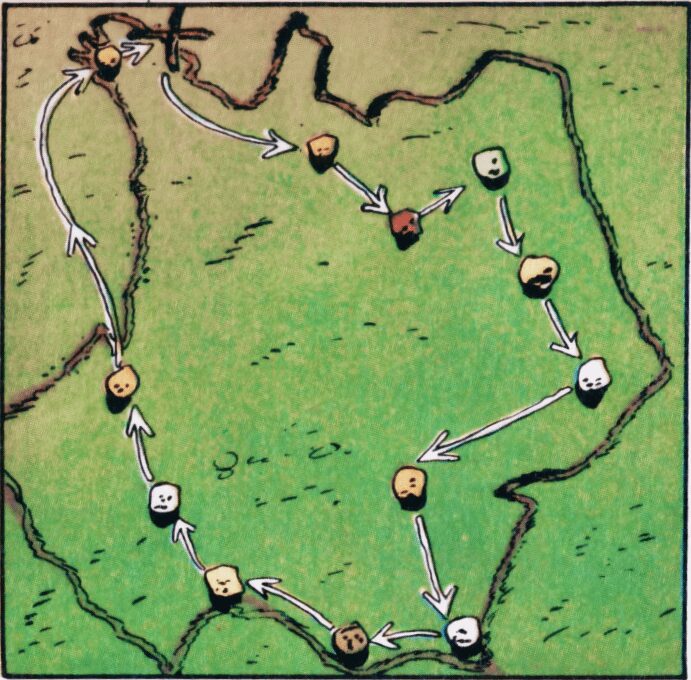
In this series of articles, we take a closer look at the places Asterix and Obelix visit during their journey around Gaul. The focus lies on the original French version of the story and the specific regional delicacies mentioned there. Le Tour de Gaule d’Astérix is widely regarded as one of the more difficult albums to translate, as much of its humor relies on cultural and culinary references. By providing historical background, this series aims to clarify the puns and regional associations that make this journey so distinctive.
The Ham of Lutetia: A Slice of Roman Paris
The journey begins in Lutetia, modern-day Paris. In the original French narrative, this is the first stop in Asterix and Obelix’s challenge to collect specialties from across Gaul. Their prize here is the Jambon de Lutèce, or Lutetian ham.
Lutetia: The Island City

In Roman times, the settlement was known as Lutetia Parisiorum, named after the Parisii tribe. The city was centered on the Île de la Cité, a naturally defensible island in the Seine that made it an important node for river trade and overland routes.
By the mid–1st century BCE, Lutetia had adopted the hallmarks of Roman urban life. It possessed a forum, public baths, and a large amphitheater, now known as the Arènes de Lutèce. Despite these features, it remained a relatively modest provincial town, with population estimates generally ranging between 5,000 and 10,000 inhabitants. Its later rise to prominence as the capital of France still lay far in the future.
Jambon de Lutèce: The Choice of Warriors

The item collected by Asterix and Obelix is a clear nod to Jambon de Paris, one of the most famous products of French charcuterie. In the album, the heroes visit a charcuterie to obtain this local specialty.
Although the modern “Jambon de Paris” is a cooked ham developed much later, the reference rests on a solid historical foundation. The Gauls were renowned in antiquity for their expertise in salting and preserving pork, a skill noted by Roman authors. Gallic hams were highly valued and were exported as luxury items, including to Rome itself. The Paris-style ham later became known for its lean texture, pale color, and gentle cooking in seasoned broth.
It is outside this Lutetian butcher’s shop that an unnamed small white dog appears for the first time. In the original French version, he follows Asterix and Obelix silently throughout their journey. The name Idéfix (Dogmatix) was assigned only later, after a reader contest organized by Pilote magazine.
A Legacy of Charcuterie
Today, Jambon de Paris remains a staple of French cuisine, most famously served in the jambon-beurre sandwich. While the modern product differs from its ancient predecessors, its reputation is rooted in the long-standing Gallic tradition of pork curing that made Lutetia an early center of charcuterie.
From Roman-era markets along the Seine to contemporary Parisian cafés, ham has remained a constant presence in the city’s culinary identity.

Next stop: Cambria


Asterix and the Jambon de Lutèce
In this series of articles, we take a closer look at the places Asterix and Obelix visit during their journey around Gaul. The focus lies on the original French version of the story and the specific regional delicacies mentioned there. Le Tour de Gaule d’Astérix is widely regarded as one of the more difficult albums to translate, as much of its humor relies on cultural and culinary references. By providing historical background, this series aims to clarify the puns and regional associations that make this journey so distinctive.
The Ham of Lutetia: A Slice of Roman Paris
The journey begins in Lutetia, modern-day Paris. In the original French narrative, this is the first stop in Asterix and Obelix’s challenge to collect specialties from across Gaul. Their prize here is the Jambon de Lutèce, or Lutetian ham.
Lutetia: The Island City
In Roman times, the settlement was known as Lutetia Parisiorum, named after the Parisii tribe. The city was centered on the Île de la Cité, a naturally defensible island in the Seine that made it an important node for river trade and overland routes.
By the mid–1st century BCE, Lutetia had adopted the hallmarks of Roman urban life. It possessed a forum, public baths, and a large amphitheater, now known as the Arènes de Lutèce. Despite these features, it remained a relatively modest provincial town, with population estimates generally ranging between 5,000 and 10,000 inhabitants. Its later rise to prominence as the capital of France still lay far in the future.
Jambon de Lutèce: The Choice of Warriors
The item collected by Asterix and Obelix is a clear nod to Jambon de Paris, one of the most famous products of French charcuterie. In the album, the heroes visit a charcuterie to obtain this local specialty.
Although the modern “Jambon de Paris” is a cooked ham developed much later, the reference rests on a solid historical foundation. The Gauls were renowned in antiquity for their expertise in salting and preserving pork, a skill noted by Roman authors. Gallic hams were highly valued and were exported as luxury items, including to Rome itself. The Paris-style ham later became known for its lean texture, pale color, and gentle cooking in seasoned broth.
It is outside this Lutetian butcher’s shop that an unnamed small white dog appears for the first time. In the original French version, he follows Asterix and Obelix silently throughout their journey. The name Idéfix (Dogmatix) was assigned only later, after a reader contest organized by Pilote magazine.
A Legacy of Charcuterie
Today, Jambon de Paris remains a staple of French cuisine, most famously served in the jambon-beurre sandwich. While the modern product differs from its ancient predecessors, its reputation is rooted in the long-standing Gallic tradition of pork curing that made Lutetia an early center of charcuterie.
From Roman-era markets along the Seine to contemporary Parisian cafés, ham has remained a constant presence in the city’s culinary identity.
Next stop: Cambria