Long before permanent Asterix theme parks existed, Floralix (1967) offered fans a temporary, immersive Gaulish village experience in Orléans-La Source, France. Operating from 22 April to 15 October 1967, Floralix was part of the Floralies Internationales d’Orléans, a major horticultural exhibition. Inspired by the wildly popular comics of René Goscinny and Albert Uderzo, the attraction brought the world of Asterix to life for the first time outside the pages of the albums. Although it lasted only six months, Floralix remains a fascinating, almost mythical piece of Asterix history, largely forgotten by fans today. The park’s significance was highlighted by its official inauguration by Edgar Faure, then the French Minister of Agriculture.
A Real-Life Gaulish Village
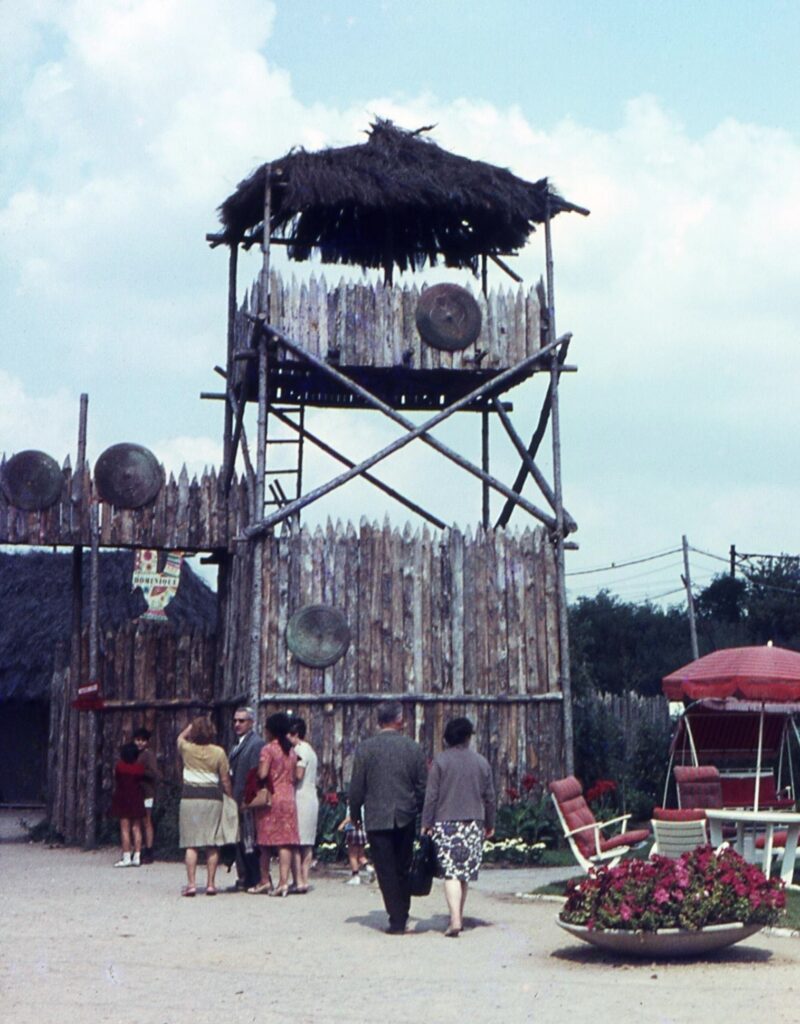
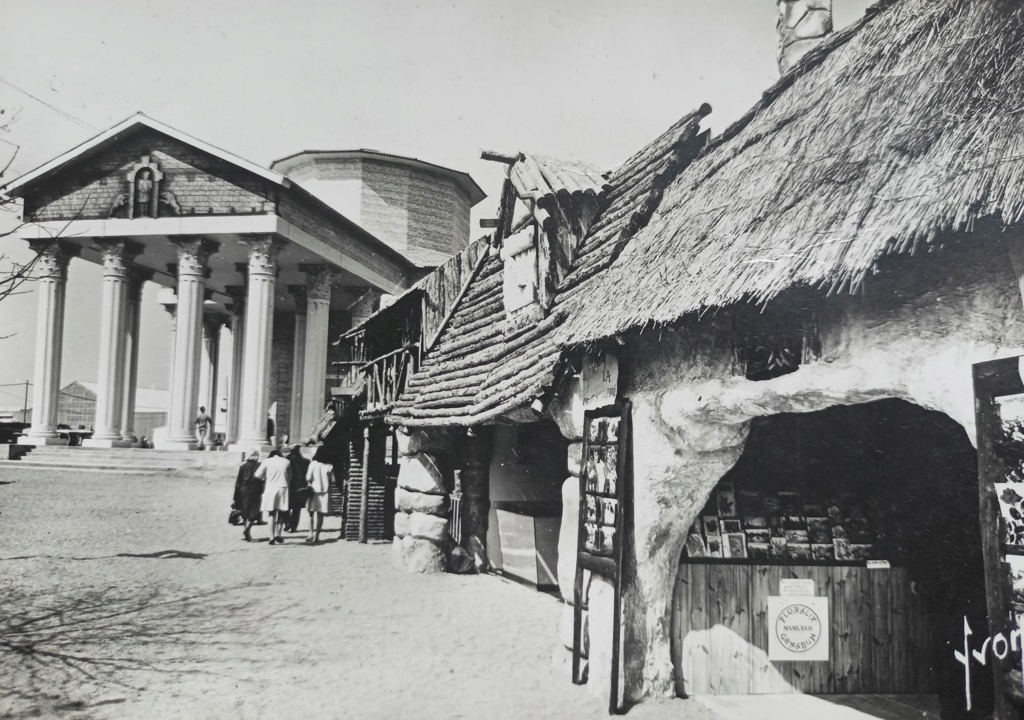
Floralix covered roughly three hectares within the Parc Floral de la Source. The designers recreated a fully functional Gaulish village, complete with straw-roofed huts, a chief’s house, a market hall, a bard’s house on stilts, and fenced enclosures. Across from the village, visitors could explore a small Roman camp, which included tents, an arena, and the imposing reconstructed Temple of Mars, standing approximately 23 meters high. At the entrance, a statue of a moustached Gaul — unmistakably Asterix — bore the inscription: “À Astérix, Floralix reconnaissant” (“To Asterix, with gratitude — Floralix”), paying homage to the beloved comic series.
Attractions and Entertainment at Floralix
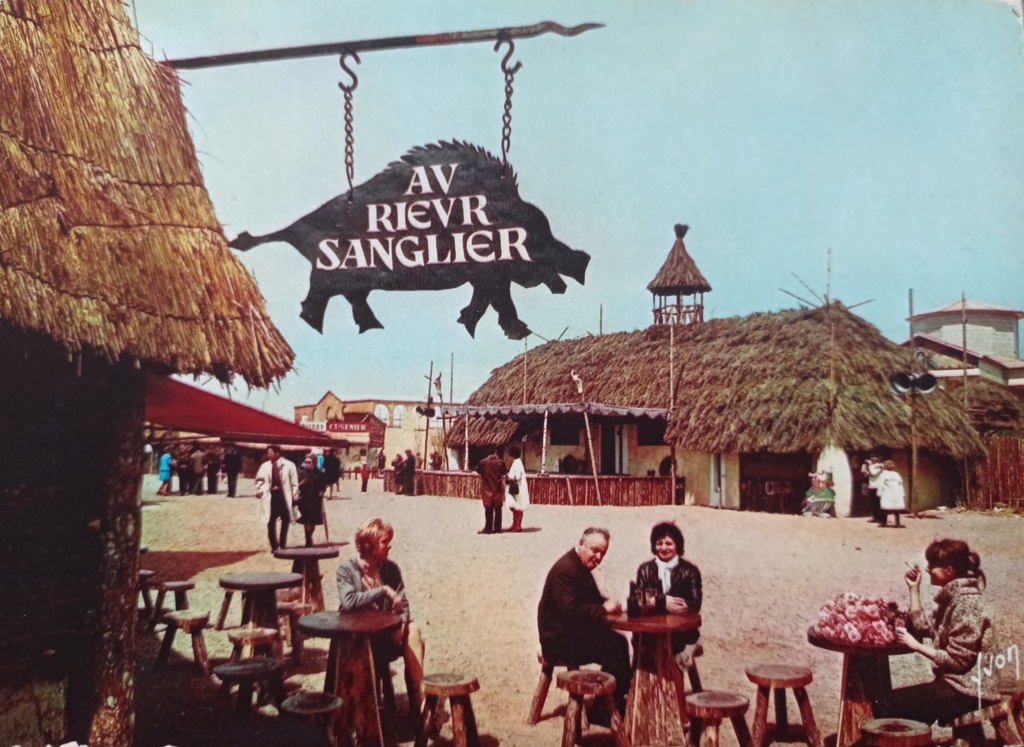
Visitors to Floralix enjoyed more than just scenery. The park featured daily live shows and musical performances by popular French artists of the time, reportedly including Michel Polnareff and Pierre Perret. Guests could dine in small “Gaulish taverns” or browse themed souvenir shops, fully immersing themselves in the bustling comic-inspired atmosphere. Culinary demonstrations, such as making the playful “Pizza d’Obélix,” added to the interactive experience.
For amusement, Floralix offered games like “tir au Gaulois” (“Gaul-shooting”), where visitors could playfully target representations of Gauls, and the Roman camp even housed a discothèque called the “Floralium.” A miniature train transported visitors around the expansive park, making it easy to explore the village and camp in comfort. For Asterix fans, Floralix provided an unprecedented opportunity to step into a tangible, real-world version of the comic’s universe.
Temporary Glory and Financial Struggles
Despite its popularity — the broader Floralies exhibition attracted approximately 2.3 million visitors — Floralix was always intended as a temporary installation. The costs, however, proved insurmountable. Expenses far exceeded revenue, resulting in municipal debates about its management and financial sustainability. After the Floralies ended in October 1967, most structures were dismantled. Only the Gaulish halle was salvaged and repurposed at the nearby Parc des Expositions, where it remained until its demolition in 1975, marking the final physical end of Floralix.

Connection to Goscinny and Uderzo
Although Floralix was inspired by Asterix, there is no evidence that René Goscinny or Albert Uderzo were directly involved in its creation. The attraction was organized independently by the exhibition planners, who capitalized on the enormous popularity of the comics — Dargaud reportedly published some promotional materials — to inspire the theme. In a video we see a very scary looking Getafix walking around in the park as well as statues of both Asterix and Obelix. While Goscinny and Uderzo were likely aware of Floralix, archival press records show no indication that they endorsed or supervised the project.
Historical Significance for Asterix Fans
Floralix’s brief existence and financial challenges may explain why it has largely faded from memory, but its historical importance is clear. It represents the first known attempt in France to transform Asterix’s fictional world into a real-life, immersive experience. For modern fans, especially with the recent announcement of a new Asterix theme park in Germany, Floralix provides both historical context and a glimpse into how early the comics captured the public imagination.
Though the village lasted only six months, it demonstrated the cultural impact of Asterix just a few years after the series became a national phenomenon. Today, Floralix serves as a unique footnote in Asterix history, reminding collectors, historians, and enthusiasts that the dream of walking through a Gaulish village is over fifty years old — and that Asterix’s magic has long extended far beyond the pages of the albums.
Collectors at the French Village d’Asterix-website share photo’s of the park.


Long before permanent Asterix theme parks existed, Floralix (1967) offered fans a temporary, immersive Gaulish village experience in Orléans-La Source, France. Operating from 22 April to 15 October 1967, Floralix was part of the Floralies Internationales d’Orléans, a major horticultural exhibition. Inspired by the wildly popular comics of René Goscinny and Albert Uderzo, the attraction brought the world of Asterix to life for the first time outside the pages of the albums. Although it lasted only six months, Floralix remains a fascinating, almost mythical piece of Asterix history, largely forgotten by fans today. The park’s significance was highlighted by its official inauguration by Edgar Faure, then the French Minister of Agriculture.
A Real-Life Gaulish Village
Floralix covered roughly three hectares within the Parc Floral de la Source. The designers recreated a fully functional Gaulish village, complete with straw-roofed huts, a chief’s house, a market hall, a bard’s house on stilts, and fenced enclosures. Across from the village, visitors could explore a small Roman camp, which included tents, an arena, and the imposing reconstructed Temple of Mars, standing approximately 23 meters high. At the entrance, a statue of a moustached Gaul — unmistakably Asterix — bore the inscription: “À Astérix, Floralix reconnaissant” (“To Asterix, with gratitude — Floralix”), paying homage to the beloved comic series.
Attractions and Entertainment at Floralix
Visitors to Floralix enjoyed more than just scenery. The park featured daily live shows and musical performances by popular French artists of the time, reportedly including Michel Polnareff and Pierre Perret. Guests could dine in small “Gaulish taverns” or browse themed souvenir shops, fully immersing themselves in the bustling comic-inspired atmosphere. Culinary demonstrations, such as making the playful “Pizza d’Obélix,” added to the interactive experience.
For amusement, Floralix offered games like “tir au Gaulois” (“Gaul-shooting”), where visitors could playfully target representations of Gauls, and the Roman camp even housed a discothèque called the “Floralium.” A miniature train transported visitors around the expansive park, making it easy to explore the village and camp in comfort. For Asterix fans, Floralix provided an unprecedented opportunity to step into a tangible, real-world version of the comic’s universe.
Temporary Glory and Financial Struggles
Despite its popularity — the broader Floralies exhibition attracted approximately 2.3 million visitors — Floralix was always intended as a temporary installation. The costs, however, proved insurmountable. Expenses far exceeded revenue, resulting in municipal debates about its management and financial sustainability. After the Floralies ended in October 1967, most structures were dismantled. Only the Gaulish halle was salvaged and repurposed at the nearby Parc des Expositions, where it remained until its demolition in 1975, marking the final physical end of Floralix.
Connection to Goscinny and Uderzo
Although Floralix was inspired by Asterix, there is no evidence that René Goscinny or Albert Uderzo were directly involved in its creation. The attraction was organized independently by the exhibition planners, who capitalized on the enormous popularity of the comics — Dargaud reportedly published some promotional materials — to inspire the theme. In a video we see a very scary looking Getafix walking around in the park as well as statues of both Asterix and Obelix. While Goscinny and Uderzo were likely aware of Floralix, archival press records show no indication that they endorsed or supervised the project.
Historical Significance for Asterix Fans
Floralix’s brief existence and financial challenges may explain why it has largely faded from memory, but its historical importance is clear. It represents the first known attempt in France to transform Asterix’s fictional world into a real-life, immersive experience. For modern fans, especially with the recent announcement of a new Asterix theme park in Germany, Floralix provides both historical context and a glimpse into how early the comics captured the public imagination.
Though the village lasted only six months, it demonstrated the cultural impact of Asterix just a few years after the series became a national phenomenon. Today, Floralix serves as a unique footnote in Asterix history, reminding collectors, historians, and enthusiasts that the dream of walking through a Gaulish village is over fifty years old — and that Asterix’s magic has long extended far beyond the pages of the albums.
Collectors at the French Village d’Asterix-website share photo’s of the park.