In the Asterix comics, Marcus Junius Brutus is often depicted as a bumbling, somewhat timid Roman youth, frequently scolded by Julius Caesar or distracted by minor hobbies like playing with knives. However, the 27th album, Asterix and Son, shows a darker side to Brutus, hinting at a more cunning and ambitious character. But who was Brutus really, outside the world of comic humor?

The Historical Brutus
Marcus Junius Brutus (85–42 BCE) was a Roman politician, senator, and military leader best known for his role in the assassination of Julius Caesar. Born into a politically influential family, Brutus was the son of Marcus Junius Brutus the Elder and Servilia, a mistress of Caesar himself. This connection gave Brutus a unique position within Roman politics, linking him both to the Republic’s elite and to Caesar personally.
Brutus was educated in philosophy and rhetoric, and he became a staunch supporter of the ideals of the Roman Republic. Despite his personal connection to Caesar, he grew increasingly concerned over Caesar’s accumulation of power, which he viewed as a threat to the Republic’s democratic institutions.
The Assassination of Julius Caesar
On March 15, 44 BCE, the Ides of March, Brutus joined a group of conspirators who assassinated Julius Caesar during a Senate meeting. Brutus’ participation was seen as especially shocking because of his familial ties to Caesar, and he was often portrayed by contemporaries as the “noble” conspirator acting for the Republic rather than personal gain.

Following Caesar’s death, Brutus’ political and military career continued amid the chaos of the ensuing civil wars. He ultimately led the Republican forces against the Second Triumvirate (Octavian, Mark Antony, and Lepidus) and was defeated at the Battle of Philippi in 42 BCE. Brutus chose to commit suicide after the defeat, cementing his historical legacy as both a tragic and pivotal figure in Roman history.
What’s in a name?
The name Brutus carries a striking irony, as its Latin root means “heavy,” “dull,” or even “stupid,” yet it became forever associated with one of the most calculating and consequential acts in Roman history: the assassination of Julius Caesar. Marcus Junius Brutus, long remembered as both a trusted ally and a betrayer, embodied the contradiction of his name. His role in the brutal murder of Caesar on the Ides of March gave the word “brute” an almost prophetic resonance, as if the name itself foreshadowed the savage simplicity of his decisive thrust. In this light, the decision in the Asterix comics to depict Brutus as a somewhat dim and bumbling character aligns neatly with the original meaning of his name, even if it contrasts with his historical reality.
Brutus vs. His Asterix Portrayal
The Asterix series often uses historical figures for comic effect, exaggerating or simplifying their traits. Brutus is usually portrayed as a naive, somewhat foolish young man, in contrast to his historical image as a philosophically minded, politically ambitious senator capable of masterminding one of history’s most famous assassinations. In Asterix the Gladiator we see Brutus for the first time, he makes an appearance in several albums.
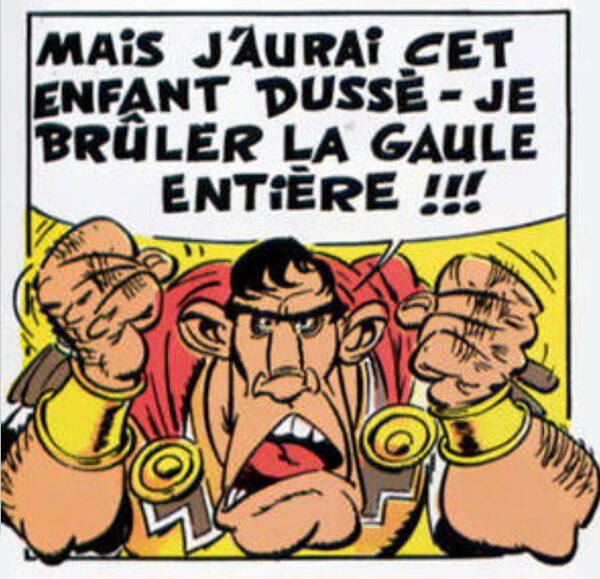
In Asterix and Son, the darker hints about Brutus nod subtly to this historical reality, showing that beneath the comic exterior, he was indeed capable of ruthless political action — though of course, in the Asterix world, it is framed humorously rather than tragically.
Why This Matters
Understanding Brutus’ historical role adds depth to the humor in Asterix. While the comics are lighthearted, they often reference real historical figures and events, and knowing the contrast between the comic Brutus and the real one helps readers appreciate Goscinny and Uderzo’s clever use of history.


In the Asterix comics, Marcus Junius Brutus is often depicted as a bumbling, somewhat timid Roman youth, frequently scolded by Julius Caesar or distracted by minor hobbies like playing with knives. However, the 27th album, Asterix and Son, shows a darker side to Brutus, hinting at a more cunning and ambitious character. But who was Brutus really, outside the world of comic humor?
The Historical Brutus
Marcus Junius Brutus (85–42 BCE) was a Roman politician, senator, and military leader best known for his role in the assassination of Julius Caesar. Born into a politically influential family, Brutus was the son of Marcus Junius Brutus the Elder and Servilia, a mistress of Caesar himself. This connection gave Brutus a unique position within Roman politics, linking him both to the Republic’s elite and to Caesar personally.
Brutus was educated in philosophy and rhetoric, and he became a staunch supporter of the ideals of the Roman Republic. Despite his personal connection to Caesar, he grew increasingly concerned over Caesar’s accumulation of power, which he viewed as a threat to the Republic’s democratic institutions.
The Assassination of Julius Caesar
On March 15, 44 BCE, the Ides of March, Brutus joined a group of conspirators who assassinated Julius Caesar during a Senate meeting. Brutus’ participation was seen as especially shocking because of his familial ties to Caesar, and he was often portrayed by contemporaries as the “noble” conspirator acting for the Republic rather than personal gain.
Following Caesar’s death, Brutus’ political and military career continued amid the chaos of the ensuing civil wars. He ultimately led the Republican forces against the Second Triumvirate (Octavian, Mark Antony, and Lepidus) and was defeated at the Battle of Philippi in 42 BCE. Brutus chose to commit suicide after the defeat, cementing his historical legacy as both a tragic and pivotal figure in Roman history.
What’s in a name?
The name Brutus carries a striking irony, as its Latin root means “heavy,” “dull,” or even “stupid,” yet it became forever associated with one of the most calculating and consequential acts in Roman history: the assassination of Julius Caesar. Marcus Junius Brutus, long remembered as both a trusted ally and a betrayer, embodied the contradiction of his name. His role in the brutal murder of Caesar on the Ides of March gave the word “brute” an almost prophetic resonance, as if the name itself foreshadowed the savage simplicity of his decisive thrust. In this light, the decision in the Asterix comics to depict Brutus as a somewhat dim and bumbling character aligns neatly with the original meaning of his name, even if it contrasts with his historical reality.
Brutus vs. His Asterix Portrayal
The Asterix series often uses historical figures for comic effect, exaggerating or simplifying their traits. Brutus is usually portrayed as a naive, somewhat foolish young man, in contrast to his historical image as a philosophically minded, politically ambitious senator capable of masterminding one of history’s most famous assassinations. In Asterix the Gladiator we see Brutus for the first time, he makes an appearance in several albums.
In Asterix and Son, the darker hints about Brutus nod subtly to this historical reality, showing that beneath the comic exterior, he was indeed capable of ruthless political action — though of course, in the Asterix world, it is framed humorously rather than tragically.
Why This Matters
Understanding Brutus’ historical role adds depth to the humor in Asterix. While the comics are lighthearted, they often reference real historical figures and events, and knowing the contrast between the comic Brutus and the real one helps readers appreciate Goscinny and Uderzo’s clever use of history.