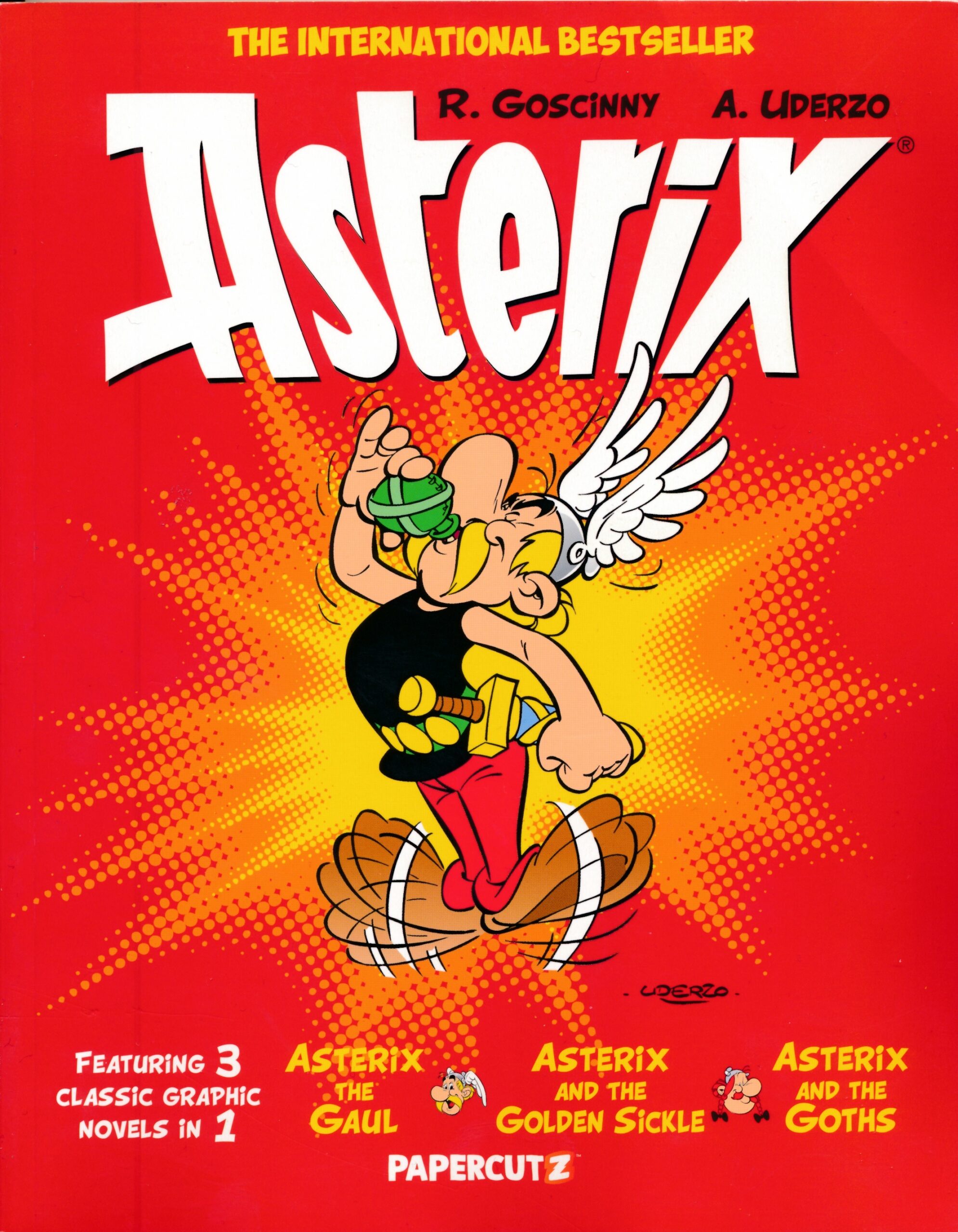
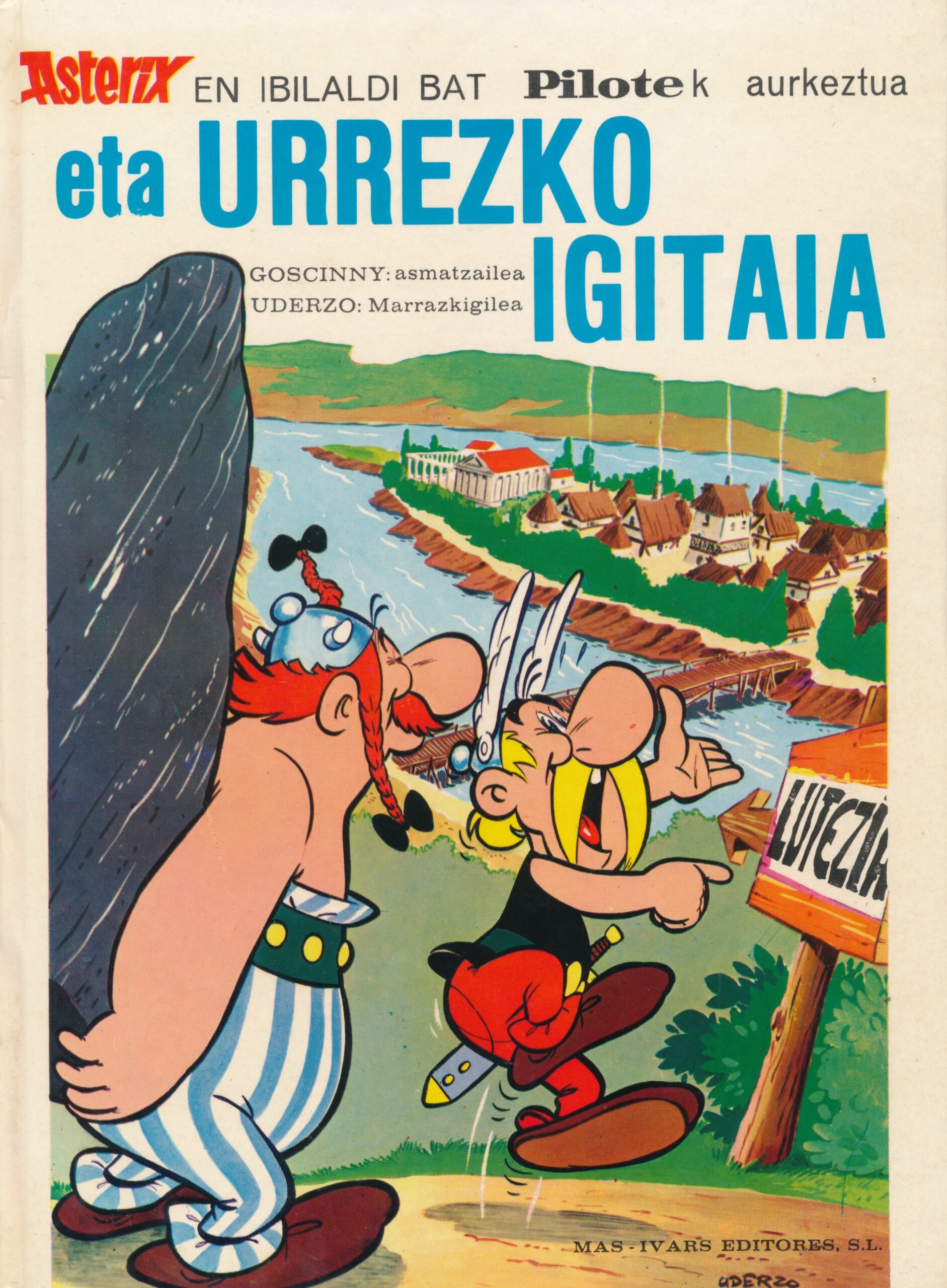
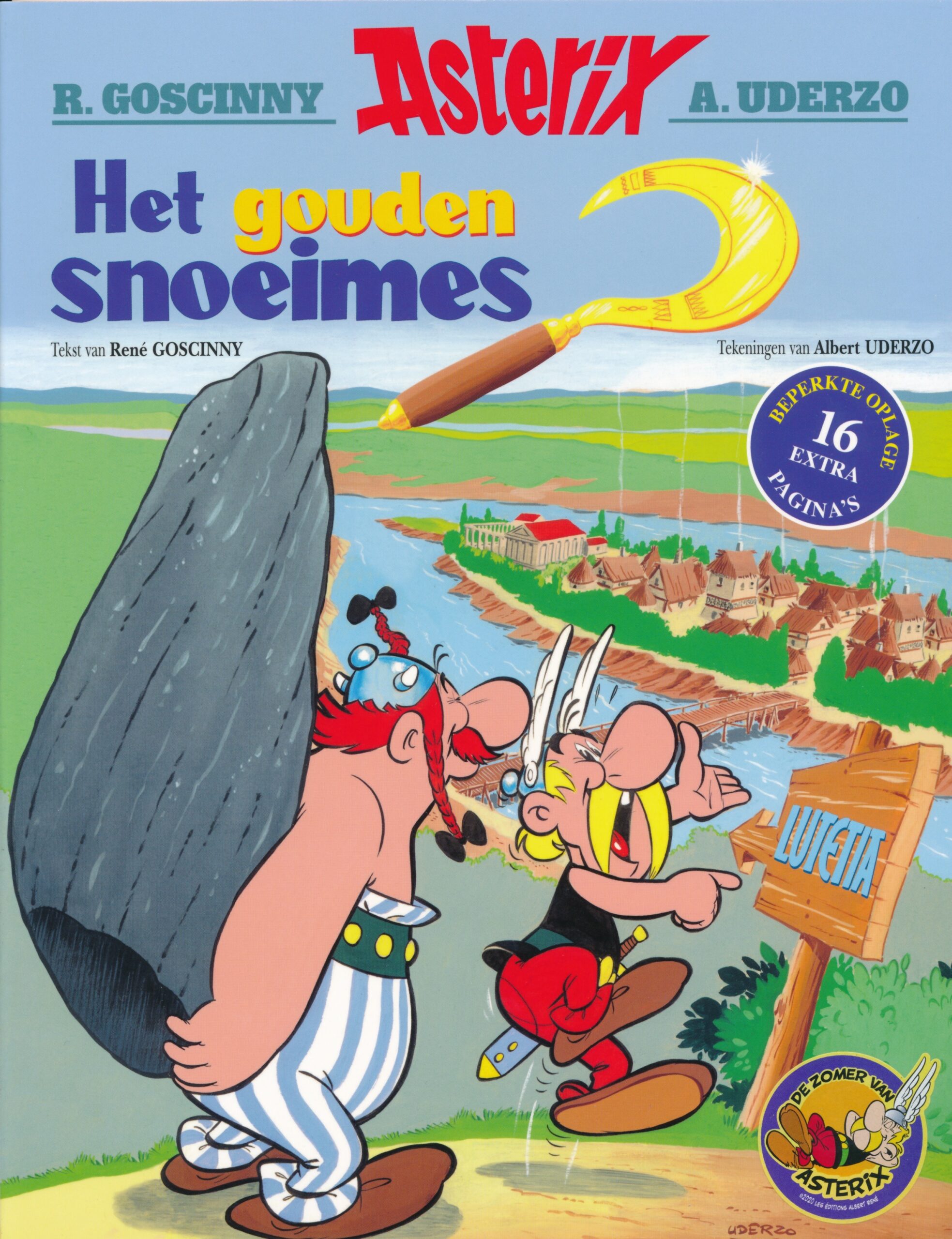
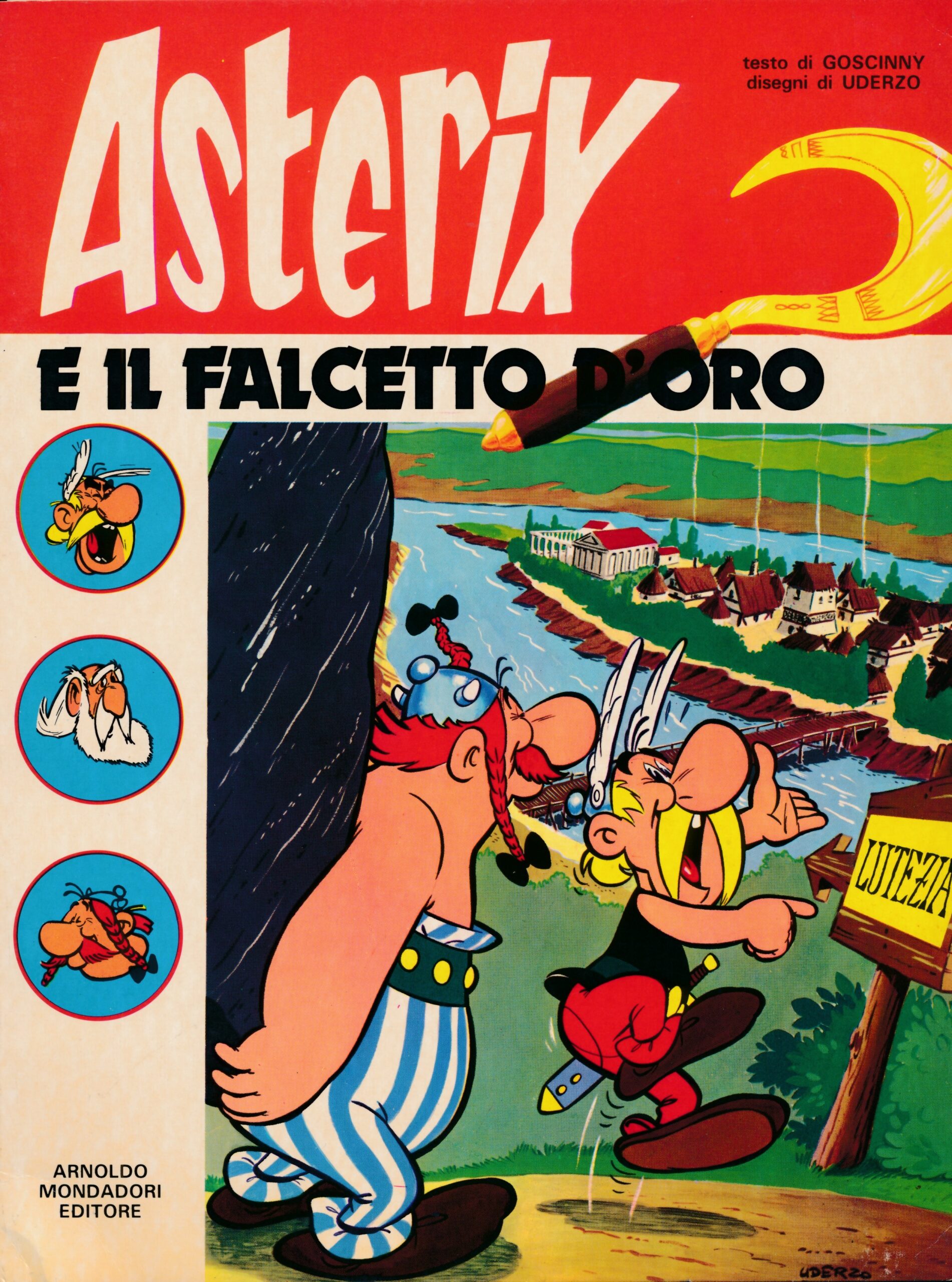
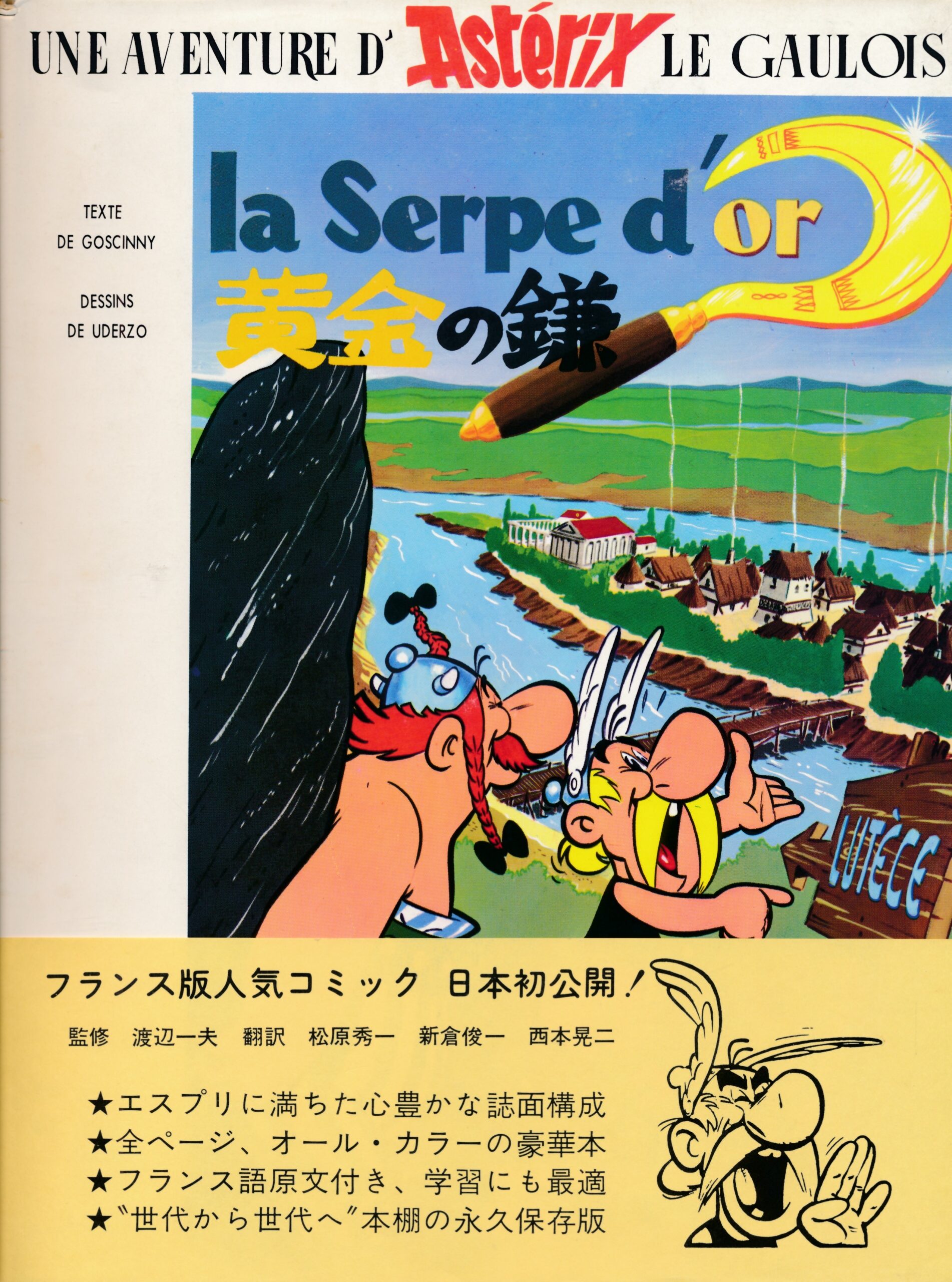
02. Asterix and the Golden Sickle
A detective story in ancient Paris
Asterix and the Golden Sickle (Astérix et la Serpe d’Or), serialized in Pilote magazine in 1960 and published as a standalone album in 1962, marked a pivotal moment for the series. This second volume is the first to take Asterix and Obelix beyond their Armorican village, introducing readers to the bustling city of Lutetia (ancient Paris) and its chaotic urban life.
This story continues to showcase René Goscinny’s sharp satire and Albert Uderzo’s expressive art, particularly in their caricatures of historical figures and archetypes. It also features Uderzo’s first caricatures of real personalities: French actor Raimu as the innkeeper of L’Auberge de Massalia, and Charles Laughton as Surplus Dairiprodus, the corrupt Roman prefect.

Synopsis
The plot begins with Getafix (Panoramix in French) breaking his golden sickle, an essential tool for cutting mistletoe, which he uses to brew the magic potion. Asterix and Obelix set off for Lutetia to buy a new sickle from Metallurgix (Amérix), Obelix’s cousin and a master craftsman.
Upon arrival, they discover that Metallurgix has gone missing. Their search leads them through the lively streets and seedy underbelly of Lutetia, where they uncover a sinister racket in golden sickles, orchestrated by Navishtrix (Navetrix), a nightclub-owning gangster, and Surplus Dairiprodus (Claude Détritus), the bored and corrupt Roman prefect and their henchman Clovogarlix (Lentix).
The duo’s journey includes tavern brawls, navigating urban chaos, a brief stay in prison, and a dramatic showdown with the criminals. Ultimately, they rescue Metallurgix, dismantle the smuggling operation, and return to their village with a new sickle for Getafix.
Interesting Facts and Details
- Lutetia as Ancient Paris: The authors cleverly portray Lutetia as a bustling metropolis, complete with traffic jams, pollution, overcrowding, and unruly taverns—a humorous nod to modern-day Paris.
- Prefect’s Decadence: Surplus Dairiprodus embodies Roman excess, lounging on cushions and eating incessantly while orchestrating his illegal schemes. His characterization is a pointed critique of bureaucratic corruption.
- Navishtrix’s “Godfather” Persona: As a crime lord running the golden sickle racket, Navishtrix parodies gangster tropes, using fear and intimidation to maintain his empire.
Latin Quotes
- Vade Retro
Translation: “Go back” or “Step back.”
This phrase is famously associated with Vade retro Satana (“Get behind me, Satan”), originating from the Christian New Testament (Matthew 16:23). It became a common expression in exorcisms and medieval religious contexts, symbolizing the rejection of evil or a command to retreat. - Acta Est Fabula
Translation: “The play is over.”
This phrase was traditionally announced at the end of Roman theatrical performances. Later, it was used to signify the conclusion of life, famously attributed to Emperor Augustus as his final words, implying life’s stage had come to an end.
Trivia and Legacy
- Caricatures of Celebrities: Uderzo’s caricatures of Raimu and Charles Laughton set a precedent for inserting recognizable figures into the series, a tradition that delighted readers and became a hallmark of Asterix albums.
- First Journey: This is the first time Asterix and Obelix venture beyond their village, laying the groundwork for future travel-centric adventures.
- Urban Adventures: The album captures the chaos of ancient urban life, from street brawls to seedy nightclubs, making it a satirical snapshot of city life.
- Forest Scene: The forest outside Lutetia, home to wolves, foreshadows the future Bois de Boulogne, adding a humorous historical twist.
- Dutch Translation (Asterix en het Gouden Snoeimes): Lentix remains Lentix, though later versions adapt his name to Fitnix.
- German Translation (Asterix und die goldene Sichel): Lentix is renamed Stupidix, highlighting his foolishness rather than his cunning.
Conclusion
Asterix and the Golden Sickle is a significant step in the series, blending clever satire, exciting adventure, and memorable characters to build on the success of Asterix the Gaul. Its wit, cultural references, and dynamic storytelling continue to charm readers across languages and generations.
Production
- Text: Goscinny
- Drawings: Uderzo
- Release: 1962
Titles
- fr: La Serpe d’or
- de: Die goldene Sichel
- es: La hoz de oro
- it: Asterix e il falcetto d’oro
- nl: Het Gouden Snoeimes
- pt: A Foice de Ouro
New Characters
- Amérix
- Avoranfix
- Claudius Métrobus
- Gracchus Pleindastus
- Saingésix
- Lentix