Swedish

Sweden is a Nordic country located in Northern Europe, known for its breathtaking landscapes, including vast forests, pristine lakes, and a long coastline along the Baltic Sea. Its capital, Stockholm, is spread across 14 islands, showcasing a harmonious blend of nature and urban life. Sweden has a rich history as a major European power and is famous for its contributions to art, technology, and culture. As a highly developed nation, Sweden is known for its strong welfare state, progressive politics, and commitment to environmental sustainability. With a population of around 10 million, Sweden is one of the most peaceful and prosperous countries in the world.
The Swedish Language
Swedish (Svenska) is a North Germanic language, part of the broader Indo-European family. It is closely related to Danish and Norwegian, sharing significant vocabulary, grammar, and historical development. Swedish evolved from Old Norse, the common language of the Scandinavian peoples in the Middle Ages, and gradually developed distinct regional forms before standardization in the modern era.
History and Distribution
Swedish is spoken by over 10 million people, primarily in Sweden and parts of Finland, where it is recognized as a co-official language. Historically, Swedish was influenced by Low German during the Hanseatic League period, which introduced new vocabulary and trade-related terms. Today, Swedish is used in government, education, media, and daily communication in Sweden, as well as among Swedish-speaking communities in Finland and around the world.
Writing System
Swedish uses the Latin alphabet with three additional letters: å, ä, and ö. These letters represent distinct vowel sounds essential to the language. Swedish spelling is largely phonemic, though some historical spellings are preserved. The alphabet consists of 29 letters in total: the standard 26 letters of the Latin script plus å, ä, ö.
Grammar and Vocabulary
Swedish grammar is relatively simple compared with other Germanic languages. It features two grammatical genders—common (en) and neuter (ett)—and does not mark case extensively except in pronouns. Word order is generally subject–verb–object (SVO) but can be flexible for questions, emphasis, or stylistic purposes. Verbs are not heavily inflected; tense, mood, and aspect are expressed with auxiliary verbs and participles. Swedish vocabulary is largely Germanic, with influences from Latin, French, Low German, and English, reflecting historical, cultural, and technological contacts.
Modern Role
Swedish serves as the official language of Sweden and as a co-official language in Finland, where Swedish-speaking Finns make up a recognized minority. It is the language of education, media, literature, and government, and it continues to evolve with new loanwords and expressions. Swedish maintains a strong connection to its Old Norse roots, while remaining accessible and practical for modern communication.
The way Vikings talk
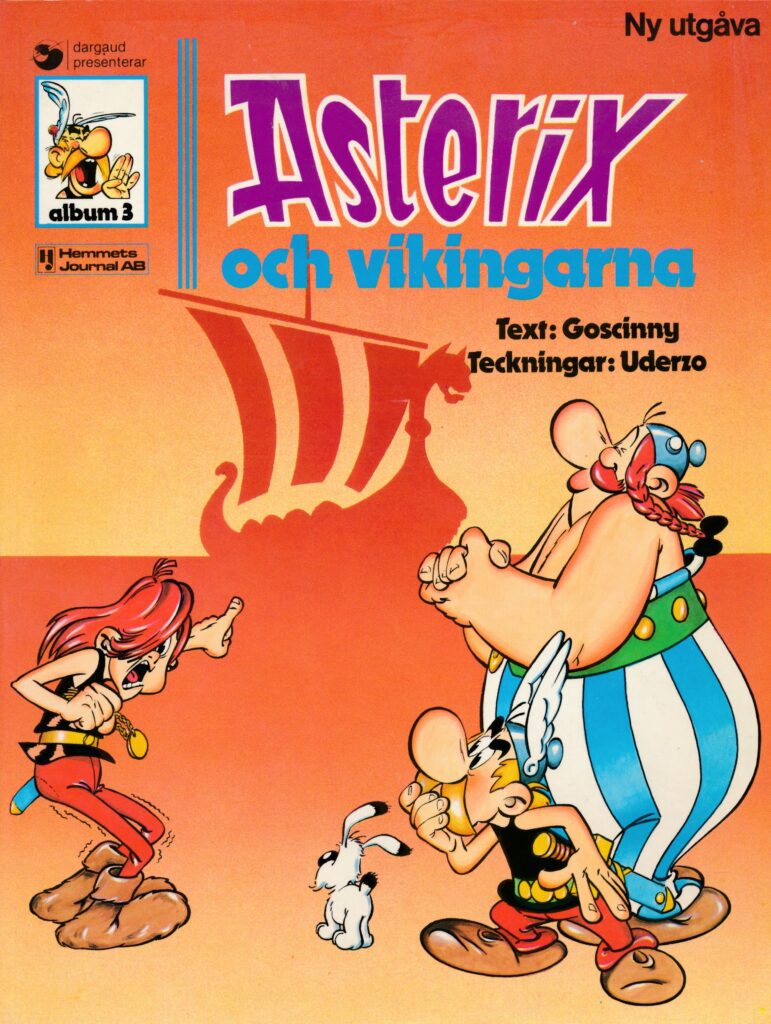
The translator of the Norwegian albums chose to let the Vikings speak with a font that looks like runes to distinguish them from the Gauls. In the Swedish albums this distinction isn’t made.
Asterix talar svenska
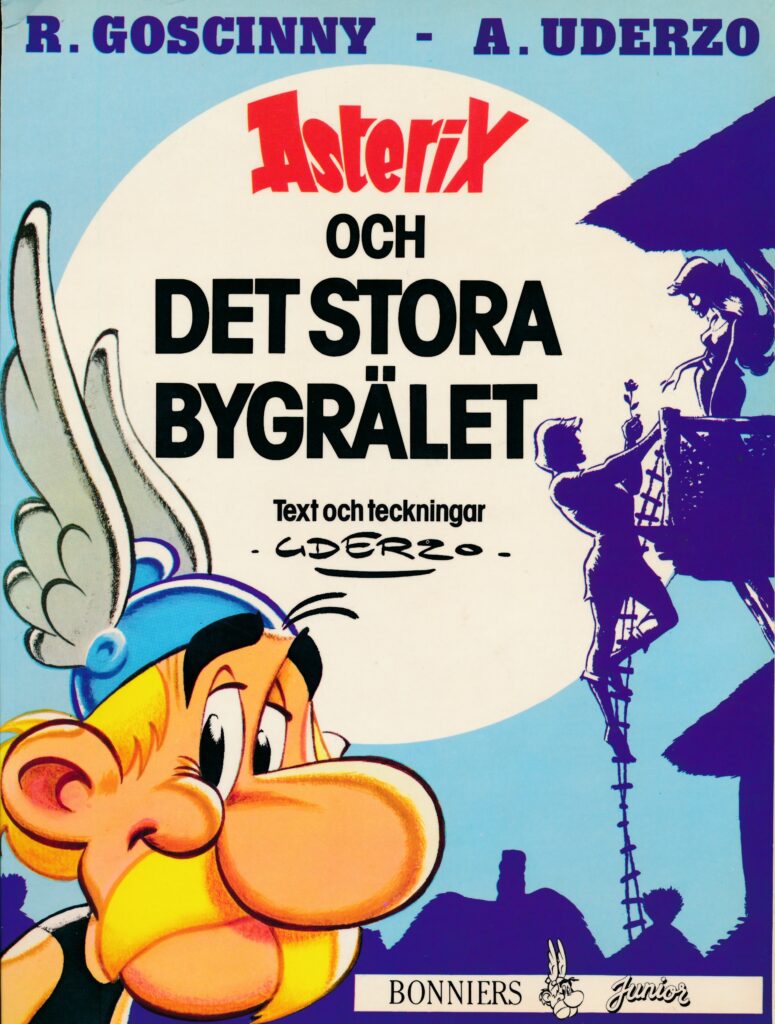
The Asterix series has been translated into Swedish, with the first Swedish edition of Asterix released in 1970 under the title Asterix och hans tappra galler. The Swedish translations are published by Egmont Kärnan, which has been responsible for many editions over the years. Notably, some of these translations were revised for updated editions, making them more accessible to modern readers. The Swedish translations strive to maintain the humor and cultural references from the original French while adapting them to Swedish culture. In addition to the standard translations, Asterix has also been published in Swedish dialects.