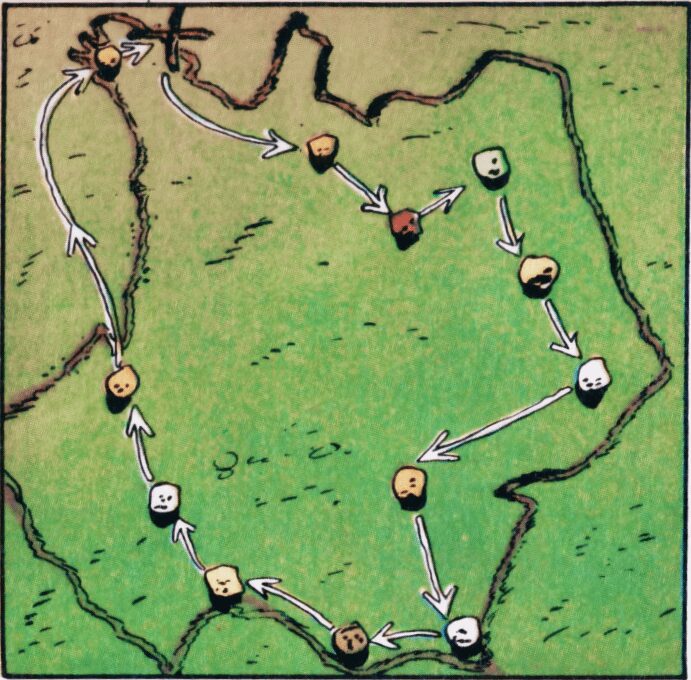
In this series of articles, we take a closer look at the places Asterix and Obelix visit during their journey around Gaul, focusing on the original French version of the story and the regional context for each stop. Le Tour de Gaule d’Astérix is widely regarded as one of the more difficult albums to translate, as much of its humor relies on cultural references, wordplay, and culinary traditions. By providing historical context, this series aims to clarify the puns and narrative details that make the journey so memorable.
Betrayal in Divodurum: The Stop That Left a Bitter Taste
After the celebrations in Durocortorum, Asterix and Obelix travel east to Divodurum (modern-day Metz). This stop is notable because it is the only city where the heroes are betrayed and temporarily detained, preventing them from completing their regional mission as they do elsewhere. Divodurum itself is a historically significant city but the original story does not mention any local delicacy being acquired there.
Divodurum: Fortress of the Mediomatrici
In the first century BC, Divodurum Mediomatricorum was the principal oppidum, or fortified town, of the Mediomatrici tribe. Its name translates from Celtic as “Holy Fortress” or “Place of the Gods,” reflecting its spiritual and strategic significance. Under Roman rule, the city became a major hub at the intersection of important military roads connecting Lyon to Trier and Reims to Strasbourg. At its height, Divodurum was among the largest cities in Gaul, with a population of around 40,000 and an amphitheater large enough to seat half the inhabitants.
The Betrayal of Quatredeusix

In the album, the Divodurum episode centers on the character Quatredeusix, whose name is a numerical pun (“4-2-6”) typical of Goscinny’s playful style. Quatredeusix betrays Asterix and Obelix to the Romans for personal gain. Astérix is captured first while Obélix is temporarily absent, and later imprisoned upon arriving in Divodurum to rescue his friend. Only after Astérix is given magic potion do both heroes escape, seizing a postal cart to continue their journey toward Lugdunum.
A Historical Note
While the story contains no culinary element at Divodurum, the city itself has a rich heritage. Today, visitors to Metz can explore its Roman and medieval history, including the thermal baths preserved at the Musée de la Cour d’Or, and see the remnants of its former status as a fortified hub of the Mediomatrici.
Reims :Previous | Next: Lyon


In this series of articles, we take a closer look at the places Asterix and Obelix visit during their journey around Gaul, focusing on the original French version of the story and the regional context for each stop. Le Tour de Gaule d’Astérix is widely regarded as one of the more difficult albums to translate, as much of its humor relies on cultural references, wordplay, and culinary traditions. By providing historical context, this series aims to clarify the puns and narrative details that make the journey so memorable.
Betrayal in Divodurum: The Stop That Left a Bitter Taste
After the celebrations in Durocortorum, Asterix and Obelix travel east to Divodurum (modern-day Metz). This stop is notable because it is the only city where the heroes are betrayed and temporarily detained, preventing them from completing their regional mission as they do elsewhere. Divodurum itself is a historically significant city but the original story does not mention any local delicacy being acquired there.
Divodurum: Fortress of the Mediomatrici
In the first century BC, Divodurum Mediomatricorum was the principal oppidum, or fortified town, of the Mediomatrici tribe. Its name translates from Celtic as “Holy Fortress” or “Place of the Gods,” reflecting its spiritual and strategic significance. Under Roman rule, the city became a major hub at the intersection of important military roads connecting Lyon to Trier and Reims to Strasbourg. At its height, Divodurum was among the largest cities in Gaul, with a population of around 40,000 and an amphitheater large enough to seat half the inhabitants.
The Betrayal of Quatredeusix
In the album, the Divodurum episode centers on the character Quatredeusix, whose name is a numerical pun (“4-2-6”) typical of Goscinny’s playful style. Quatredeusix betrays Asterix and Obelix to the Romans for personal gain. Astérix is captured first while Obélix is temporarily absent, and later imprisoned upon arriving in Divodurum to rescue his friend. Only after Astérix is given magic potion do both heroes escape, seizing a postal cart to continue their journey toward Lugdunum.
A Historical Note
While the story contains no culinary element at Divodurum, the city itself has a rich heritage. Today, visitors to Metz can explore its Roman and medieval history, including the thermal baths preserved at the Musée de la Cour d’Or, and see the remnants of its former status as a fortified hub of the Mediomatrici.
Reims :Previous | Next: Lyon